

Roof repairs in Worthing

We trace a leak or a loose tile back to the fault that caused it, photograph that fault for you, and repair it with fixings and lead that stand up to sea weather.

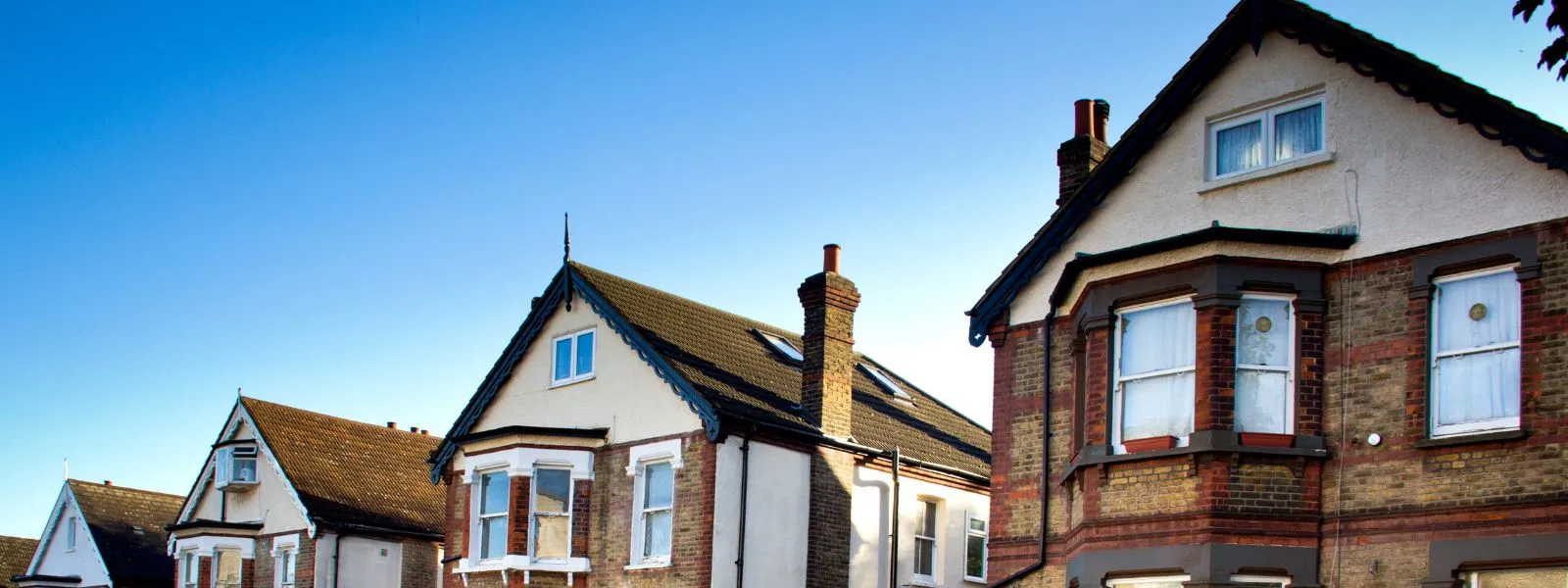
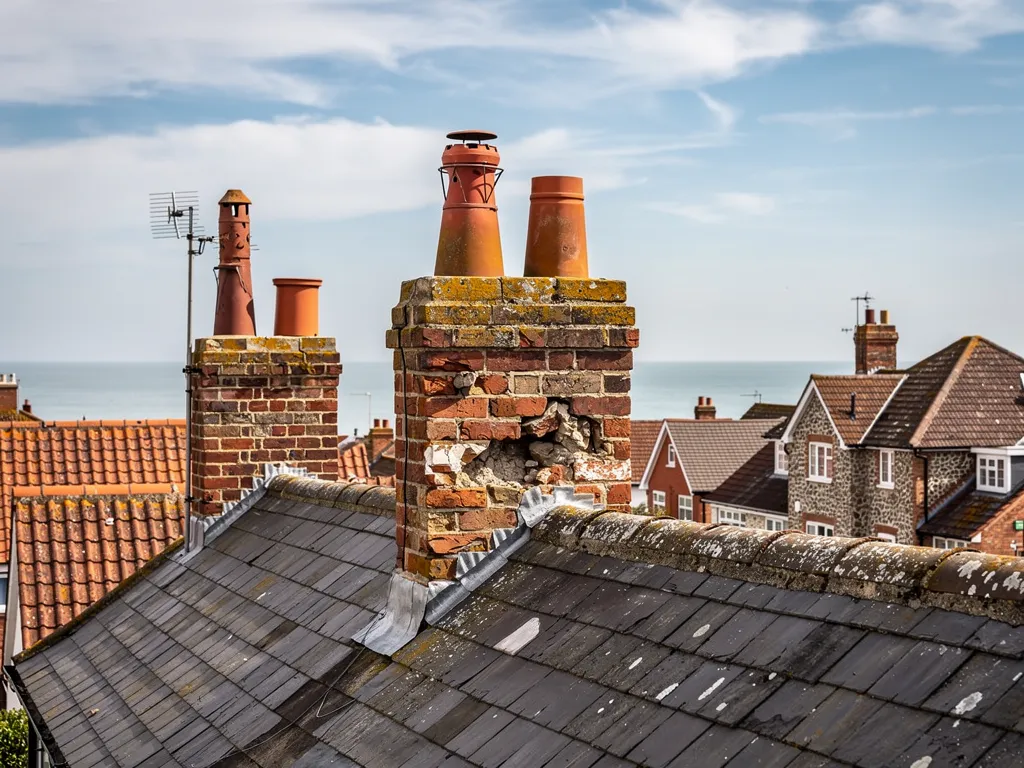
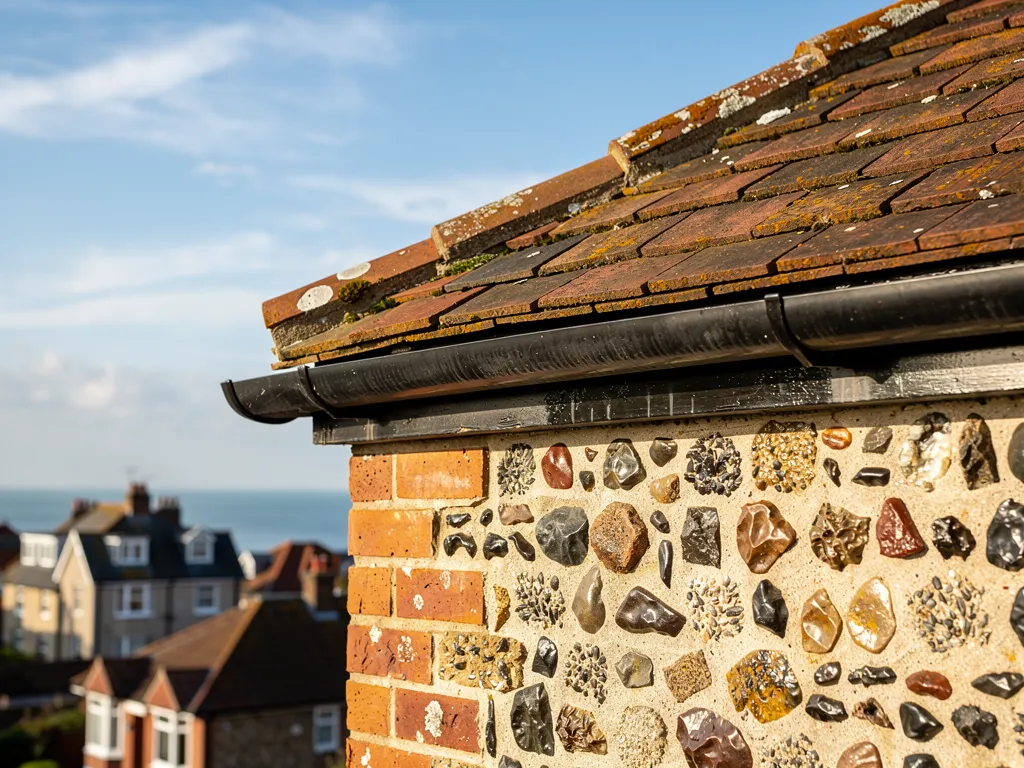
Victorian terrace chimney stacks with spalled bricks and old lead flashing
  • Leaks traced
    to the source
  • Photos of
    your own roof
  • Written quote,
    one total price
  • 10-year workmanship
    guarantee, in writing

What we repair on Worthing roofs

  • Slipped and broken tiles

    Clay and concrete tiles that have cracked or slid after a gale, matched as closely as the market allows and fixed back to the battens.

  • Slipped slates

    Welsh and imported slates whose nails have rusted through, refitted on tingles, or re-slated in patches where the battens below need attention too.

  • Lead flashings and soakers

    Lead that has lifted, split or lost its pointing where the roof meets a wall, a chimney or a dormer, renewed in the right code.

  • Ridges, hips and verges

    Loose ridge and hip tiles and crumbling verge mortar, re-bedded with mechanical fixings or changed to a dry-fix system that holds in a gale.

  • Valleys and gutters

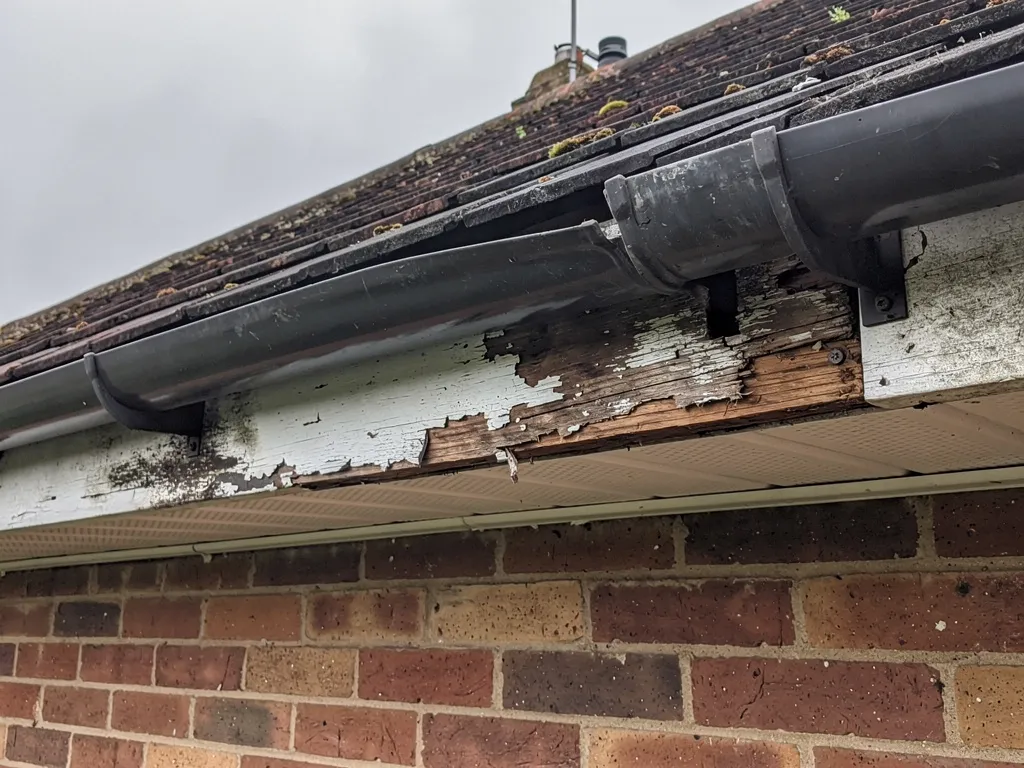
    Blocked or split valley linings, and gutters that overflow and push water back under the tiles at the eaves, cleared, relined or reset.

  • Flat roof splits and blisters

    Split felt, lifted EPDM edges and cracked GRP on extensions, garages and dormers, patched where the deck is sound and the covering has life left.

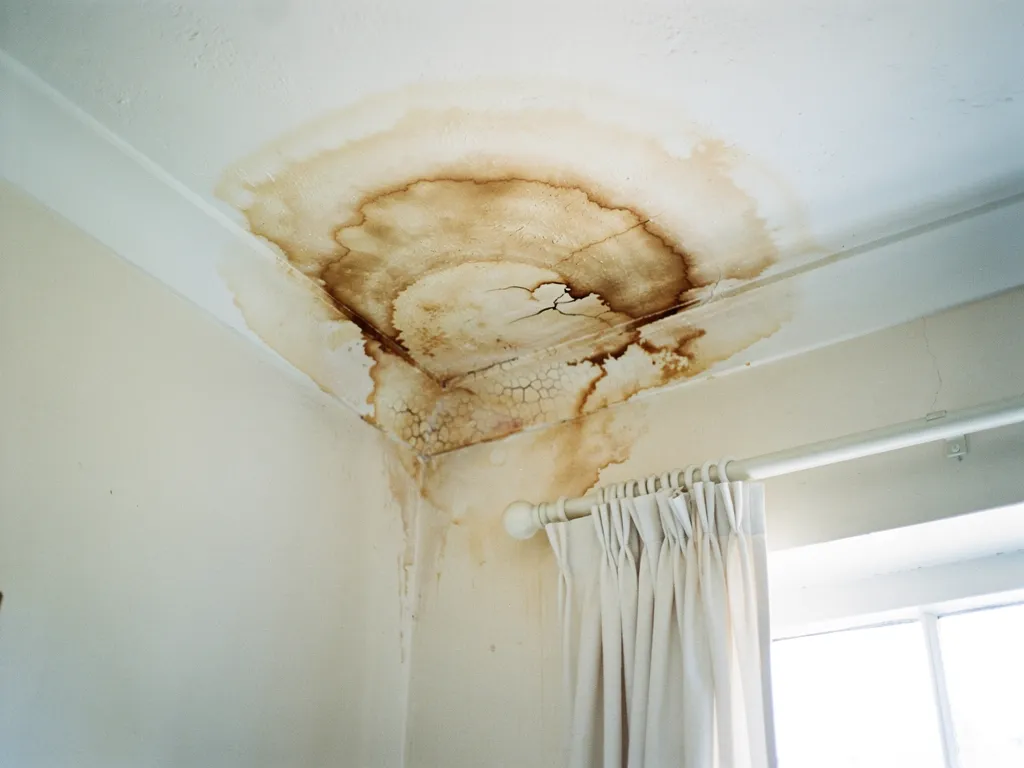
Brown water stain spreading across a white bedroom ceiling near the window

Signs a roof repair is due

  • A damp patch after heavy rain
  • Tiles or slates on the ground
  • Daylight showing through the loft
  • A ridge tile rocking or out of line
  • Water running behind the gutter

Typical UK costs for roof repairs

Typical UK price ranges
JobUK range
Minor repair, such as a few tiles£100 to £300
Moderate repair£500 to £1,000
Re-bedding or replacing ridge tiles£300 to £600
Repointing ridge or hip tiles£200 to £400
Storm damage repair£500 to £1,500

These are national guide figures. Your own price arrives as a written quote once we have surveyed the roof and found the cause. Source: MyBuilder roof repair and slate roof cost guides, updated 21/08/2026.

How a roof repair runs, from first call to finished

  1. Tell us the symptomsCall 01903 299063 or send a WhatsApp saying where the water shows and when, with a photo of the stain or the slipped tile.
  2. Survey and photographsWe check the loft first, then the covering above it, and photograph the fault so you can see the cause.
  3. A written quoteOne total price for the repair arrives in writing, with a plain reason why that is the right job.
  4. Repair and clear upWe carry out the repair, photograph the finished work, leave the place tidy and take the waste away.

The roof repair guide

Finding the fault, then fixing it properly

How water gets into a coastal roof, what each repair involves, what the rules say and what the work typically costs.

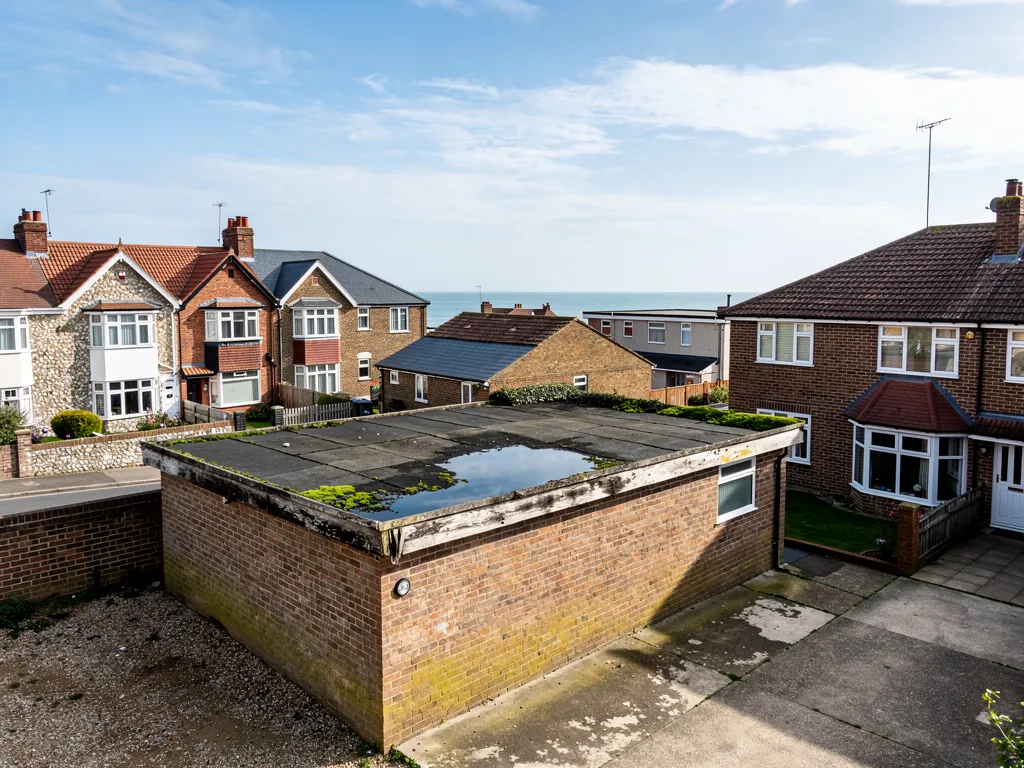
Single brick garage with a tired felt flat roof, ponding water and patches

Chapter one

Why the stain is rarely under the fault

Rain past the covering travels along underlay and timber, so your ceiling mark is a clue, not an answer.

A wet stain on a landing ceiling tells you water has reached the plaster. It does not tell you where it came in. Rain that slips past a cracked tile, a lifted flashing or a split valley lands on the underlay, the membrane or felt laid under the battens, and runs downhill until it finds a nail hole, a lap or the edge of a timber. From there it can travel along a rafter or a ceiling joist before it drips. On a Worthing terrace with a long rear slope, the stain and the fault can sit well apart, and on a hipped bungalow the water can turn a corner at the hip before it shows.

At a glance

  • Water runs along underlay and rafters before it drips
  • We start in the loft, then check the covering outside
  • Condensation can look like a leak, but the pattern differs

Note Where the ceiling is well sealed and a certified LR underlay is used, Marley says ordinary eaves construction ventilates enough: about 3mm.

That is why a repair that starts from the stain so often misses. Someone replaces the tile directly above the mark, the ceiling dries for a week, and the next band of driving rain off the Channel brings the drip straight back. The fault was never at that tile.

1.1 How we follow the water back

We start inside. In the loft, with a torch, we look for the wettest timber, the tide marks on the underlay and any staining on top of the insulation. Old felt underlay that has sagged between the rafters can hold pools of water you can see from below. We follow those marks uphill to the highest wet point, because that is the nearest the water gets to its way in.

Then we go outside to the same spot on the covering. It might be a slipped slate, a cracked tile, a gap at the abutment where the roof meets a wall, a chimney with open joints, a perished collar round a soil pipe or a valley full of leaves. Each leaves a different trail, and the loft tells us which one to look for. We photograph the cause, inside and out, before any price is put to you. Our guide to finding a roof leak sets out the same checks in more detail.

1.2 When it is not the roof at all

Not every wet loft has a leak. Warm, moist air from a bathroom or kitchen rises into a cold roof space, condenses on the underside of the felt or on the nail points, then drips. The pattern gives it away: damp spread evenly along a slope, worse on cold mornings, often with mould on the timber, and no link to rain. If we think the cause is condensation we tell you, and the fix is ventilation rather than new tiles. There is more on telling condensation from a leak in its own answer.

Tracing a leak to its source

  1. Loft We find the highest wet timber and the tide marks on the underlay.
  2. Covering We check the tiles, flashings and valleys directly above that point.
  3. Proof We photograph the cause inside and out before writing the quote.

The stain shows where the water stopped, not where it started.

If a leak only appears in a certain wind, that is useful evidence. Note the date, the weather and how long after the rain started the drip began. Put a bowl under it, move anything you value out of the loft, and if the ceiling bulges, keep well clear of it. A short message with those details and a photo of the stain lets us bring the likely materials to the first visit. If water is pouring in, our emergency roof repairs page explains how we make a roof safe first and come back for the permanent repair.
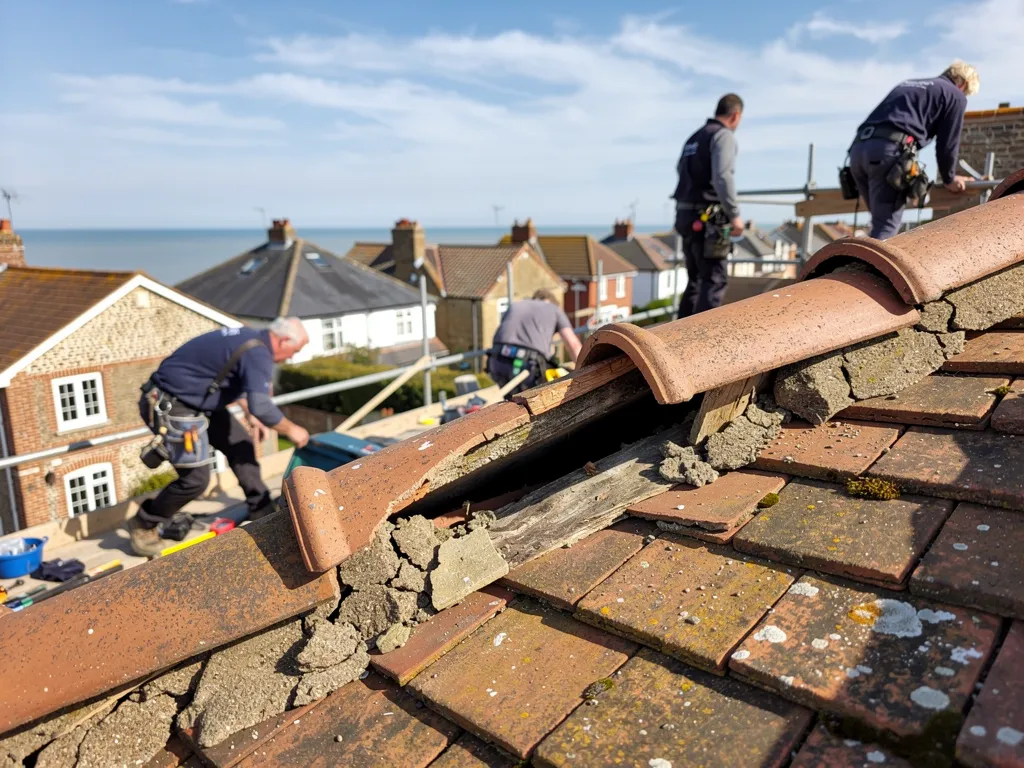
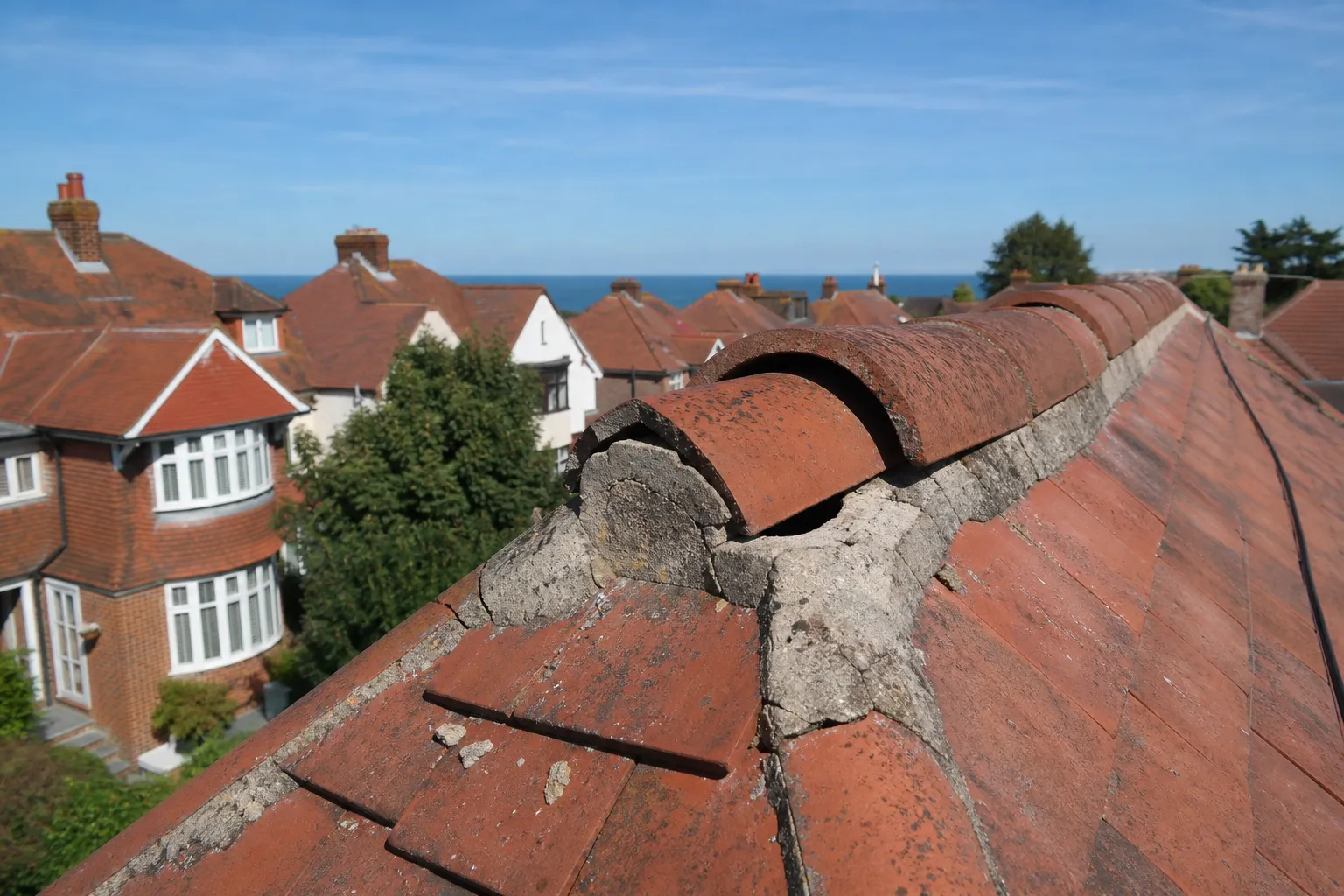
Cracked and crumbling mortar bedding under clay ridge tiles, seen close up

Chapter two

Slipped tiles, loose ridges and sea gales

Wind rarely strips a sound roof; it finds the slate on a rusted nail or the ridge on tired mortar.

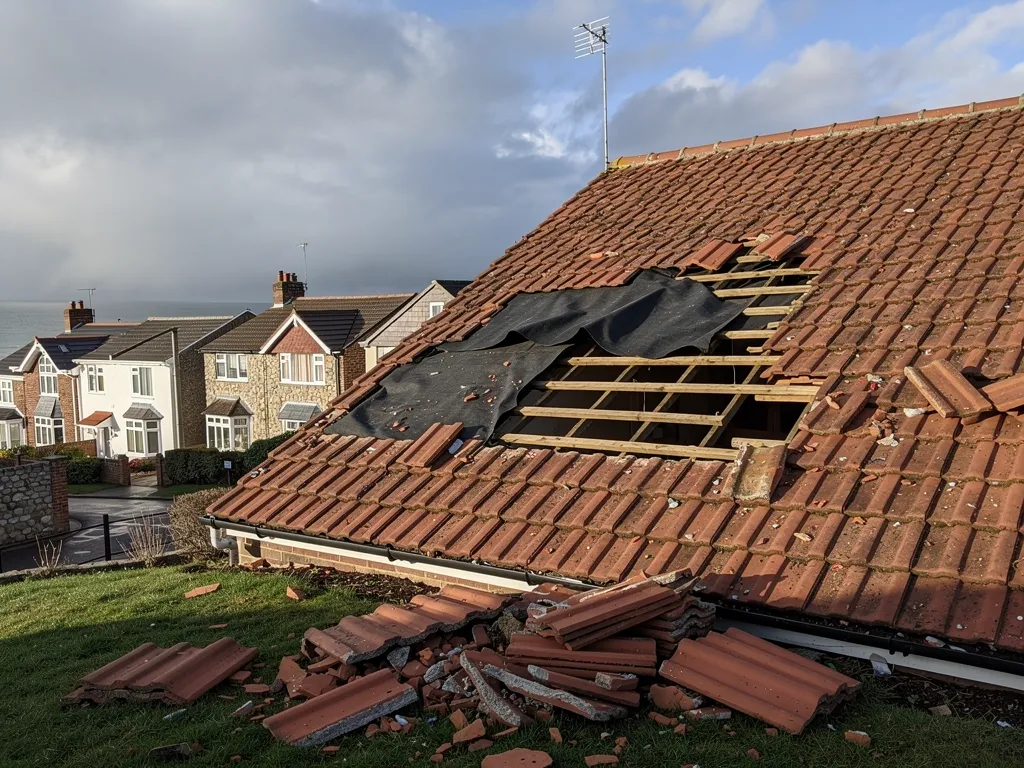
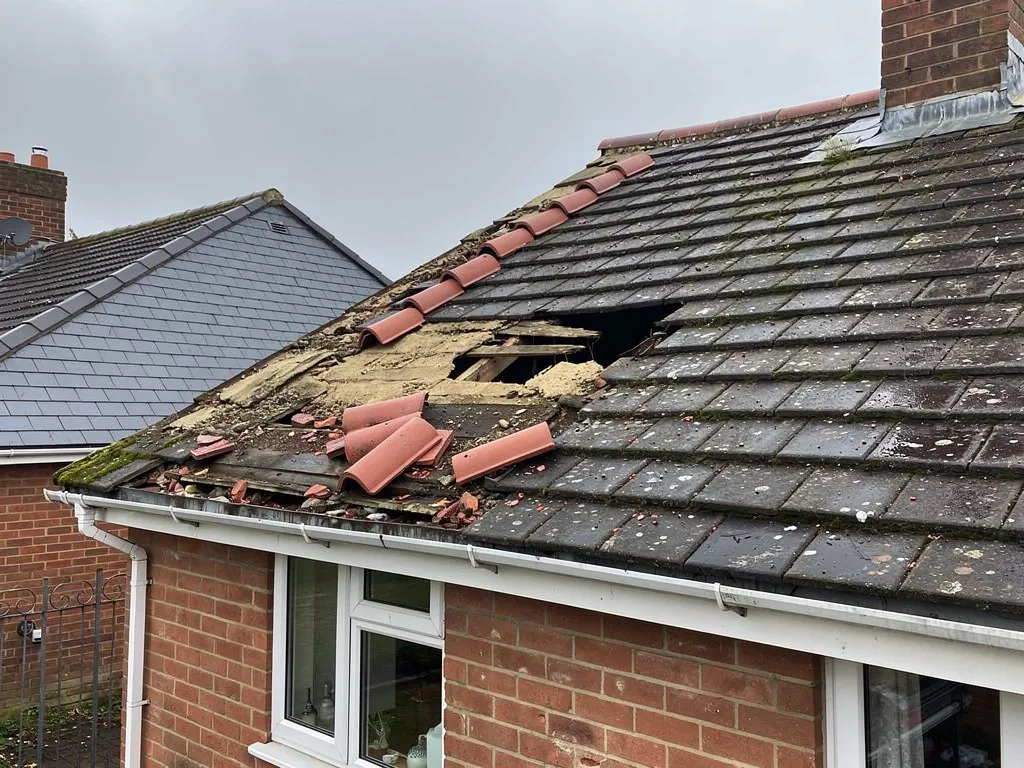
After a gale, the first thing people notice is a tile on the lawn or a gap in a row of slates. The tile itself is often fine. What failed was the fixing. Slates on the Victorian streets near the seafront in Worthing, Hove and Brighton hang on nails that rust and snap with age, and a slate whose nail has gone slides down until the course below stops it. Clay and concrete tiles hook over the battens by small nibs, and many older roofs have few nails in them at all, so a strong gust lifting the tail of a tile is enough to unhook it.

At a glance

  • Rusted nails let slates slide out of their courses
  • Since BS 5534:2014, ridges are mechanically fixed as well
  • Near Shoreham airport, fixing specifications may need special advice

Note Cupa's headlap for a 500x300 natural slate is 115 mm at a 20° pitch, falling to 80 mm at 30°.

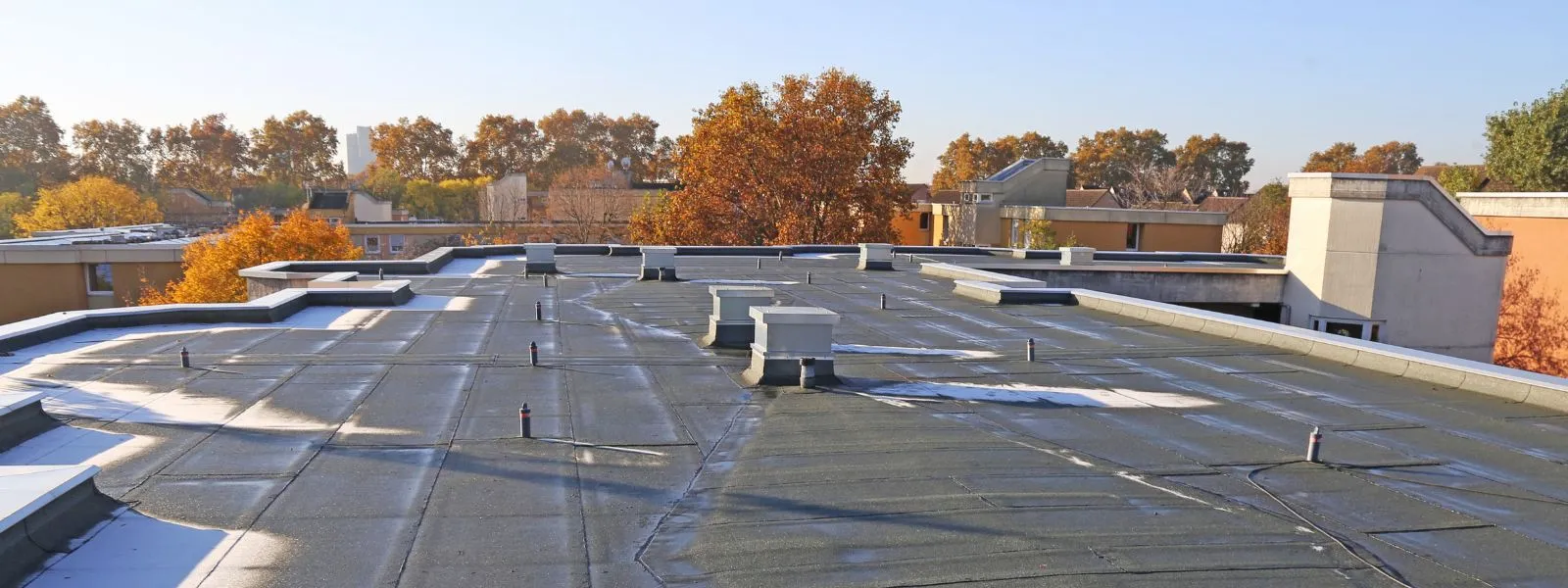
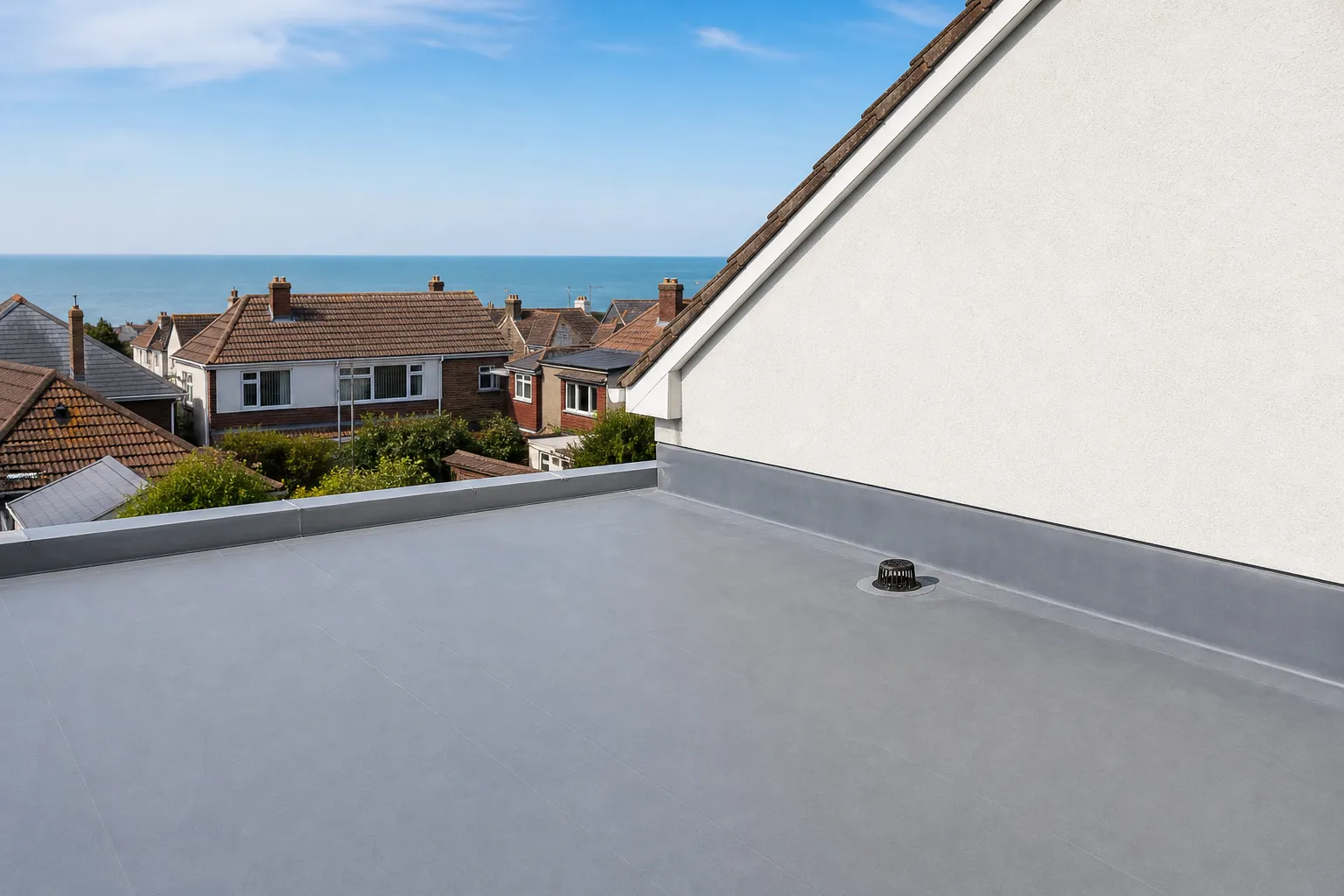
New single-ply membrane flat roof with a welded upstand and edge trim near the sea

Pitch matters too, especially on a low roof. Worthing has plenty of shallow extension roofs and low bungalow roofs, and Marley's guidance notes that where a roof is pitched at less than 30 degrees, the slope facing the wind can come under severe suction, which pulls at the tiles rather than pressing them down. A careful repair replaces the broken pieces and adds fixings so the neighbouring tiles are held as well.

2.1 Replacing tiles and slates

For a single slipped slate we fit a new or matched slate and secure it with a tingle, a narrow metal strip nailed to the batten through the joint below and turned up to hold the tail. Where several slates in one area have gone, we strip that patch, check the battens and the underlay, and re-slate it with every slate properly nailed. For tiles we match the profile and colour as closely as we can, because concrete and clay patterns have changed over the years. Wienerberger asks for a minimum of one mechanical fixing on each single-lap tile, set by a specification for the site's location, altitude and local wind exposure, and we fix repairs on that basis.

New single-ply membrane flat roof with a welded upstand and edge trim near the sea

2.2 Ridges, hips and verges

The ridge is the row of capping tiles along the top of the roof; hips are the same on a sloping corner; the verge is the edge of the roof at a gable end. Older ones were bedded on sand and cement alone, and years of wind, rain and frost crack that bedding until the tiles rock or the verge mortar falls out in lumps. Mortar on its own is no longer treated as a reliable hold: since the 2014 revision of BS 5534, ridge and hip tiles are mechanically fixed as well, with clips, screws or a dry-fix system tested to BS 8612:2018. On some heritage roofs a bedded finish with hidden fixings suits better. Our ridge tile repairs page covers the choices. Aircraft can create local wind loads above the usual calculation, so for roofs near Shoreham airport, in parts of Shoreham, Lancing and Sompting, the tile manufacturer may need to advise on how they are fixed.

Cracked bedding mortar under the half-round ridge of a clay-tiled semi, the ridge tiles working loose
Fig. 2.a On the survey Bedding mortar cracked and the ridge tiles working loose.
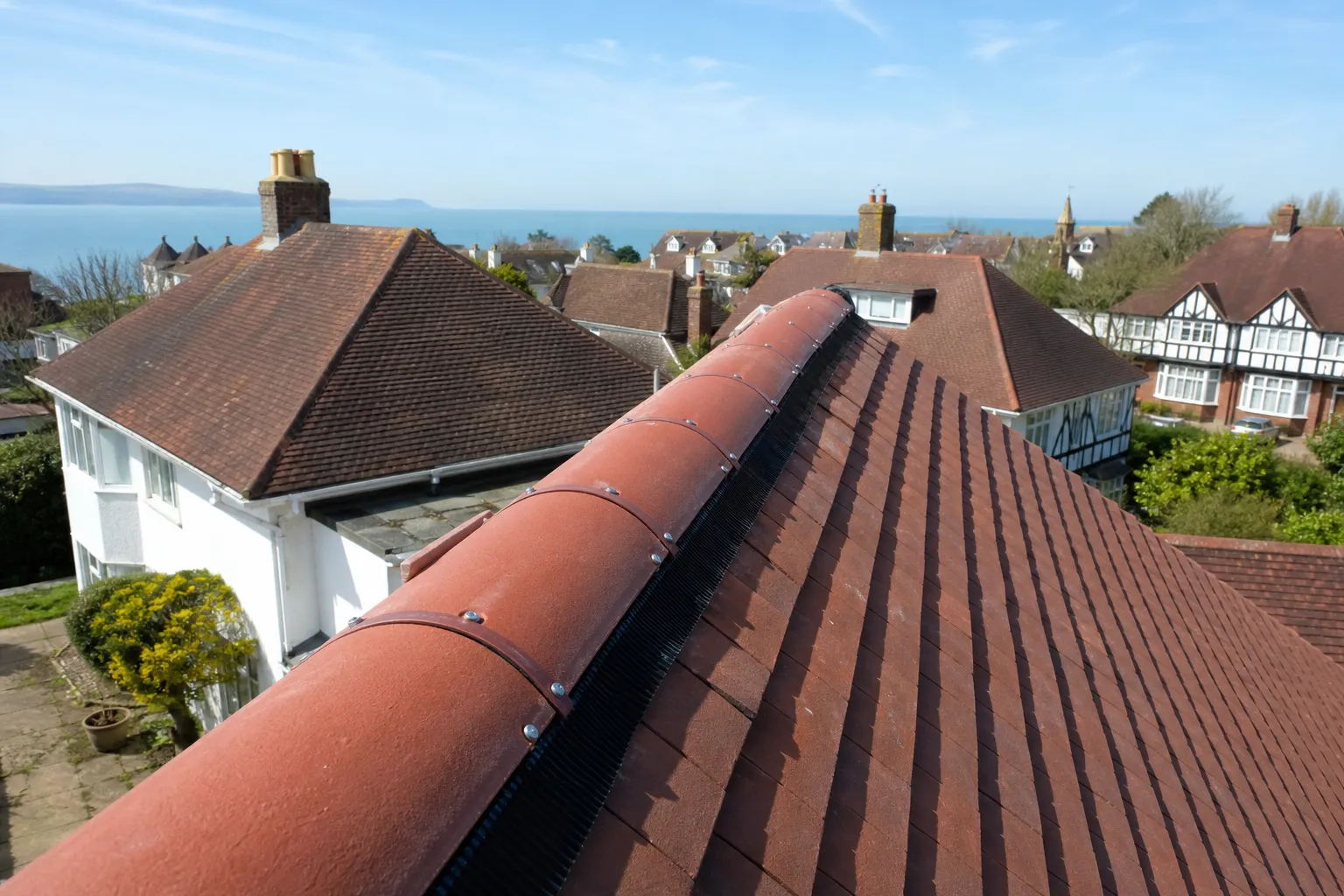
The same clay ridge re-laid on a dry-fix system, clipped and screwed to the ridge board
Fig. 2.b Put right Ridge re-laid with mechanical fixings to the ridge board.

Chapter three

Flashings, valleys and the lead between them

The joints where a roof meets a wall, a chimney or another slope are where many leaks begin.

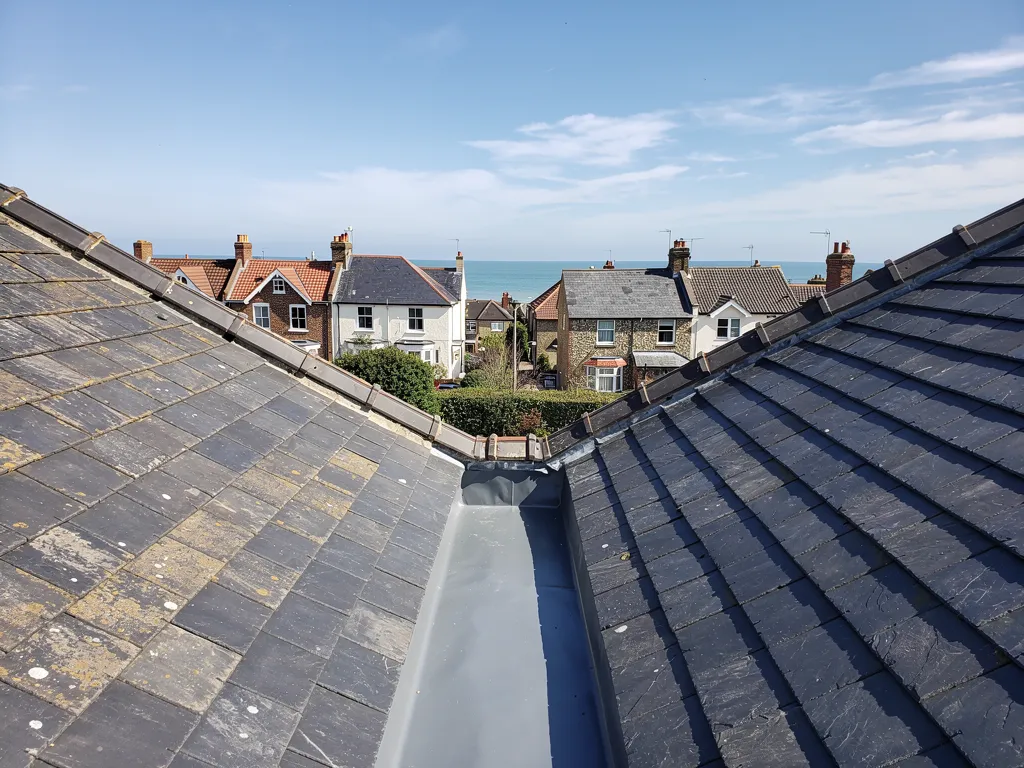
New lead valley between two slate roof slopes

A flashing is the strip of lead that seals the roof to anything standing above it: a wall, a chimney stack, the cheek of a dormer. Its top edge is tucked into a mortar joint in the brickwork and pointed in, and its lower edge lies over the tiles. Beneath it, on many tiled and slated roofs, sit soakers, small pieces of lead slipped between each course to carry water back onto the roof. When the pointing falls out of the joint, the lead lifts in the wind and rain runs straight down behind it. When lead has been fixed in lengths that are too long, it can split as it moves between the heat of the day and the cold of the night.

At a glance

  • Flashings seal the roof to walls and chimney stacks
  • Leadworx calls Code 4 the standard flashing weight
  • Sealant over failed lead traps water behind it
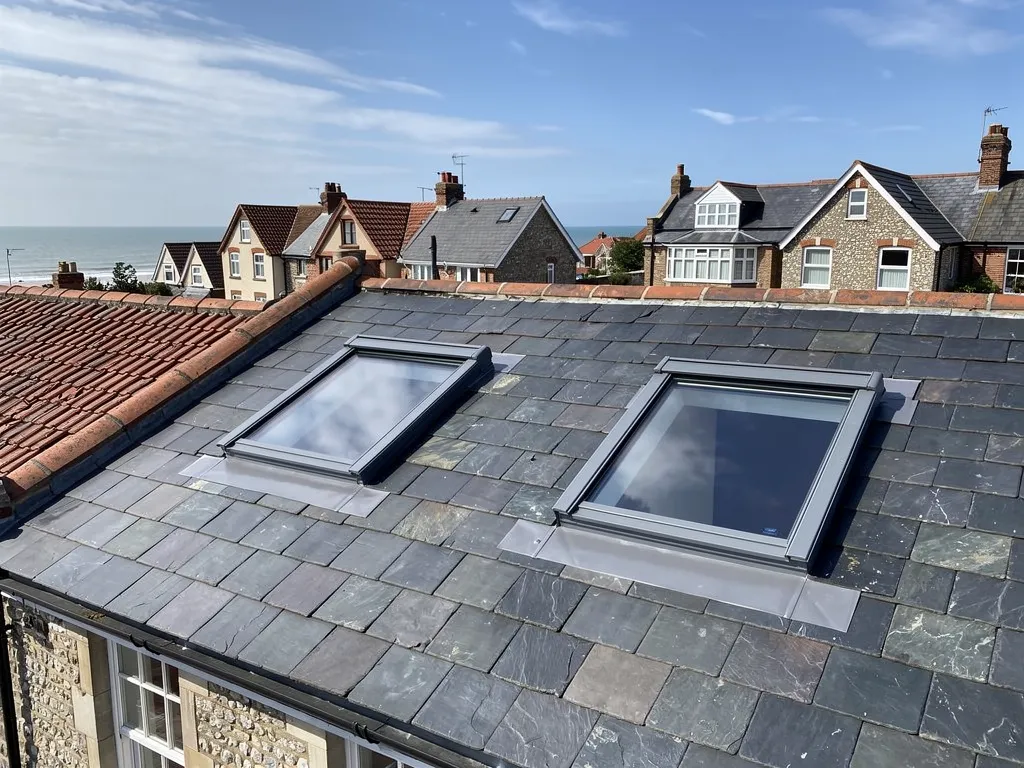
Two new roof windows with grey flashings in a slate roof

Chimneys gather several of these faults in one place. The flaunching, the sloped mortar cap round the pots, cracks and lets water into the stack. Open joints in the brickwork soak up driving rain. The back gutter behind the stack fills with leaves. Each of them can pass for a roof leak in the room below. Chimney repointing and leadwork often go together, and MyBuilder's chimney repair guide puts repointing at around £750, within a range of £500 to £2,000. Rebuilding a stack is a larger job with its own page.

3.1 Lead codes and why they matter

Sheet lead is sold by code, a number that tracks its thickness, made to BS EN 12588. Leadworx describes Code 4 as the standard choice for general flashing work, with Code 3 kept for soakers and Code 5 used on heavier pitched and vertical work. The right code, cut into lengths short enough to move without tearing, and dressed tight to the tiles so wind cannot get under it, is the difference between leadwork that lasts and leadwork that needs attention after a few winters. MyJobQuote says lead flashing can last for over 80 years. Quality lead, well dressed, is one of the longest-lived parts of any roof.

Two new roof windows with grey flashings in a slate roof

3.2 Valleys

A valley is the channel where two roof slopes meet in an inside corner. It carries the water off both slopes, so it works harder than any other part of the roof. Older valleys are lined with lead; newer ones may use a preformed liner, or tiles cut and laid to meet in the middle. Leaves, moss and old nesting material build up, the water backs up under the tiles at the edges, and the leak appears some distance away. Clearing a blocked roof valley can be all it needs; a split lead lining needs renewing in fresh lead.

Lead sheet codes in brief

Code 3
1.32 mm, recommended for soakers only
Code 4
1.80 mm, the usual weight for flashings
Code 5
2.24 mm, heavier pitched and vertical work
Standard
Lead sheet codes are made to BS EN 12588

Source: Leadworx, Lead Sheet Codes Explained; Royston Lead cast lead brochure; fetched October 2026

New lead, dressed tight and pointed in, outlasts any tube of sealant.

A tube of mastic is the wrong tool here. Sealant smeared over a lifted flashing looks neat for a season, then shrinks and cracks, and the water it lets through is trapped behind it, soaking the brickwork and the timber below until the damp shows indoors. The answer for failed lead is new lead, cut and dressed to suit, with the top edge re-pointed into the joint. Our answer on whether roof sealant repairs work goes into this in further detail.

Chapter four

Flat roof repairs on extensions and dormers

Felt, rubber and fibreglass each fail in their own way, so the repair depends on which you have.

Flat roofs cover a lot of rooms on this coast: the kitchen extension on a 1930s semi in Goring, the garage and porch on a post-war bungalow, the rear dormer on a Victorian terrace, the large roof over a block of seafront flats. None of them should be truly level. A good flat roof falls gently to a gutter or outlet, and IKO, citing the 2018 edition of BS 6229 (since revised), advises designing for a fall of 1:40 so the finished roof still reaches at least 1:80 once building tolerances and deflection are allowed for. Where water sits in puddles for days after rain, the roof was laid too flat or the deck has sagged, and that standing water works on every seam.

At a glance

  • Standing water works on every joint in a membrane
  • IKO: design a 1:40 fall for a finished 1:80
  • A new membrane can bring Part L insulation rules
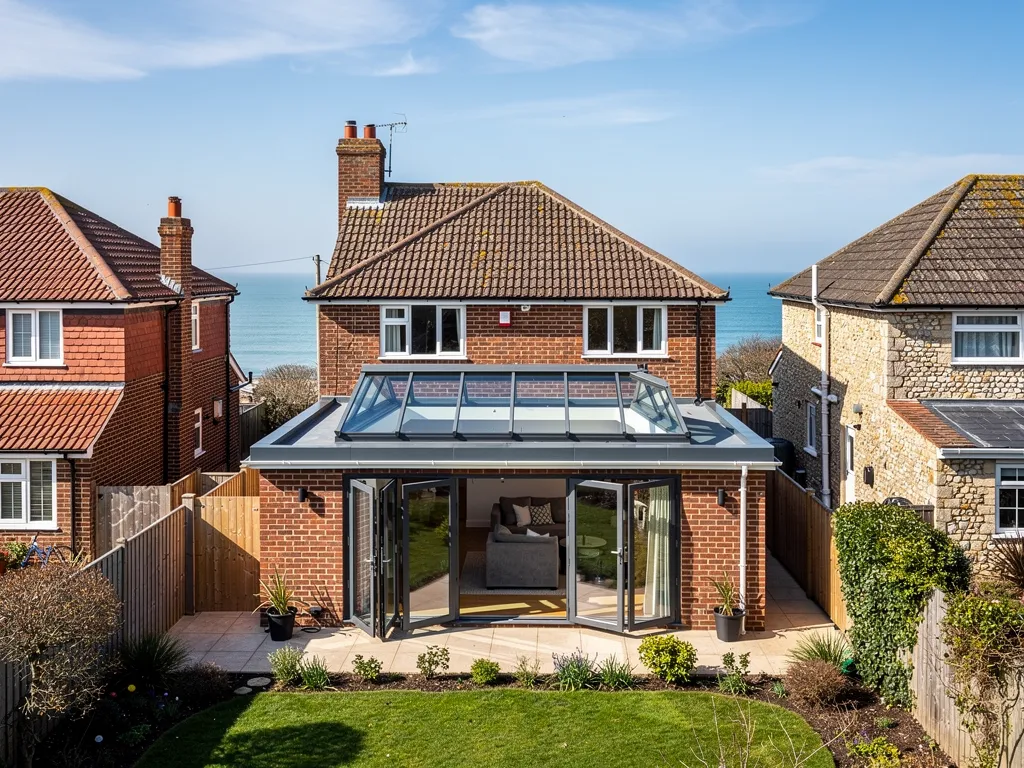
Glass roof lantern on a flat-roofed extension seen from the garden

4.1 What fails on felt, rubber and fibreglass

Felt roofs, built up in layers of bitumen sheet, blister when trapped moisture expands in the sun, then crack along the blisters. Seams open at the edges and round outlets, and the felt at the upstands, where the roof turns up a wall, pulls away from the flashing above it. EPDM, a single sheet of synthetic rubber, is tough across the middle but can lift at the edges or be holed by a dropped tool. GRP, a fibreglass laminate laid wet and set hard, can crack where the timber deck beneath moves, especially over a joint between boards. Small faults on each can be repaired: a felt patch torched down over a cleaned split, a rubber patch laid with the maker's primer and tape, a GRP crack ground back and relaminated. When felt is brittle across the whole roof, or the deck under it is soft, a patch only moves the leak along.

Glass roof lantern on a flat-roofed extension seen from the garden

4.2 When a repair becomes a new covering

Replacing the waterproof membrane on a flat roof counts as renovating a thermal element under Approved Document L. Where more than half of that roof's surface is renovated, the insulation should normally be brought up to the current standard in the same job, which can raise the roof edge and change the trims. When that applies we explain it before any work is agreed, and we handle the building control notification where the work is notifiable. A full re-cover is a different job from a patch on an old roof. Flat roofing in full, from new coverings to insulation, has its own pages.

Some older garage and outbuilding roofs are corrugated asbestos cement rather than felt. HSE advises assuming asbestos is present in any building built or refurbished before 2000, and says asbestos cement roofs are always fragile, so nobody should stand on one. The same care applies to old fascia and soffit boards, because HSE lists external soffits among the places asbestos turns up. We check what a roof is made of before anyone climbs onto it.

Flat roof coverings: typical life and typical UK cost of a new covering

CoveringTypical lifeTypical UK cost per m²
Torch-on felt10 to 20 years (Less)£70 to £100
EPDM rubber20 to 30 years (GreenSpec)£90 to £130
GRP fibreglass25 to 40 years (Less)£95 to £150
Lead50 to 100 years (Less)£150 to £200+
Source: Less flat roof cost guide (March 2026); GreenSpec single-ply membranes; MyBuilder flat roof cost guide (updated 21/08/2026)
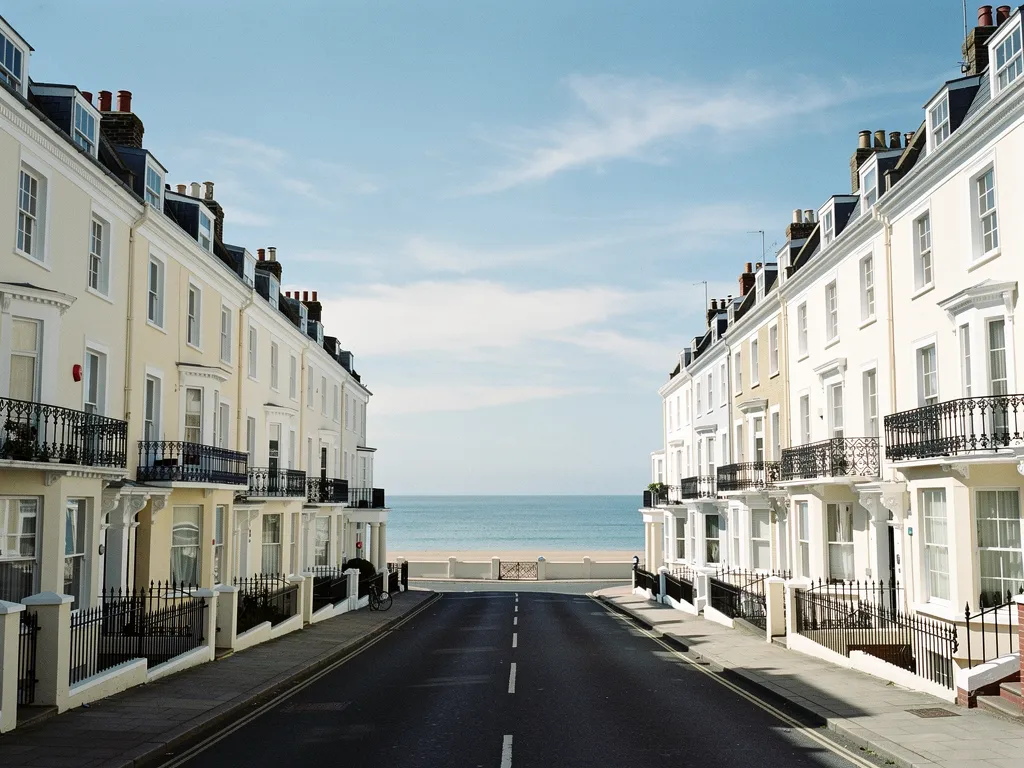
Regency terrace near the seafront with grey Welsh slate roofs

Chapter five

Repair now, or replace the whole slope?

A repair suits a roof that is sound around the fault; replacement makes sense once it is not.

The right job is the smallest one that properly fixes the fault. For a slipped slate, a cracked tile, a lifted flashing or a short length of ridge, that is a repair, and it can give a roof many more years. We recommend replacement only when the evidence says the problem is the whole roof rather than one part of it, and we show you that evidence. A repair keeps more of the original roof, which matters on older houses.

At a glance

  • Scattered faults across a slope point to tired underlay
  • Typical lifespans depend on exposure and workmanship
  • Like-for-like repairs do not usually need planning permission

Note Under Approved Document L Table 4.3, an existing roof worse than 0.35 W/(m²·K) is upgraded towards 0.16 when renovated.

Row of post-war hipped bungalows with tiled roofs on a Worthing street

5.1 Signs the slope has worn out

The clues are in the loft and on the covering. Felt underlay that has turned brittle and torn between the rafters no longer catches the water that gets past the tiles. Battens that are soft or split with rot cannot take new fixings. Nails that have rusted through under one slate have usually rusted under its neighbours too, so slates begin slipping all over the slope instead of in one corner. Concrete tiles that have lost their surface and turned porous, or clay tiles flaking after hard frosts, mean every patch sits next to the next failure. When we see several of these together, we tell you, show you the photographs and explain both routes: a repair that buys time, or a new roof. Our roof replacement pages cover the second route in full.

Row of post-war hipped bungalows with tiled roofs on a Worthing street

Age helps the decision but does not settle it. Marley says concrete tiles are expected to last around 60 years, MyBuilder puts clay tiles at 40 to 60 years before they need replacing, and by MyBuilder's account a well-installed natural slate roof can last 80 to 100 years or more. Those figures depend on exposure, workmanship and the quality of the original installation, and they are never promises. A roof well inside its range with one clear fault is a repair. A roof near the end of it with faults on every slope is usually better replaced, because repeated callouts add up to more than the work they put off.

Partial re-roofing sits between the two. Where one slope, often the one that takes the weather, has failed and the others are sound, that slope alone can be stripped and re-covered on new underlay and battens, with the sound tiles or slates reused and the shortfall matched as closely as possible, which keeps the look of the house. The choice runs from a small repair to full replacement, and the survey decides which.

What people sayOnce a roof has leaked twice, the whole thing needs replacing.

What is trueTwo leaks can come from two separate faults, each repairable; replacement is due when underlay, battens or fixings have failed across the slope.

A roof well inside its expected life, with one clear fault, needs a repair.

5.2 Permission for repairs and part re-roofs

Like-for-like repairs do not usually need planning permission, because they do not materially change how the building looks. On a listed building, or in the few places where an Article 4 direction covers roof materials, check with the local planning team first. For Building Regulations, the Planning Portal says a building control application is not normally needed when less than 25 per cent of the total building envelope and less than 50 per cent of the roof is affected. Beyond that, or with a new covering 15 per cent or more heavier, approval applies. Bats and nesting birds are protected and roof work can disturb both, so we look before we lift. Our guide to repairs on a listed roof covers consent.

Chapter six

Reading the price of a roof repair

National guides give a range; access, the covering and the survey decide where your roof sits.

For a typical UK roof repair, MyBuilder's guide gives a range of £150 to £1,500, with minor work at £100 to £300, moderate repairs at £500 to £1,000 and major repairs at £2,500 or more. Checkatrade's roof repair guide prices the work by area instead, from £90 to £120 per m² on concrete tiles up to £150 to £220 per m² on natural slate, excluding VAT. These are national figures, not ours, and they are a starting point for a conversation rather than a price for your roof.

At a glance

  • MyBuilder puts roof repairs between £150 and £1,500
  • Scaffolding on a highway needs a council licence
  • Check that any quote includes VAT and scaffolding

6.1 What moves the figure

Access is often the biggest factor. A slipped tile on a single-storey extension can be reached from a ladder or a small tower. The same tile on the front slope of a three-storey Victorian house on a busy Worthing street needs scaffolding, and MyBuilder puts a standard two-storey scaffold at around £850 to £1,200, with a chimney scaffold at £400 to £900. Where the scaffold stands on the public highway, the scaffold firm also needs a licence from the county council, which wants 10 working days' notice at minimum; in Brighton and Hove the city council issues its own. The covering matters as well: natural slate, handmade clay and lead cost more to match than concrete interlocking tiles. So does what lies underneath. A tile repair that uncovers rotten battens or perished underlay grows into a bigger job, which is why we look in the loft before we price anything at all.

6.2 Comparing quotes fairly

Ask every roofer the same questions. Does the price include VAT, charged at the standard 20% rate? Does it include the scaffolding and any licence? Is the waste taken away? Has the roofer been in the loft, or priced the job from the ground? A figure written after a proper look is worth more than a lower one guessed from the drive. We keep our prices good and fair, and a quote from us is one figure for the whole job. The roof repair cost guide goes deeper into the national figures.

Once the repair is done, keeping it sound is simple maintenance: clear gutters and valleys of leaves each autumn, look up at the ridge line and the verges after a big gale, and have any slipped tile seen to early, before water reaches the battens. A small fault caught in spring is a smaller bill than the same fault found after a wet winter on a West Sussex roof.

Typical UK repair costs by covering, per m²

  • Concrete tiles£90 to £120 per m²
  • Clay tiles£110 to £160 per m²
  • Natural slate£150 to £220 per m²
  • Bitumen felt flat roof£100 to £140 per m²
  • GRP flat roof£130 to £180 per m²

National figures before VAT from one published guide; they are not our prices. Source: Checkatrade roof repair cost guide, table last updated June 2026.

Roof repair questions from Worthing homeowners

How much should I pay for a roof repair in Worthing?

MyBuilder's national guide puts roof repairs at £150 to £1,500, with small jobs such as a few replaced tiles at £100 to £300 and moderate repairs at £500 to £1,000. It lists re-bedding or replacing ridge tiles at £300 to £600. Where your own job falls depends on access, the covering, the height of the roof and what lies underneath. We confirm the figure in writing once we have seen the loft and the roof.

What is a fair hourly or day rate for a roofer?

Checkatrade's roof repair guide gives roofers' rates of £35 to £45 an hour, or £280 to £360 a day, before VAT, and MyBuilder's new roof guide gives a day rate of £250 to £300. Hourly rates are only a rough guide, because a repair also needs material, access equipment and travel. A price for the finished job tells you far more than a rate.

How can you spot a dodgy roofer before agreeing to a repair?

Be wary of a self-styled roofing specialist who knocks after a storm, points to damage you cannot see, wants to start straight away or asks for cash up front. An experienced roofer will look in the loft, show you photographs of the fault, put the price in writing and give you a number you can call back. For work agreed at your home you normally have 14 days to cancel.

Can I get a grant to repair my roof?

Few homes qualify. The national energy schemes pay for insulation and heating rather than roof repairs. Adur & Worthing Councils run Repair Grant Assistance of up to £5,000 for owners who receive an income-related benefit, have owned the home for at least 12 months and face a serious housing hazard. If money is tight or you are disabled, ask the councils' Housing Grants Team before any work starts.

Is scaffolding part of the price for a repair?

When a repair needs scaffolding, it is included in the quote, so the one figure covers it, and we tell you why it is needed. Plenty of small repairs on bungalows, porches and extensions can be done from ladders or a tower instead. Where a scaffold stands on the pavement, the scaffold firm applies for the highway licence, and the notice period needs to be built into the timing.

Can I send photos of a leak before you visit?

Yes, and it helps. A photo of the ceiling stain, one of the roof from the street or garden if you can take it safely, and a note of the weather when the leak appears let Watertight Worthing Roofing plan the visit. Photos from the ground rarely show the actual fault, so we still look in the loft and at the covering before we quote. Please stay off ladders and the roof itself.

Guides to leaks, stains and roof repairs

Plain answers on leaks, ceiling stains, costs and repairs, written for the roofs of Worthing, West Sussex and the coast from Littlehampton to Brighton, Hove and inland to Horsham.

Guides

Quick answers

Tell us about your roof

Describe what is happening and we will call you back to arrange a visit.

  • Photographs of what we find
  • A written quote with one total price
  • Or call 01903 299063
Call Get a quote