Roofers in Henfield

Henfield sits on a Greensand ridge east of the Adur, with clay peg tile on older roofs, some Horsham stone and plenty of slate. Our survey covers each kind, with pictures.

Three kinds of Henfield roof, and where they let go

  • A half-hipped clay tile roof

    Hipped and half-hipped peg-tile roofs

    Horsham District Council's appraisal says many older Henfield roofs are hipped or half-hipped, usually covered in peg tiles.

    Read more about Hipped and half-hipped peg-tile roofs

    A half-hip clips the top of a gable into a small sloping end, adding short hips that need sound fixing.

  • A Horsham stone slab roof

    Horsham stone on the High Street

    The appraisal records Horsham stone slates less often than peg tile, with Tipnoak on the High Street as one example and thatch rarer still.

    Read more about Horsham stone on the High Street

    Stone slates are laid in diminishing courses, so a sound repair starts with sorting the roof's own stone.

  • A Welsh slate roof with a stack

    Slate on nineteenth-century houses

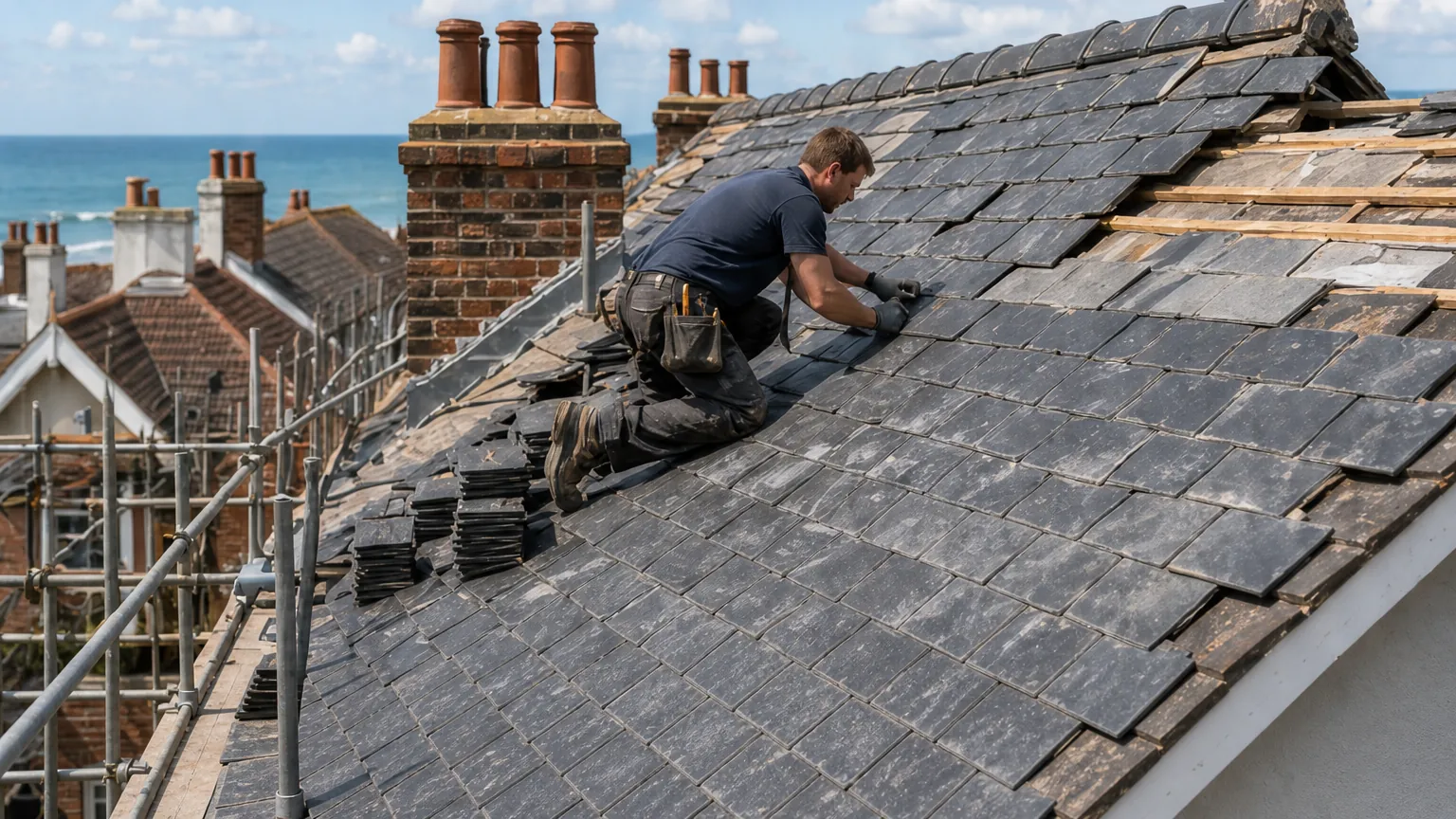
    The appraisal says slate is nearly universal on Henfield's 19th-century buildings. A slate roof usually fails at the nail rather than the stone, so we look for slipped slates, rusted fixings and cracked ridge tiles before anything else.

Street map of Henfield, north-east of central Worthing, with a pin on the town.

What to look up before a Henfield re-roof

Planning authority
Horsham District Council
Councils
Horsham District Council and West Sussex County Council
Conservation area
Henfield Conservation Area, designated 1973
Article 4
None of Horsham District Council's directions falls within the conservation area
Parish church
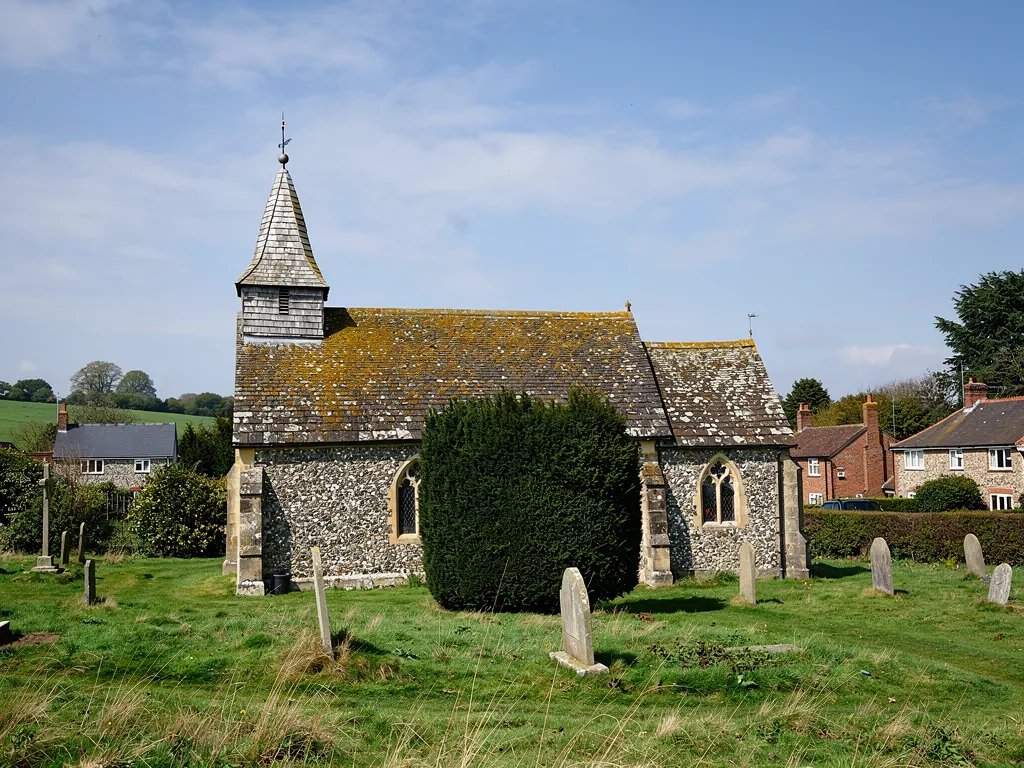
St Peter, part local sandstone and part flint with Caen stone dressings, extensively rebuilt in 1870 and 1871
From central Worthing
13.1 road miles, north-east, about 26 minutes by car

Henfield roofs

Peg tile, stone and slate above the Adur

How the older village was roofed decides where a Henfield roof fails, what a sound repair copies and who must be asked first.

Chapter one

Half-hips, hips and peg tiles in Henfield

Horsham District Council describes hipped and half-hipped roofs in peg tile, so the hips and ridges are where a Henfield survey begins.

Horsham District Council's Henfield Conservation Area appraisal says that many roofs on older buildings in the village are hipped or half-hipped, usually covered in peg tiles. A hipped roof slopes on all four sides, with a hip, the angled ridge where two slopes meet, running down each corner. A half-hipped roof stops short of that: the top of the gable wall is clipped back into a small sloping face, so there is a short hip above an otherwise vertical end. Either shape adds hips and short ridges beyond what a plain gable has, and every one is a place where tiles end and something else begins. Peg tiles are small clay plain tiles, named for the pegs that once held them, laid in overlapping courses, so a single slope carries a great many joints.

At a glance

  • Older roofs are often hipped or half-hipped
  • Peg tile is the usual covering, says the council
  • Hip tiles are now fixed mechanically as well
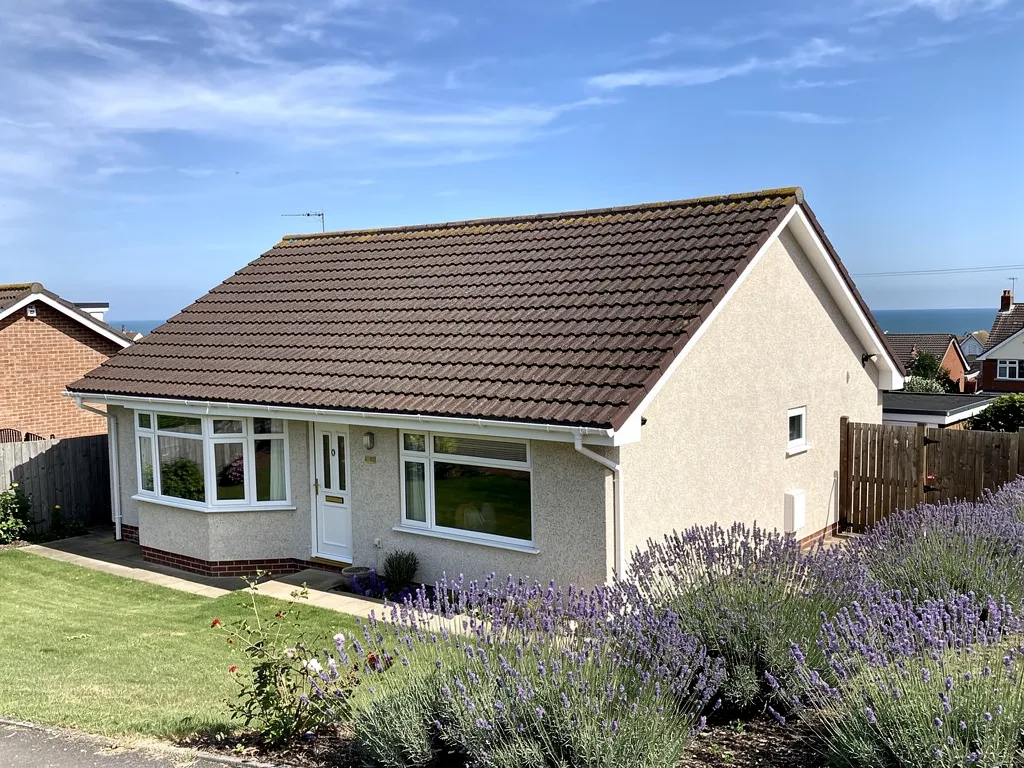
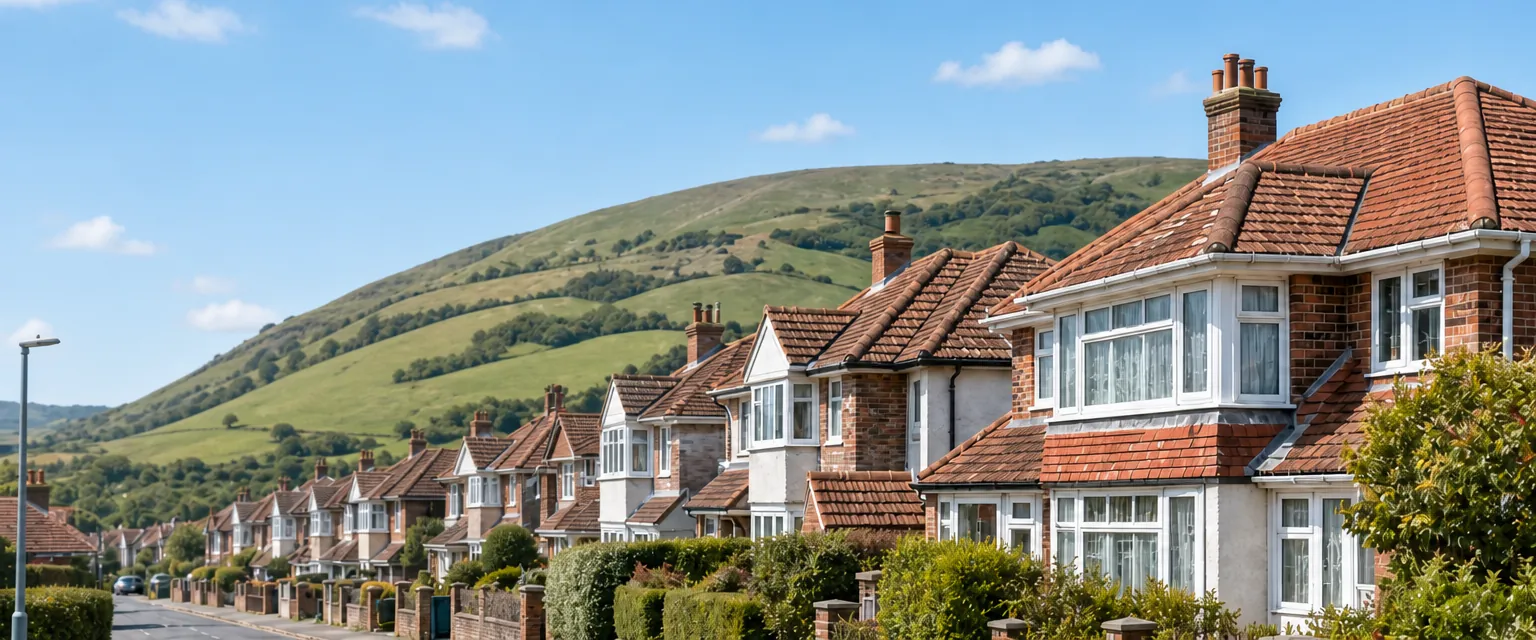
Post-war hipped bungalow with a new tiled roof

1.1 What tends to loosen first

On these roofs the bedding beneath the hip tiles and the tiles along the verge, the edge where a slope finishes at a gable, are the earliest casualties. Mortar cracks with frost and sun, and a loose hip tile can creep a long way before anyone sees it from the lane. Beneath, small clay tiles depend on their nibs and fixings, so a slope can look whole from the road while individual tiles have slipped. We check from the ladder and from the ground, then go into the loft to look for daylight along the hips and for damp rafters, and every fault is photographed for the written quote.

Post-war hipped bungalow with a new tiled roof

1.2 Fixing hips to the current standard

Under the 2014 revision of BS 5534, a hip tile no longer depends on its mortar bed alone; a clip or screw secures it too. Marley adds that the 2018 amendment warns its advice may be unsuitable for heritage roofs, and says to consult the local planners and a heritage specialist before starting. On an older Henfield cottage that matters, so we start from the tiles already there. Sound hip tiles are cleaned, re-bedded and secured again, with a clip or a screw going into the batten or rafter beneath. A dry-fix hip, where clips and a ventilated strip replace the mortar bed, is an option where it suits the roof, and BS 8612:2018 is its test specification. Cracked tiles are replaced with clay of matching size and colour. Our ridge tile repairs page sets out the choices for cracked, loose and re-bedded tiles, and the same approach carries along the verge, where a slope meets its gable wall.

What the council appraisal records for older roofs

Roof shape
Hipped or half-hipped on many older buildings
Usual covering
Peg tiles
Less often
Horsham stone slates
Less often still
Thatch
Nineteenth-century buildings
Slate, described as nearly universal

Source: Horsham District Council, Henfield Conservation Area Appraisal and Management Plan, January 2018
Chapter two

Slate, Horsham stone and flint walls

Slate on the 19th-century houses, peg tile and stone on older ones: a repair should follow the roof it joins.

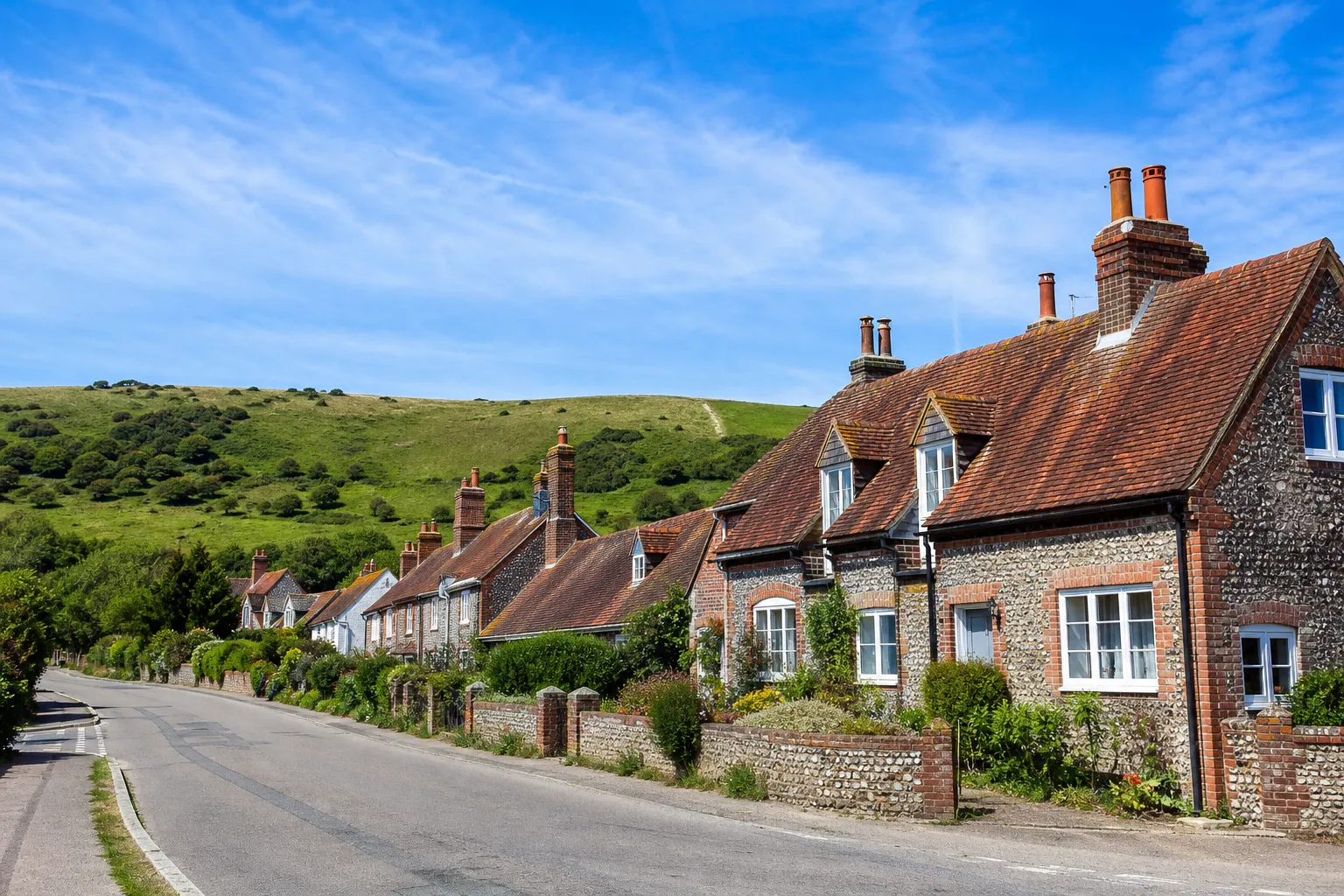
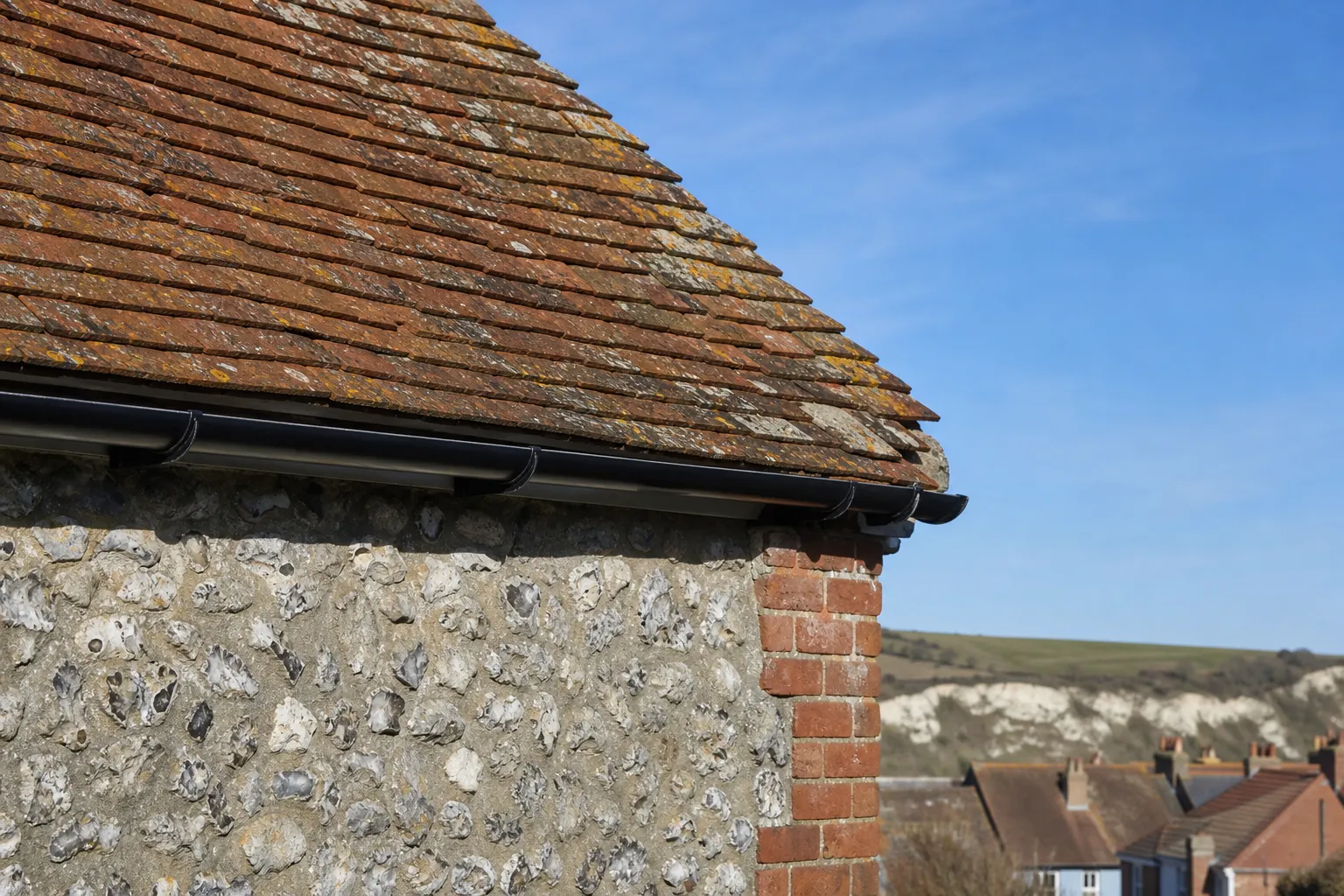
Old clay tile roof over a flint wall in a downland village

The council appraisal says slate is nearly universal as the roofing material on Henfield's 19th-century buildings, while Tipnoak on the High Street has a Horsham stone slate roof. Slate is long-lived, and MyBuilder puts the life of a well-fitted slate roof at 80 to 100 years or more. Where one fails early, the fault is nearly always in the fixings. The iron nail rusts, the slate slides down its course, and a gap opens that lets water beneath the row above. We tap and lift where we safely can, to see how many slates are still held by sound nails, because that count decides between a handful of replacements and a rework of the slope. On a pitched slate roof, a tingle, a thin strip of lead or copper that holds a replacement slate in place, is often the neat answer to a single gap. Our slate roofing page explains both routes.

At a glance

  • Slate is nearly universal on 19th-century buildings
  • Tipnoak on the High Street has Horsham stone slates
  • Flint, knapped or as nodules, is a popular wall material
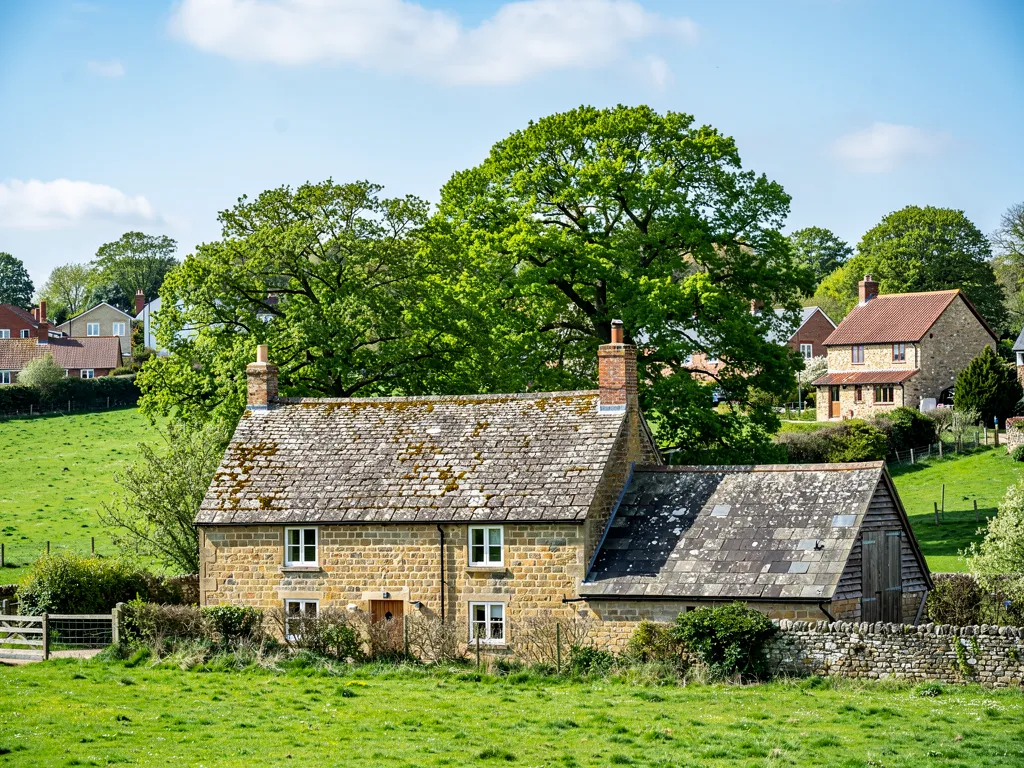
Sandstone farmhouse and barn with Horsham stone roofs in the Sussex Weald
Sandstone farmhouse and barn with stone roofs in the Sussex Weald

2.1 Horsham stone on the older houses

The appraisal's Horsham stone examples include Cedar View and Old Mill House, as well as St Peter's Church. For stone roofs, the Stone Roofing Association ranks the options: reuse the stone already on the roof first, steer clear of slates taken off other buildings wherever possible, and use new Horsham slates for any shortfall. We lift the slabs, grade them by size and set them out again in diminishing courses, the biggest slabs nearest the eaves. Apple Tree Cottage, a single-aisled hall house possibly of the 14th century, and the late 16th-century George inn show how old some Henfield timbers are. Before work on any building of that age, we ask whether it is listed, since listed building consent applies to any repair made in non-matching materials.

Sandstone farmhouse and barn with Horsham stone roofs in the Sussex Weald
Sandstone farmhouse and barn with stone roofs in the Sussex Weald

2.2 Flint walls and the lead against them

The appraisal calls flint a popular building material, used knapped, which means split to show a flat dark face, and as nodules, with red brick dressings. St Peter's is built partly of local sandstone and partly of flint with Caen stone dressings, and was extensively rebuilt in 1870 and 1871. While it remains an Anglican parish church in use, it sits under the ecclesiastical exemption, and its roof is dealt with through the Church's faculty process. On houses, a lead flashing tucked into a flint joint can lift where the face is uneven, and bats and nesting birds are protected in old roof spaces.

What people sayA century-old slate roof with one slipped slate is finished.

What is trueSlate commonly fails at its nails, so a survey counting the sound fixings often shows a targeted repair is enough.

Chapter three

Repair or re-roof on the Greensand ridge

Age, covering and condition decide between patching a Henfield roof and stripping it, and the survey shows which.

Henfield lies north of the South Downs, chiefly on the east bank of the River Adur, with its church on a ridge of Lower Greensand above the Weald clay. None of that changes the choice facing an owner with a tired roof: patch it, or strip and recover. We settle it on evidence. We count slipped and cracked tiles or slates, test nails and battens, inspect the underlay and trace how far damp has reached into the timbers. A fault confined to one spot points to a repair, while faults on every slope point to a re-roof. Any roof under trees collects moss and leaf litter in its valleys, and clearing a blocked valley or gutter is sometimes the entire fault. Either way, you get our recommendation with photographs of your own roof, and what we propose is the smallest job that deals with the cause.

At a glance

  • Horsham District Council is the planning authority
  • A larger re-roof can need building control approval
  • The county council licenses road-side scaffolding
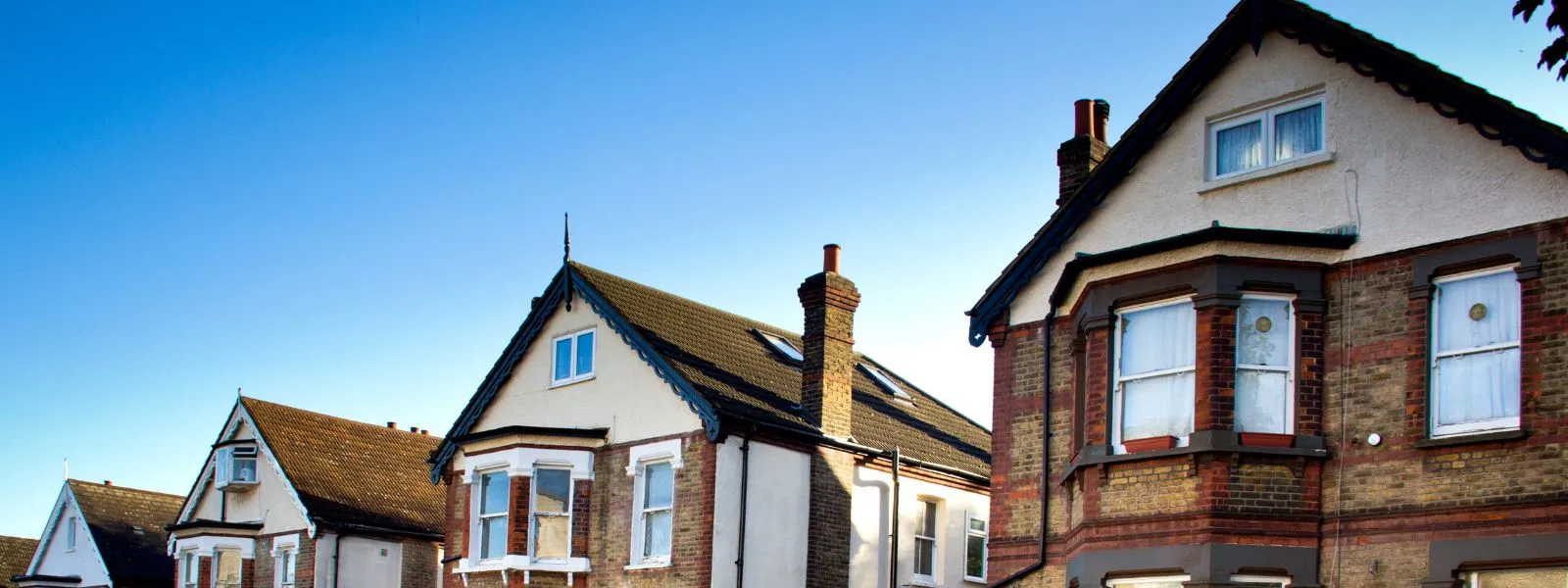
Edwardian semis with concrete tile roofs, brick chimneys, rooflights

3.1 When Building Regulations apply

The Planning Portal says repairs and re-covering normally need no building control application where less than 25 per cent of the total building envelope and less than 50 per cent of the roof is involved. Go beyond those limits, alter the structure, or fit a covering at least 15 per cent heavier than before, and approval is needed; a thermal upgrade under Part L can follow. You can apply through a registered building control approver or the council's building control team. When the job is notifiable, we explain the steps and make the notification for you. Inside the conservation area, Horsham District Council can confirm whether anything beyond like for like triggers permission, and our roof planning permission guide covers dormers and roof windows.

Edwardian semis with concrete tile roofs, brick chimneys, rooflights

3.2 Scaffold, licences and the total

Scaffolding that stands on the road or pavement requires a highway licence, which West Sussex County Council grants when the scaffold firm applies; at least 10 working days of notice are asked for, so allow for that when setting a start. Your total reflects access to the roof, the covering, its size and pitch, and what is found under the old tiles. VAT at the standard rate is charged on a new roof. The figures below are published national ranges, and the price we quote is a good, fair one. A full strip is described on our roof replacement page.

Published ranges for Henfield-type jobs

  • Moderate roof repair£500 to £1,000
  • Chimney repointing£500 to £2,000
  • Gable re-roof, semi£5,000 to £8,000
  • Hipped re-roof, semi£8,000 to £12,000

The survey leads to a written quote in one total; when comparing, confirm that VAT and the scaffold are counted. Source: MyBuilder new roof, roof repair and chimney repair price guides, updated 21/08/2026.

Henfield roof queries, from Tipnoak to the Adur meadows

Why do half-hipped peg-tile roofs in Henfield need extra care at the hips?

A half-hip adds short hips and ridges that carry bedded tiles, and bedding is where wind and frost work first. Since the 2014 revision of BS 5534, each hip tile gets a mechanical fixing beside its bedding. On an older Henfield roof we keep the existing clay where it is sound, re-bed it, add the fixing, and send you pictures of the finished hips.

Can the Horsham stone on a Henfield High Street roof be relaid rather than replaced?

Frequently. The Stone Roofing Association ranks the roof's own stone first, discourages slates taken from other buildings and prefers new Horsham slates for gaps. Slabs are lifted, graded and laid back in diminishing courses, with the largest slabs low on the slope and the smallest at the top, and any broken ones are set aside, which lets us size up the shortfall ahead of the written quote. On a listed building, get the council's view first, since stone replaced by another material is not a matching repair.

Is slate on a Henfield villa better repaired or replaced?

It depends on the nails. Slate itself can last 80 to 100 years or more, so a handful of slipped slates usually means repair with new fixings. If most of the nails in a slope are corroded, the slope has to be stripped and relaid, reusing sound slates. We lift a sample at survey and photograph what the fixings look like before we recommend either route.

Does the Henfield Conservation Area mean I need permission for a new roof?

Not as a rule. Re-covering in the same material normally falls outside planning control, and none of Horsham District Council's Article 4 directions falls within the Henfield Conservation Area. Listed buildings are the exception, and so are changes to the look of the roof, such as a different covering or new roof windows. Ask Horsham District Council early, and pass the reply to us so the survey and quote reflect it.

Tell us about your roof

Describe what is happening and we will call you back to arrange a visit.

  • Photographs of what we find
  • A written quote with one total price
  • Or call 01903 299063

10-year workmanship guarantee, in writing.

Call Get a quote