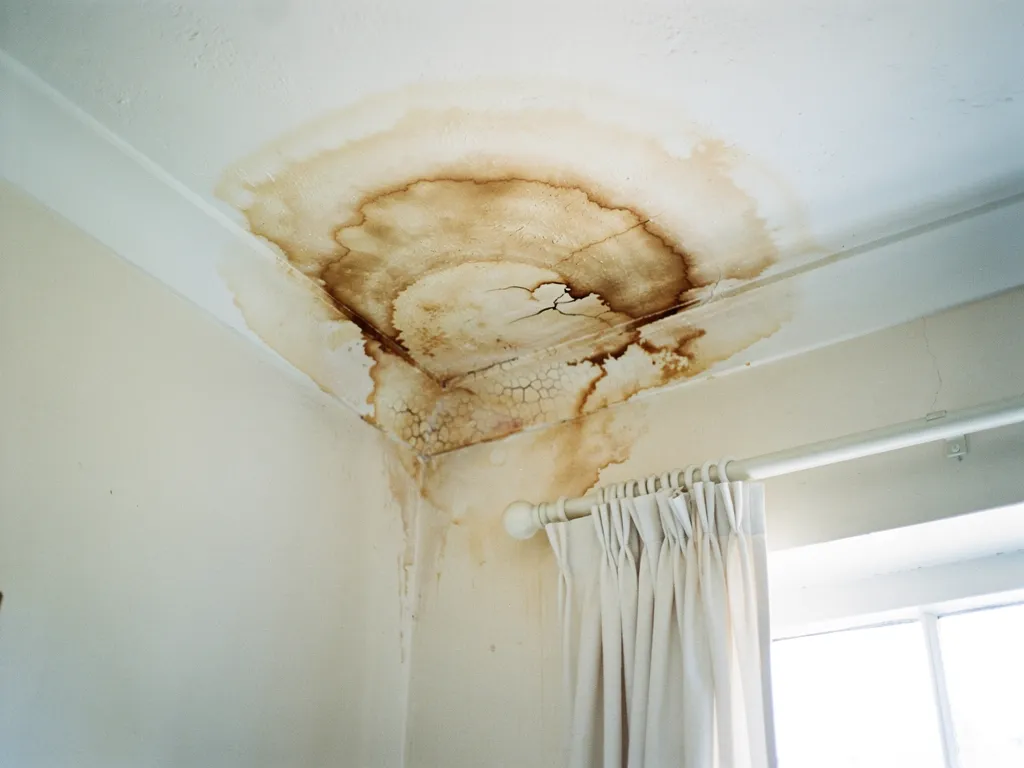
Chapter one
Industrial units, shops and flats: roof types
Most commercial roofs belong to a few families, and each family leaks, ages and is repaired in its own way.
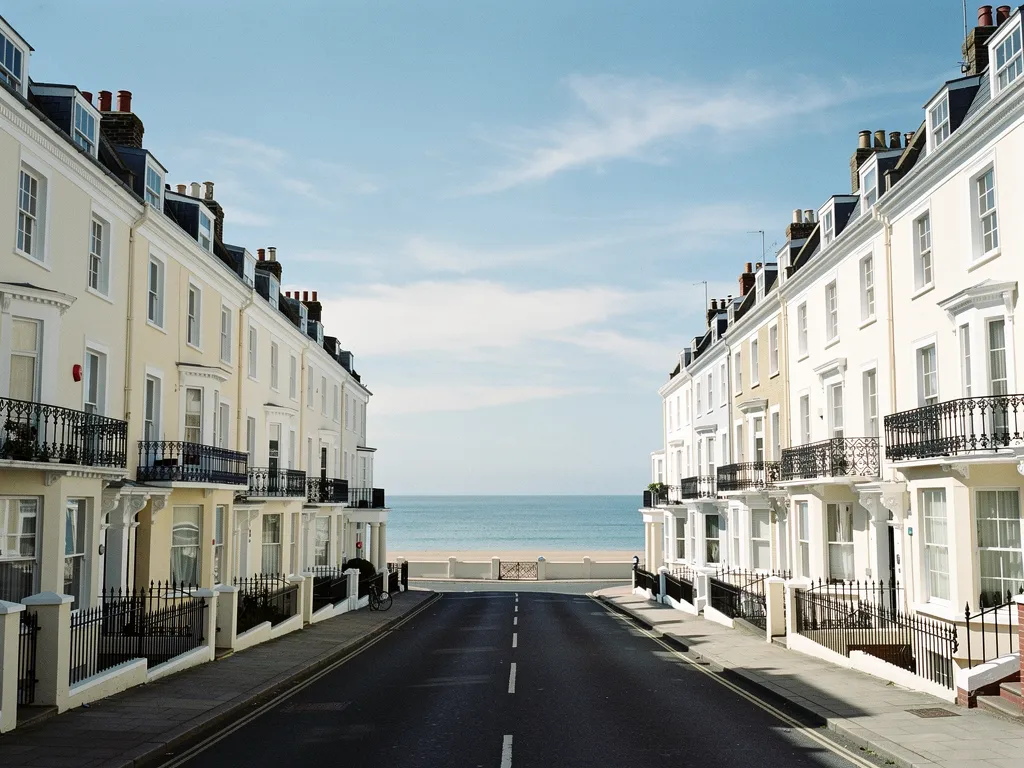
A commercial roof is a roof on a building that is not someone's home, and in Worthing that covers a wide spread. Trading estates hold warehouses and workshops under long profiled sheets. The high streets of Worthing, Shoreham-by-Sea and Littlehampton have shops with flat extensions at the back and slate or tile above the upper floors. Offices, surgeries, schools, blocks of flats and village halls add their own mix. Knowing which family a roof belongs to is the first step in working out how it fails and what a sound repair looks like.
At a glance
- Profiled sheets, flat membranes and pitched coverings dominate
- Flat roofs typically last 15 to 30 years
- The covering decides how a fault is repaired
1.1 Profiled metal and cement sheets
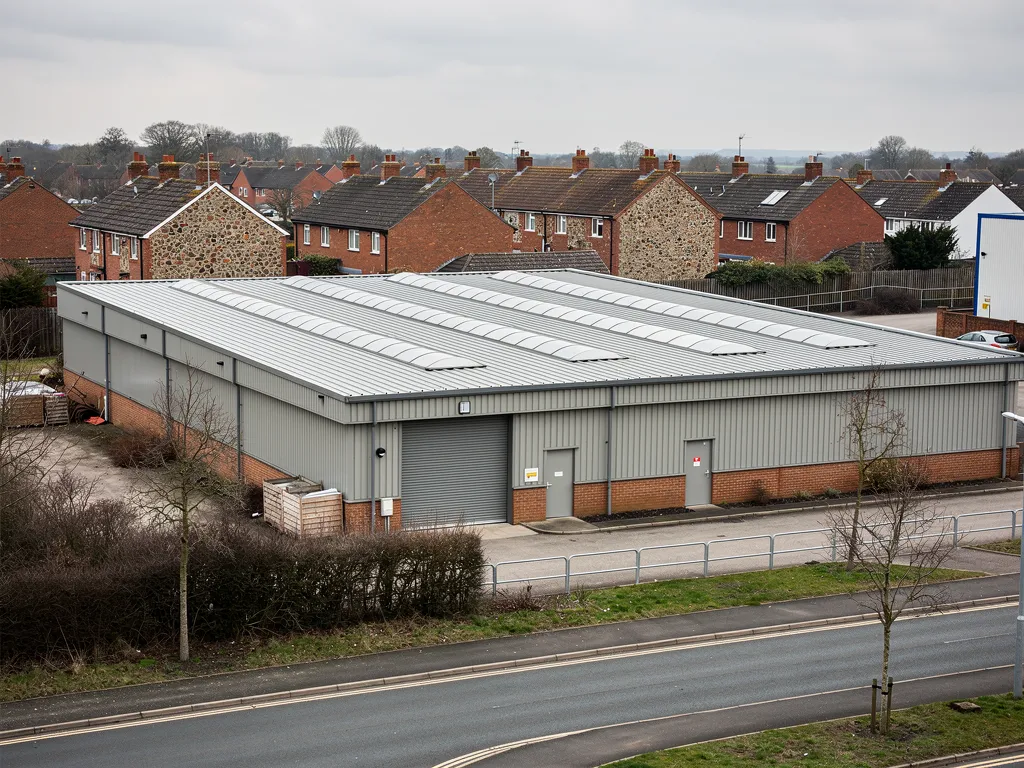
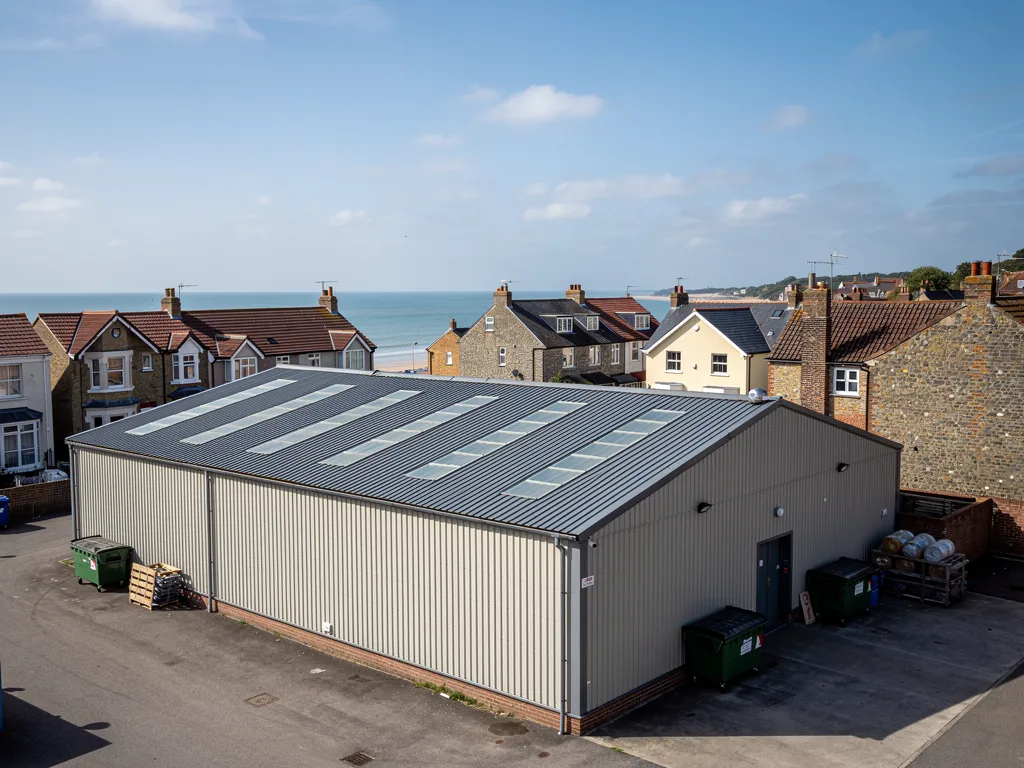
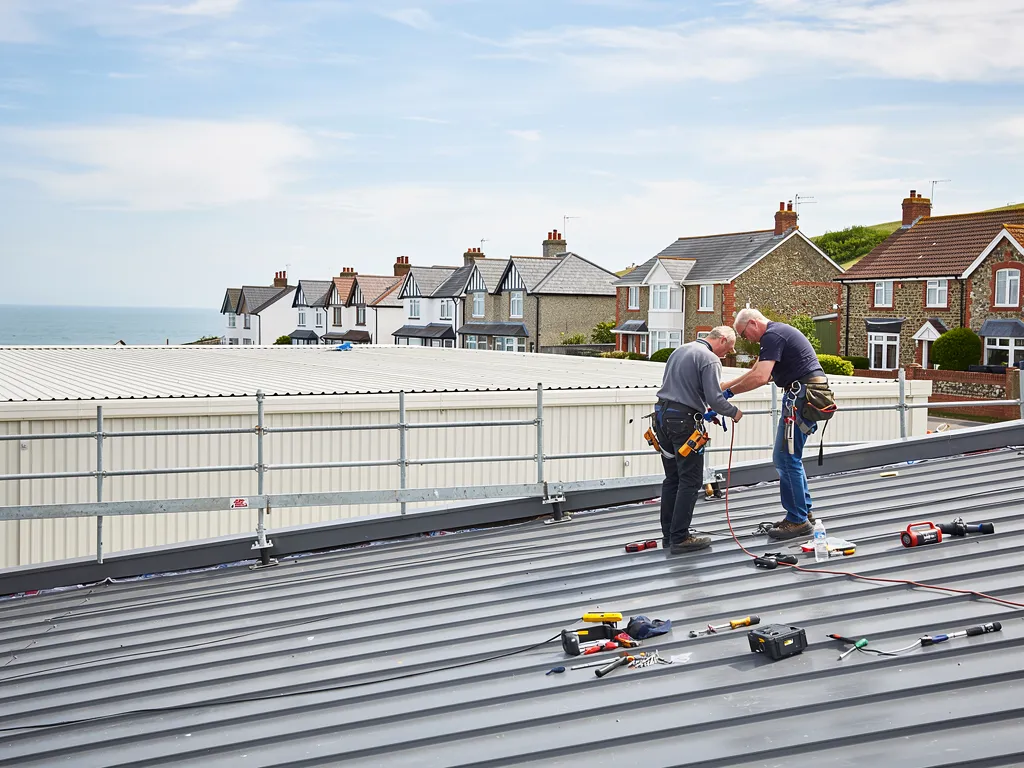
Industrial units are usually covered with profiled sheets of steel, aluminium or fibre cement, fixed to purlins, the horizontal beams that span between the building's frames. Water gets in at the laps where sheets overlap, at the fixings that pierce them, at the ridge flashings and around every rooflight. Single skin sheets have nothing behind them, so condensation forms on the underside and drips onto stock, which is easy to mistake for a leak. Built-up sheets have insulation between two skins, and a wet core can sit unseen until the lining stains. Sheets that have rusted at their edges and fixings are a recurring cause of leaks; our guide to cut edge corrosion shows what it looks like.
1.2 Flat roof membranes
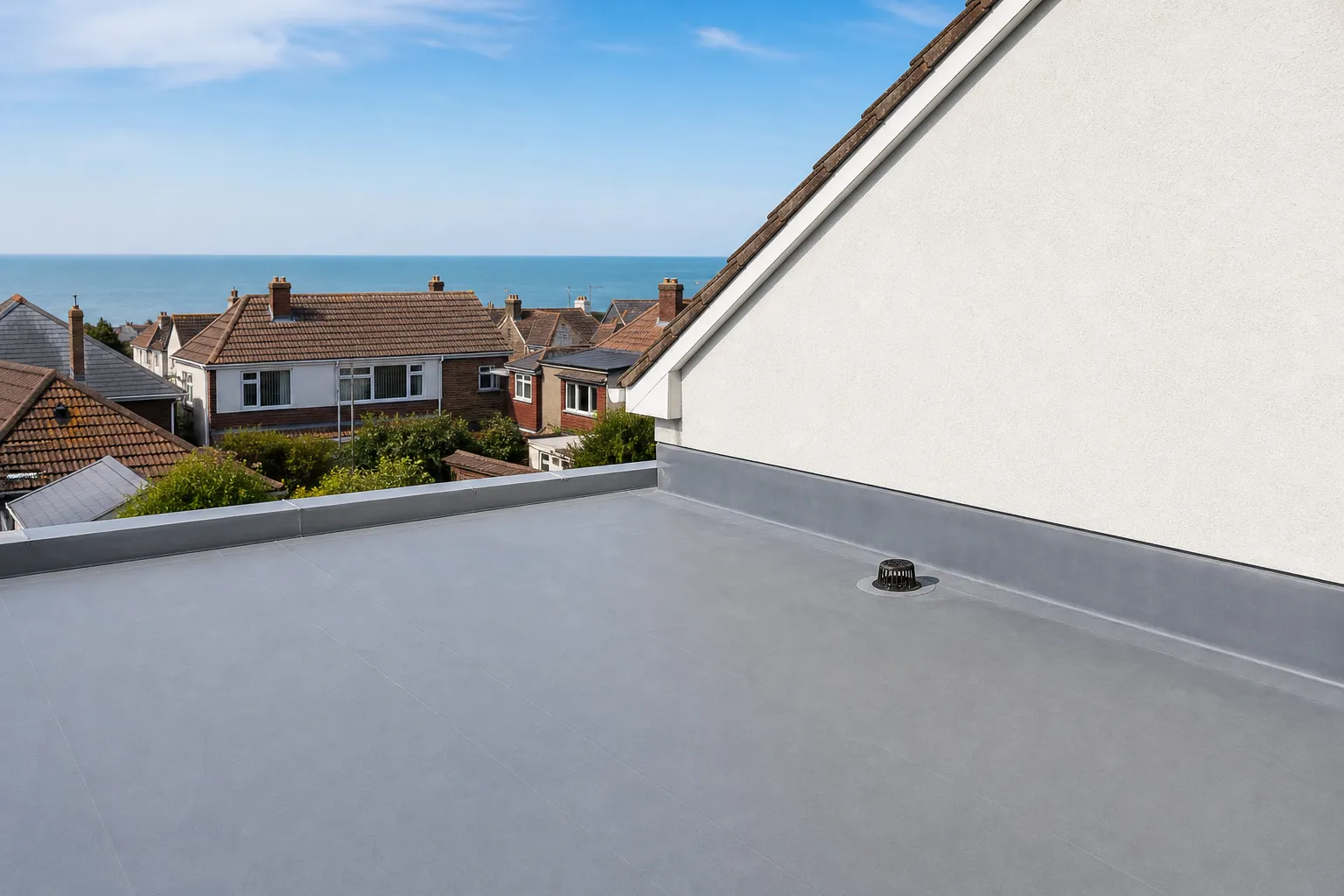
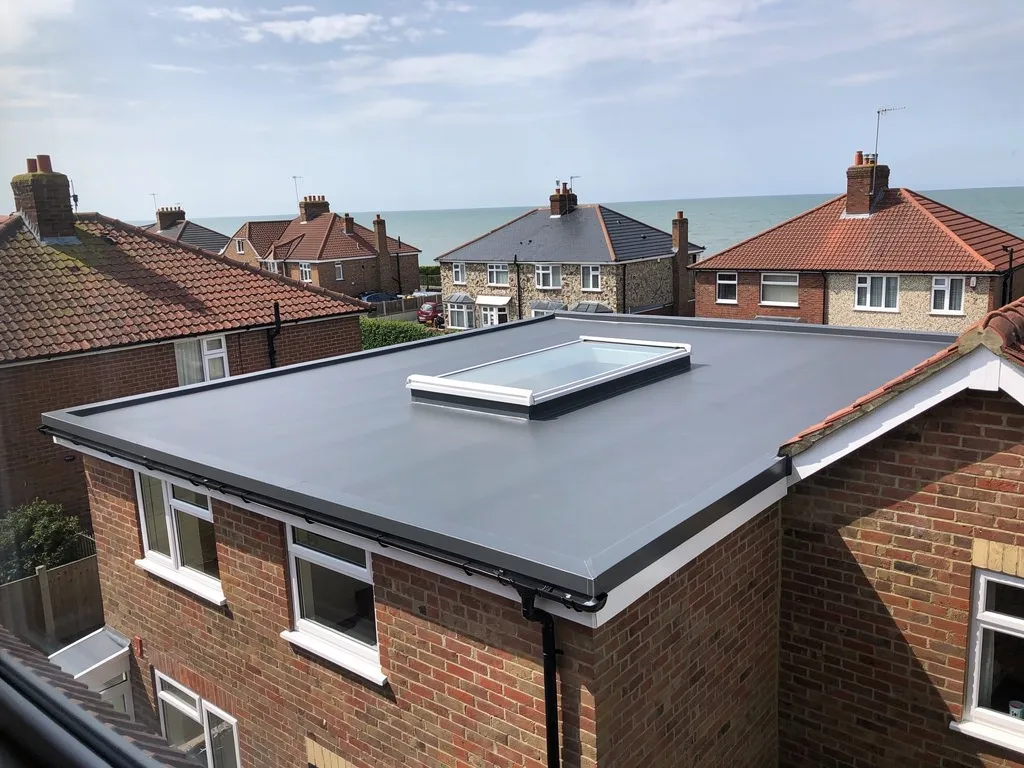
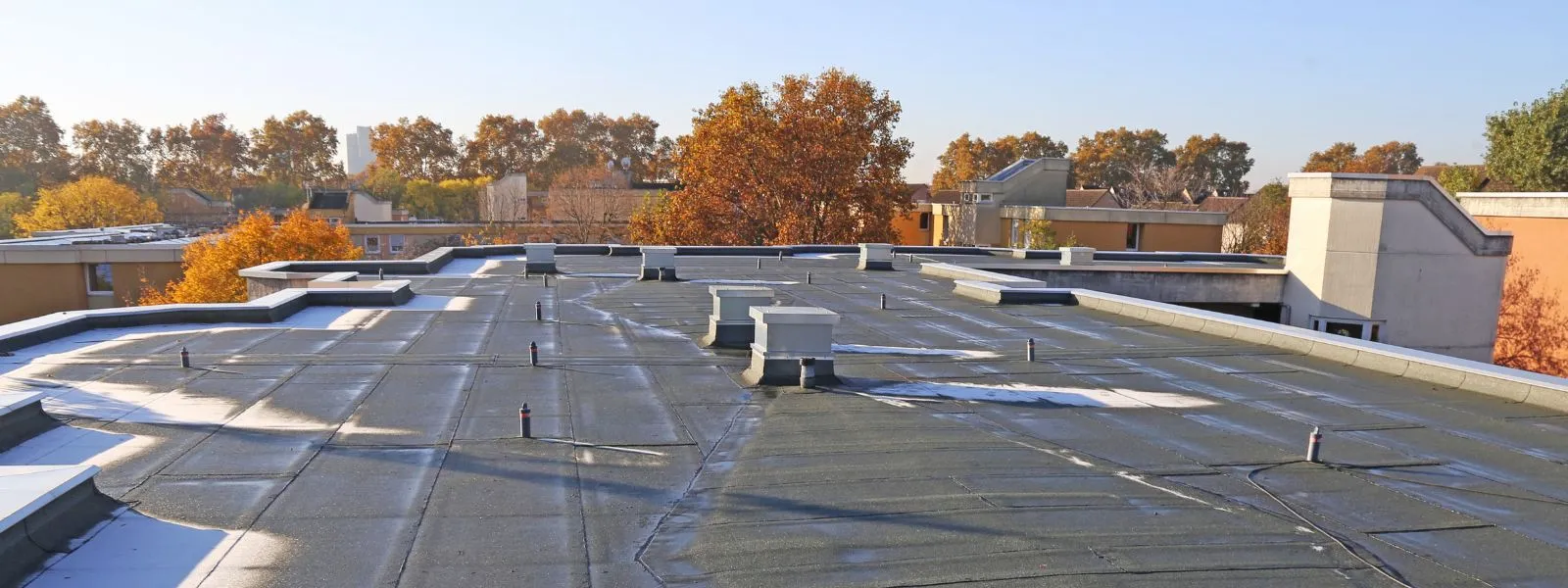
Shop extensions, offices and the roofs above flats often carry a flat covering. That might be built-up or torch-on felt, a single sheet of EPDM (a synthetic rubber) or PVC, a GRP laminate (glass-reinforced plastic, cast wet and set hard), or lead or zinc on prestige buildings. Each is mended differently. Felt is patched with new felt on a cleaned surface, EPDM with the maker's primer and tape, GRP by grinding back the crack and laminating again, and PVC by welding on a patch. When a whole membrane has gone brittle or the deck beneath is soft, patching only moves the leak along, and the choice shifts to a new covering. Our flat roofing page covers coverings in full, and the guide to types of commercial roof sets out the options side by side.
Flat roof coverings: typical life as published
| Covering | Typical life |
|---|---|
| Torch-on felt | 10 to 20 years |
| EPDM rubber | 20 to 30 years or more |
| GRP fibreglass | 25 to 40 years |
| Lead | 50 to 100 years |
| Zinc | 60 to 100 years |
Which family a roof belongs to decides how it fails and how it is mended.
1.3 Pitched roofs above shops, pubs and halls
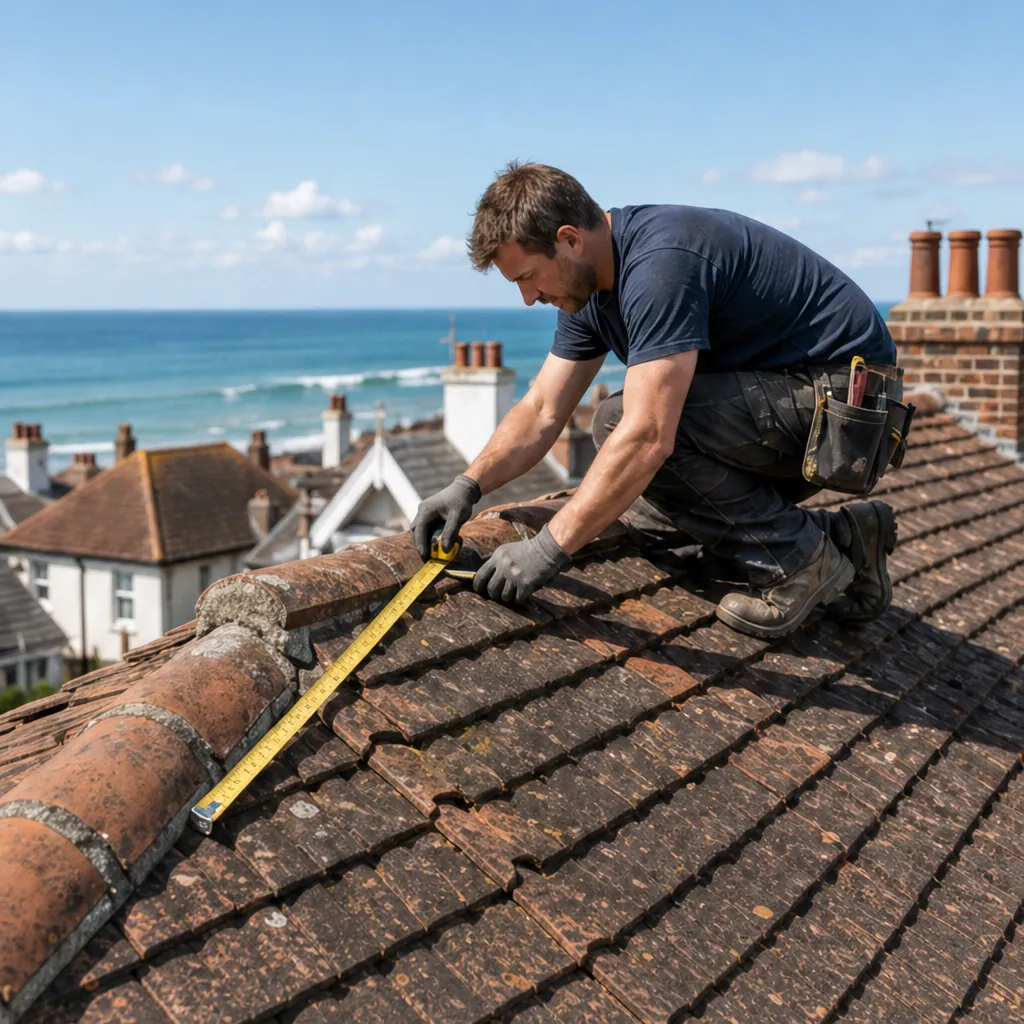
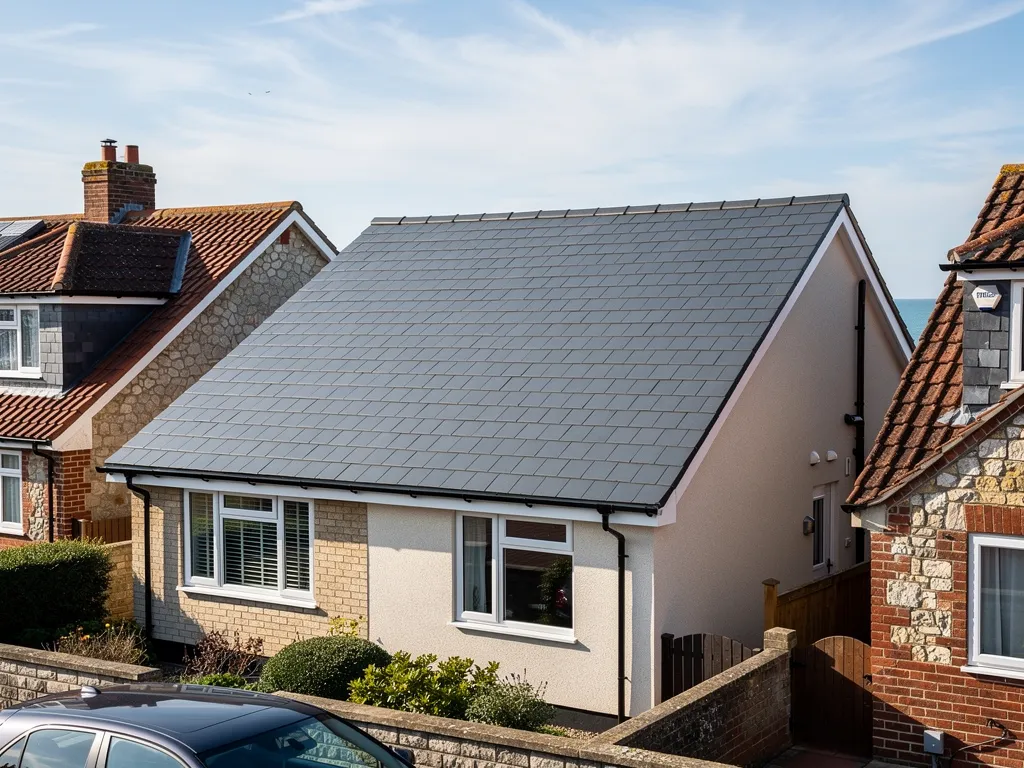
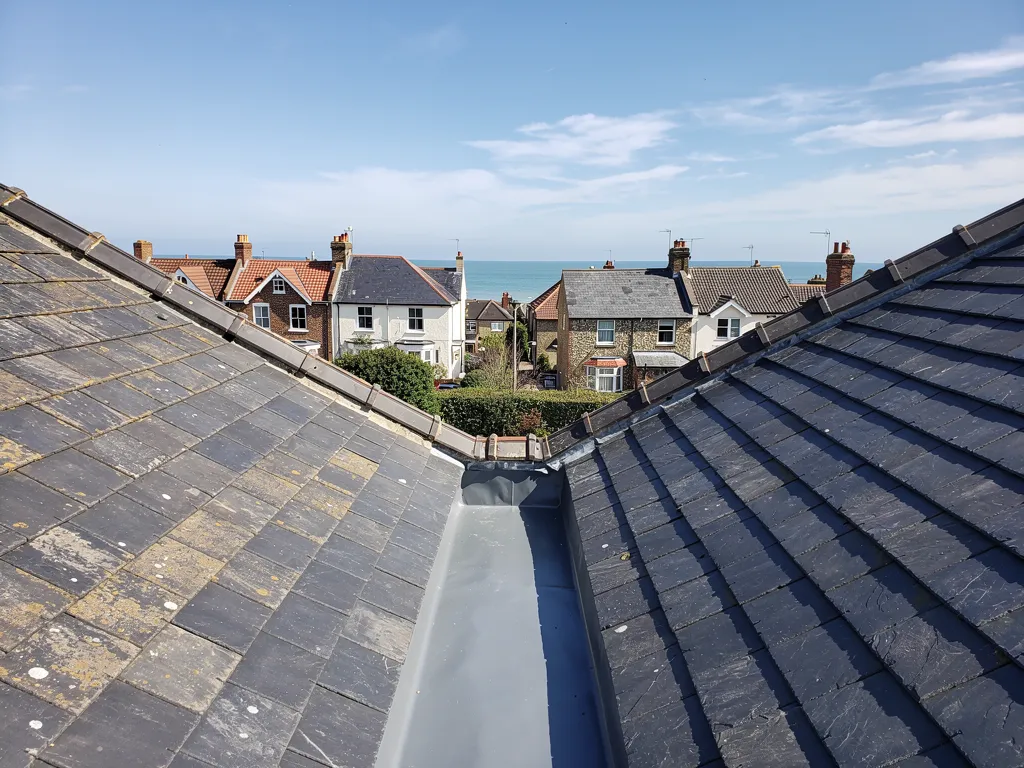
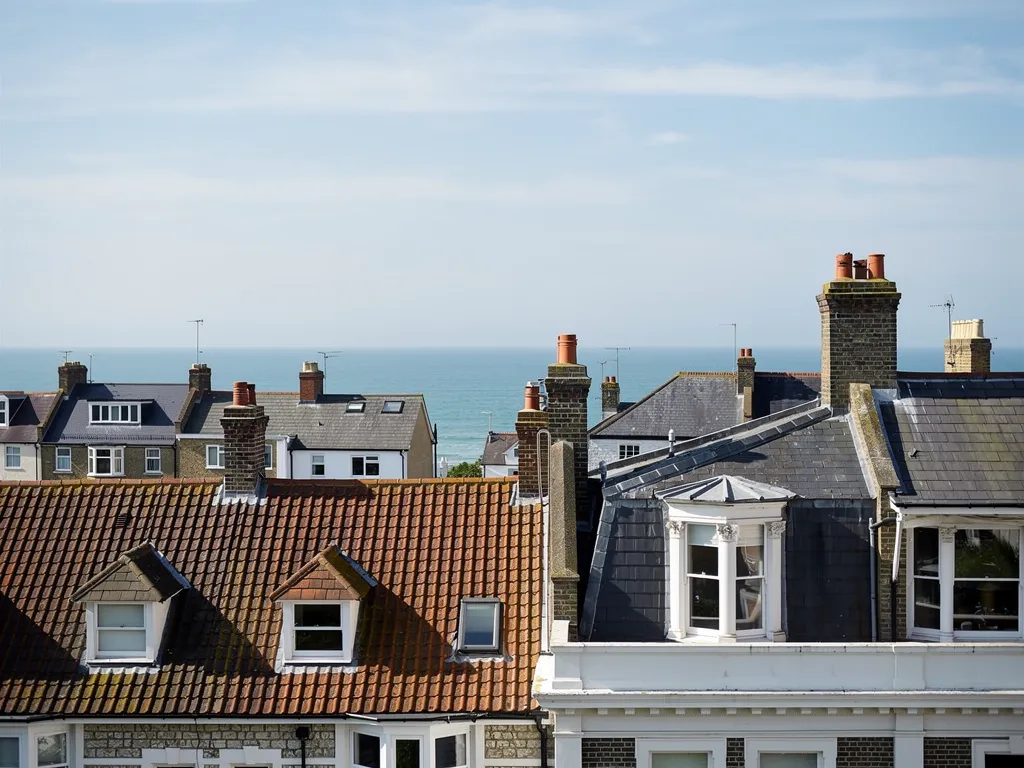
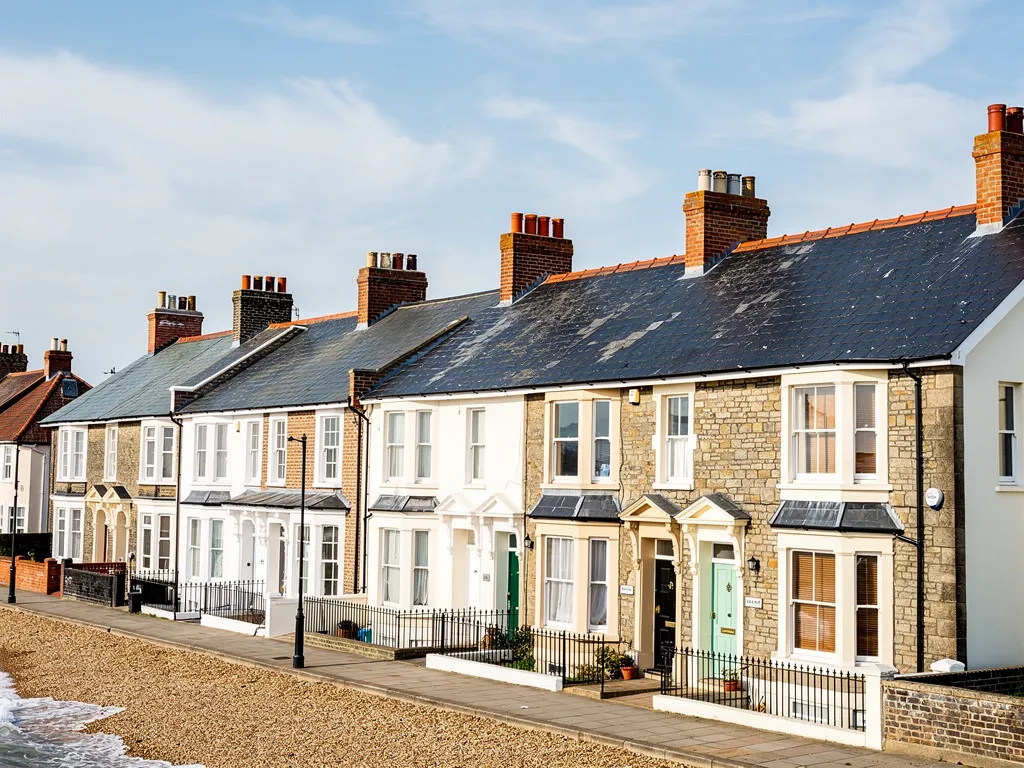
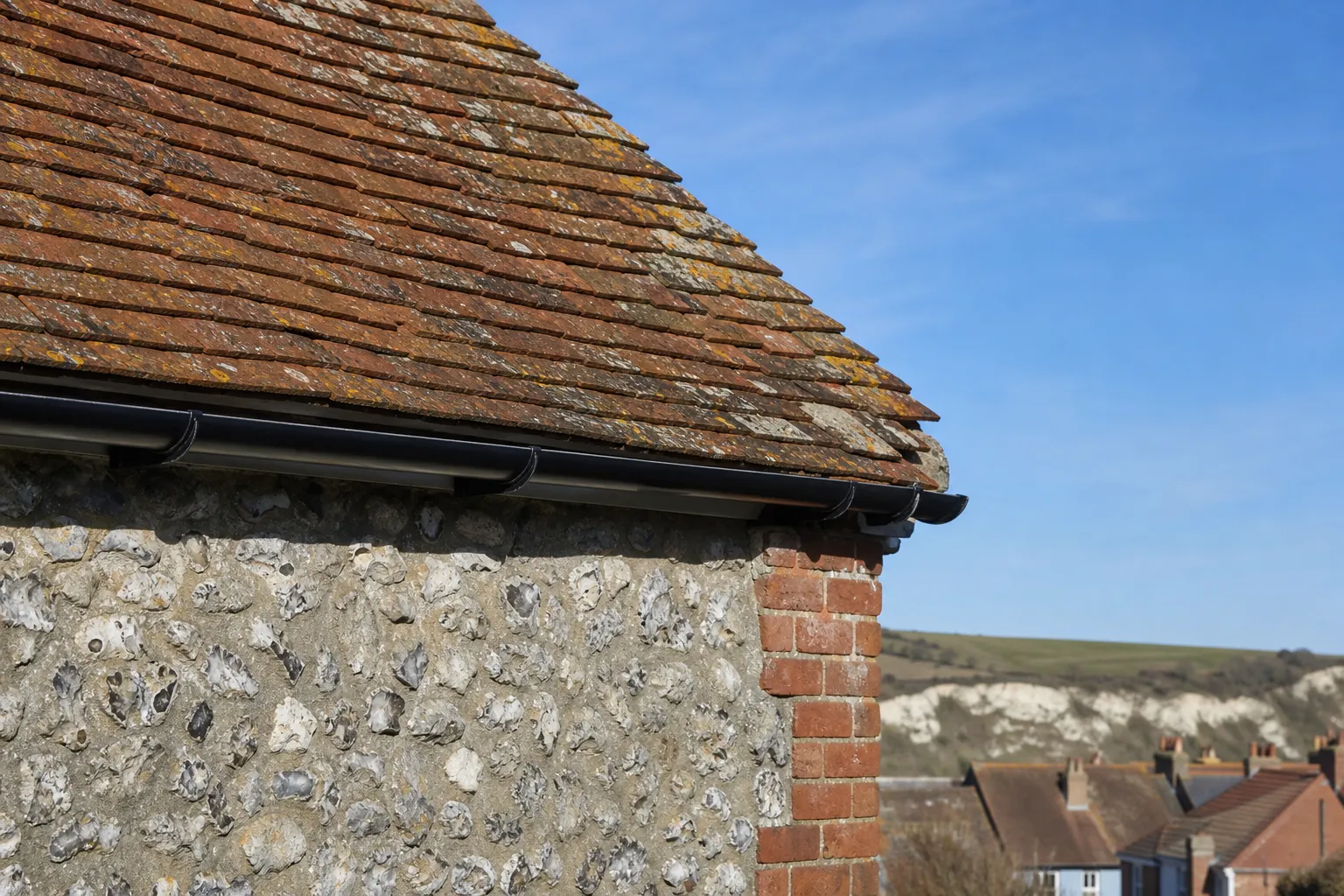
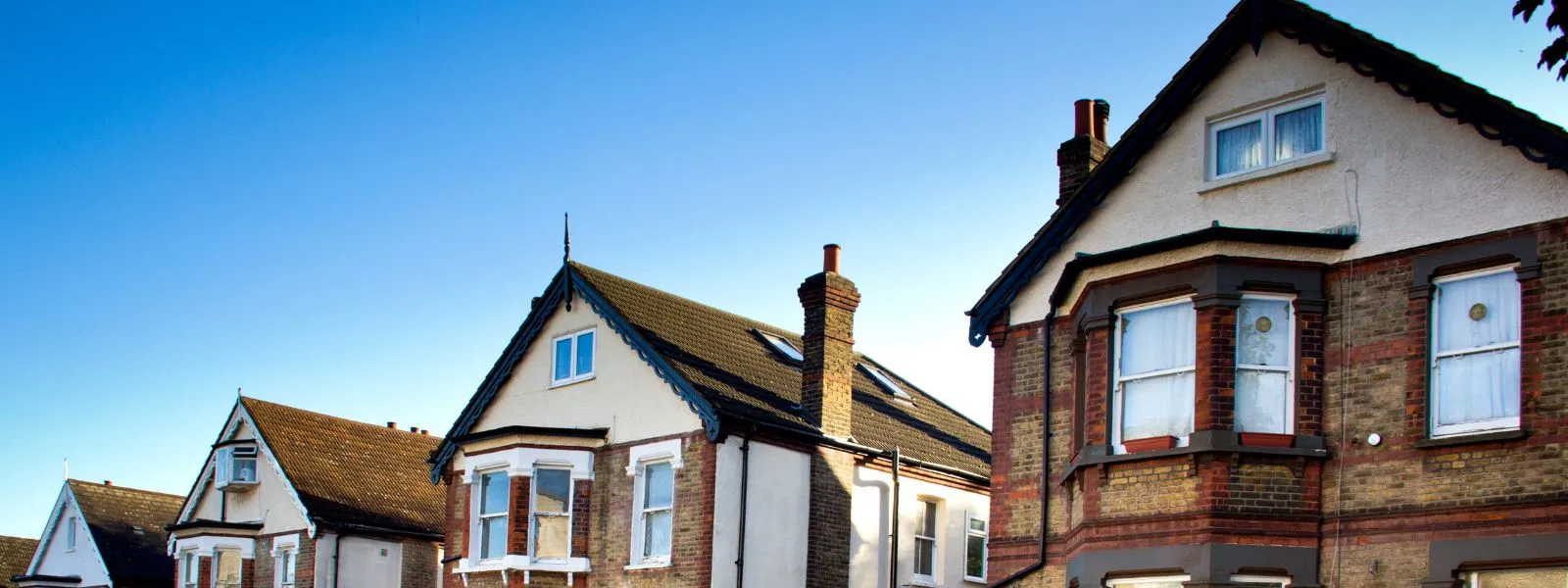
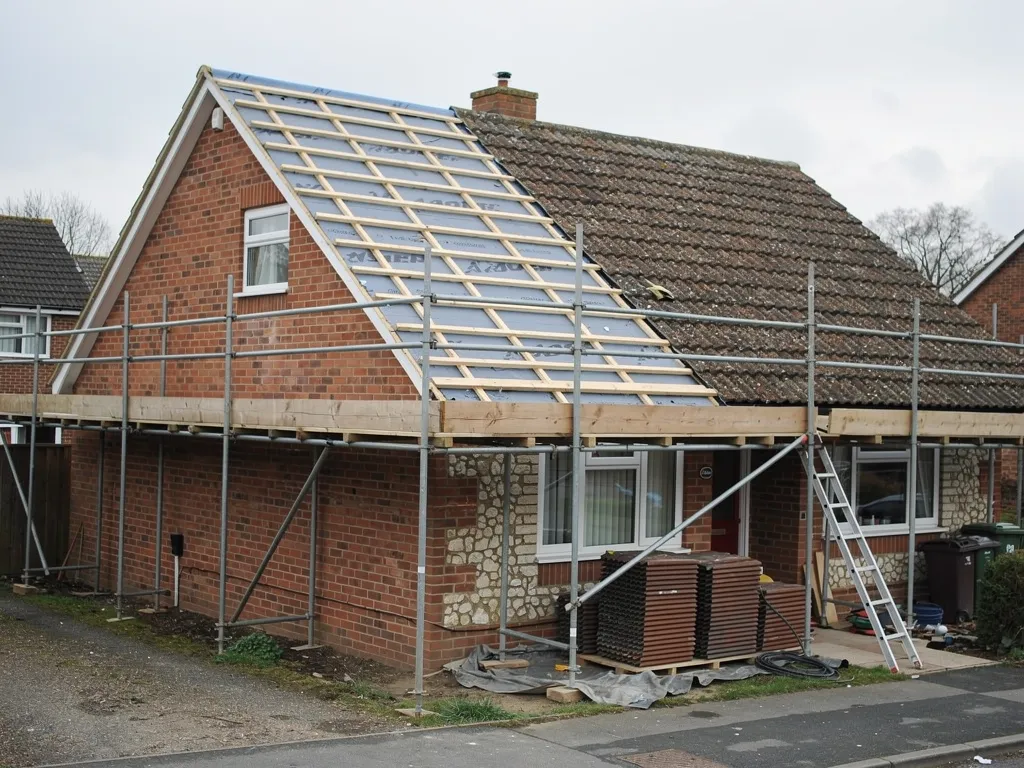
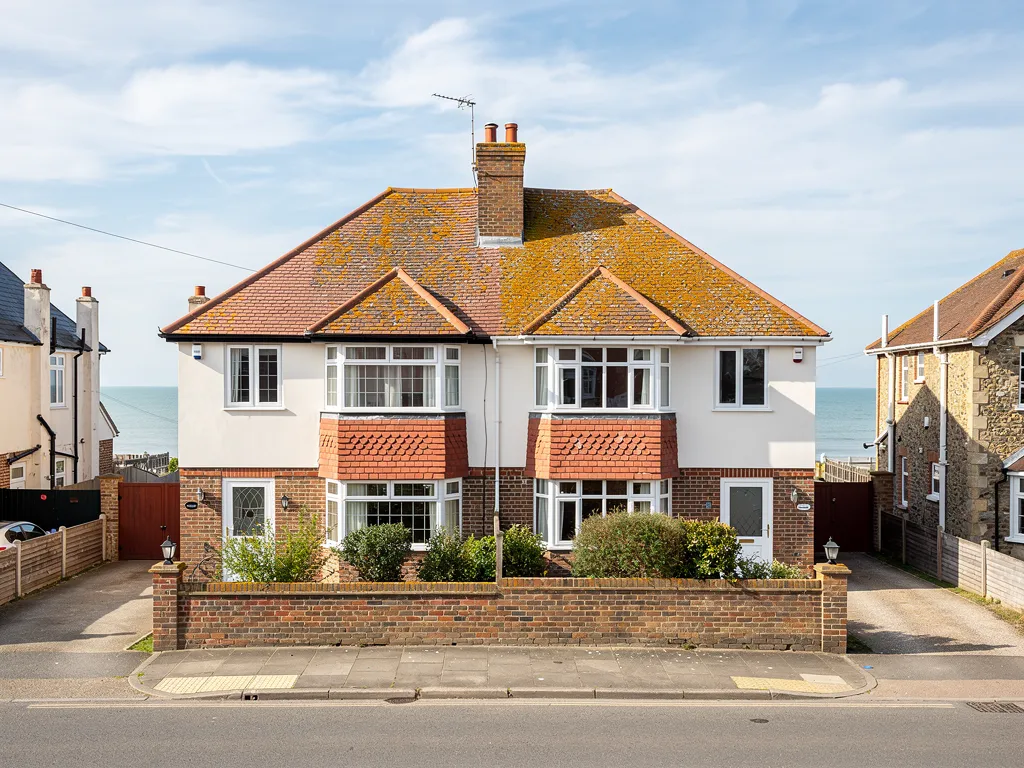
Older commercial buildings often carry slate or clay tile above ground-floor trade, and the repairs follow the pitched rules in our pitched roofing work. Church and village hall roofs add a consent question. Churches in use by the Church of England, Roman Catholic Church, Methodist Church, Baptist Union or United Reformed Church fall under the ecclesiastical exemption, while a redundant church needs listed building consent, as our note on church and village hall roof repairs explains.