

Worthing roofers who find where the water gets in

We are a roofing contractor based in Worthing. We trace each leak to where it starts, show you photographs of your own roof, and fix it to stand up to Channel weather.

  • Leaks traced
    to the source
  • Photos of
    your own roof
  • Written quote,
    one total price
  • 10-year workmanship
    guarantee, in writing
Find us on Google

Where rain gets into a Worthing house

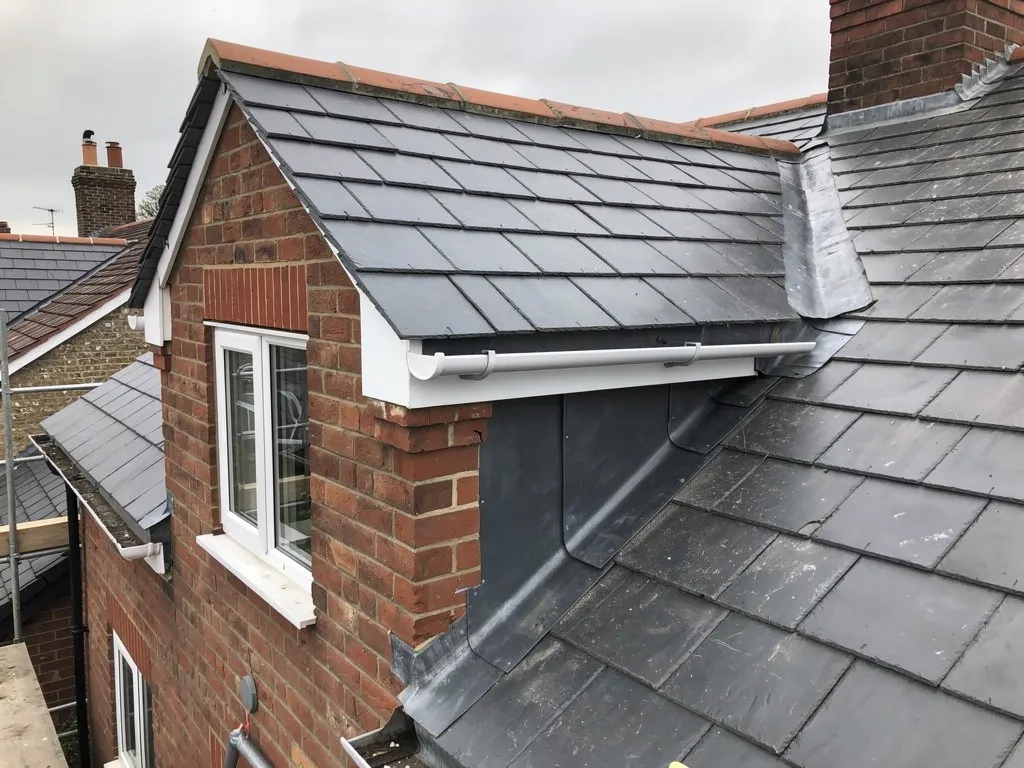
  • Flashings and soakers

    The lead that seals a roof to a chimney or wall. Once it cracks or lifts, rain runs behind it.

  • Ridges, hips and verges

    The tiles along the top, the corners and the gable edges. When their mortar breaks up, wind can lift them and rain follows.

  • Valleys and gutters

    Where two slopes meet, and the channels at the eaves. Leaves, moss or a split joint send water back under the tiles.

Guide prices for roof work in Worthing

Guide prices
JobGuide price
Roof repairsfrom £500
Flat roofing£50 to £100 per m²
Gutters, soffits and fascias£500 to £2,500
Roof replacement£5,000 to £15,000+

A guide only: your written quote, one total price, follows the survey.

See all costs

How we work on every roof

  • We find the cause before we price
  • You see photographs of your own roof
  • The right fix, not the biggest job
  • Site cleared and every scrap taken away
  • Fixed and dressed to hold in sea gales
Find us on Google

From your first call to the finished roof

  1. Tell us what you seeRing 01903 299063, send a WhatsApp or use the form; a photo of the stain helps.
  2. Survey and photographsWe go up, trace the water back to where it gets in, and photograph what we find.
  3. One written priceYou get a written quote with one total price and the reasons for the work.
  4. The work, then the tidyWe carry out the repair or the new roof, clear the site and talk you through the finished job.

The Worthing roof guide

What a coastal roof needs, in plain words

What we explain on Worthing driveways before anyone signs.

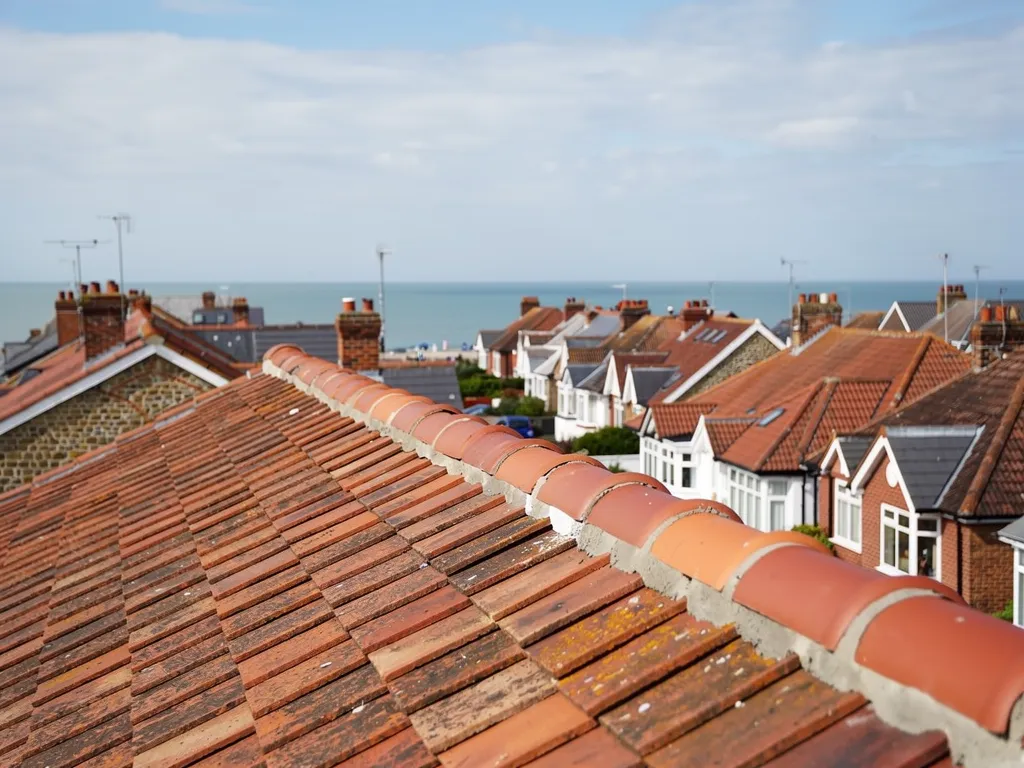
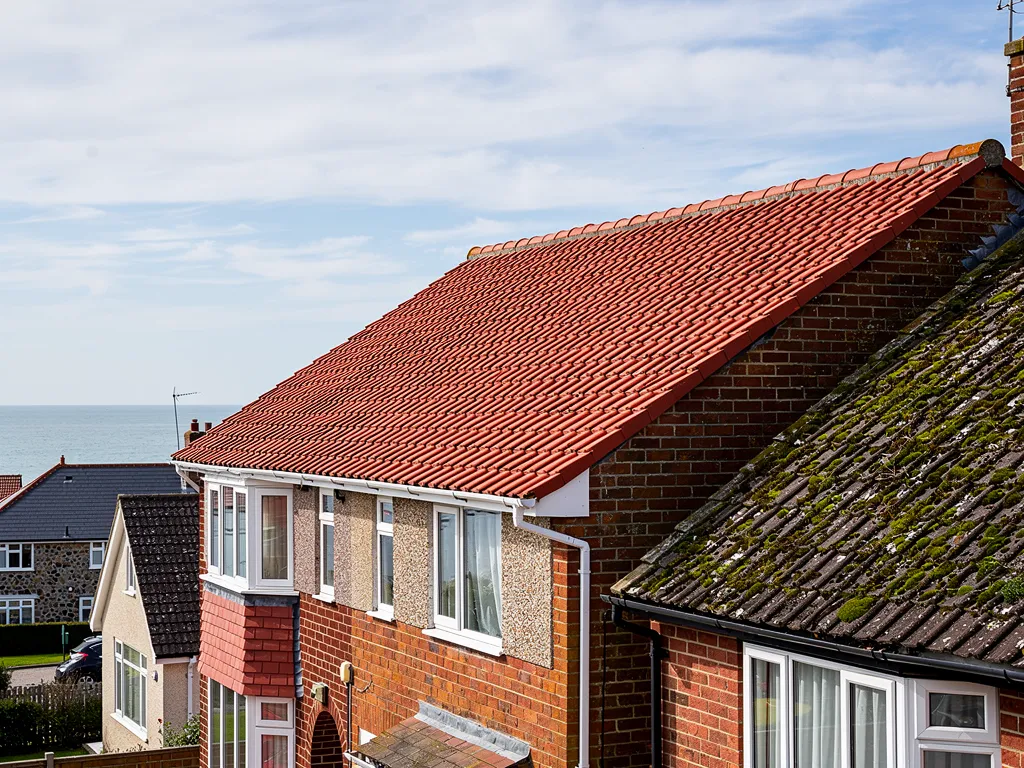
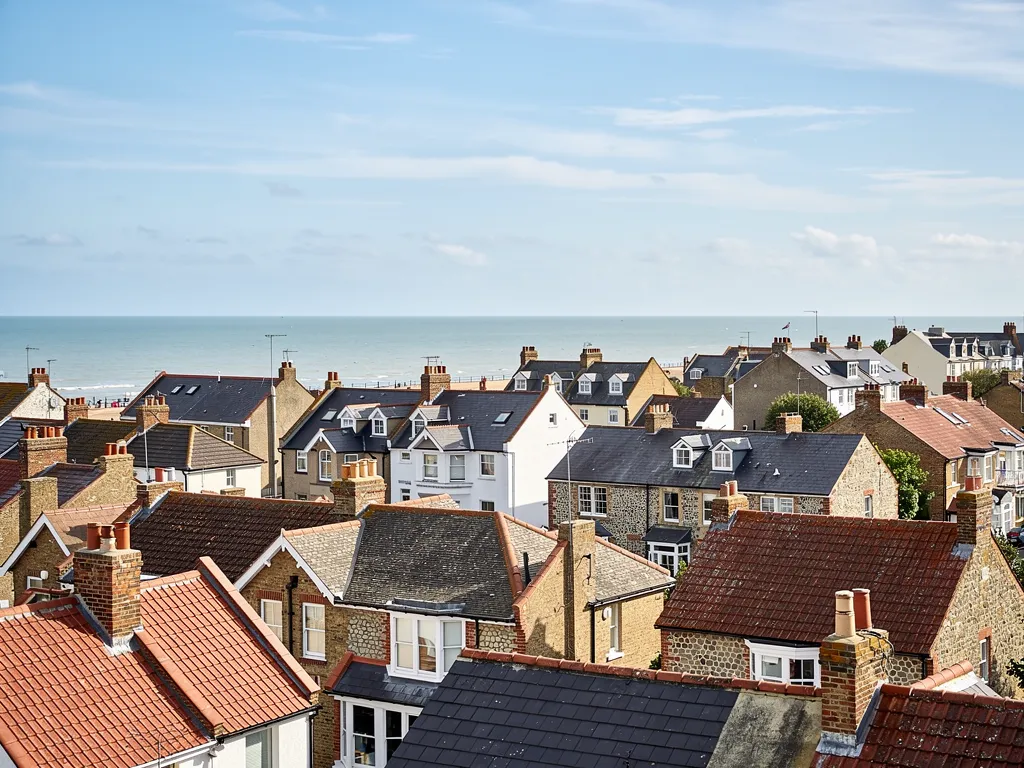
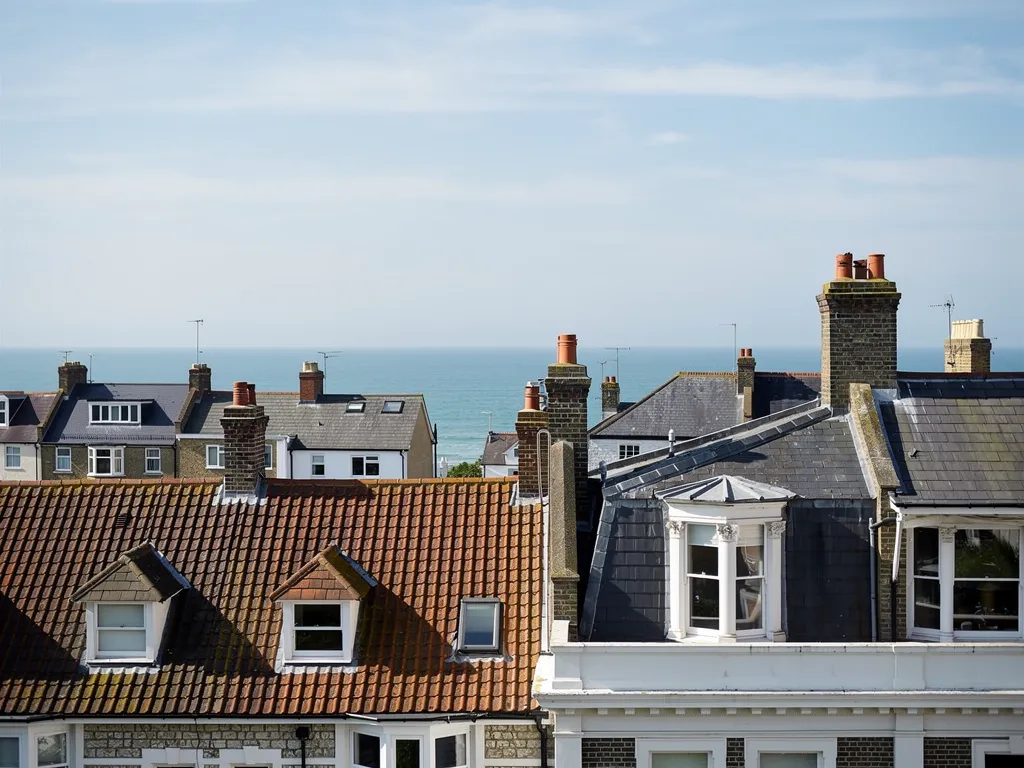
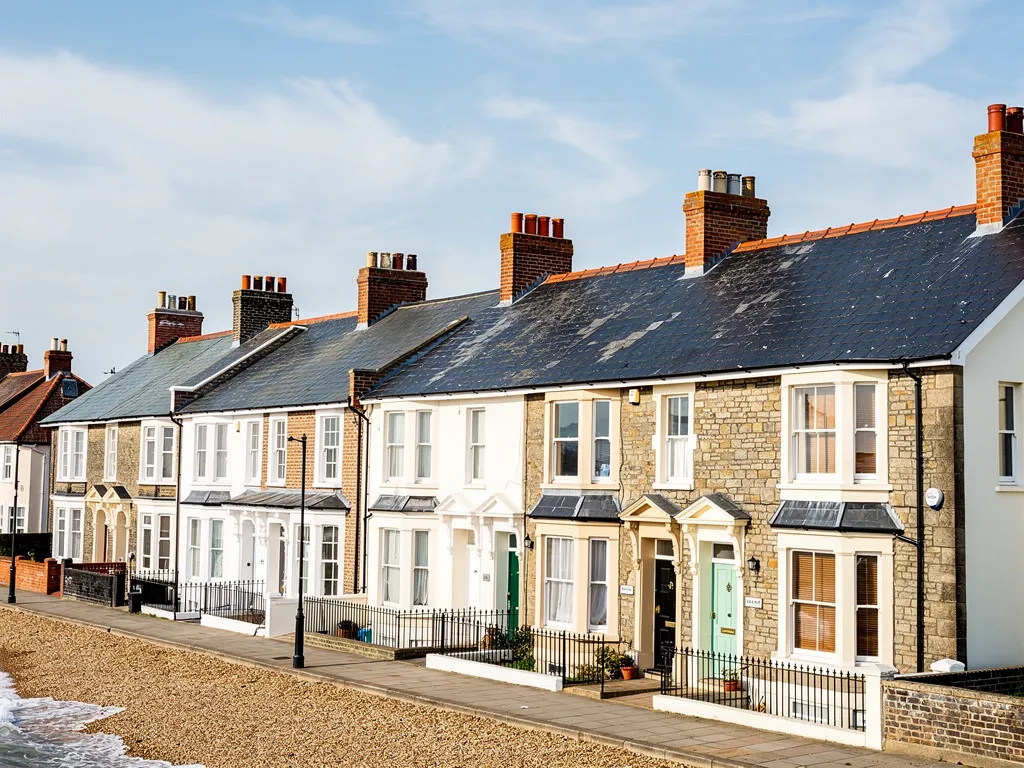
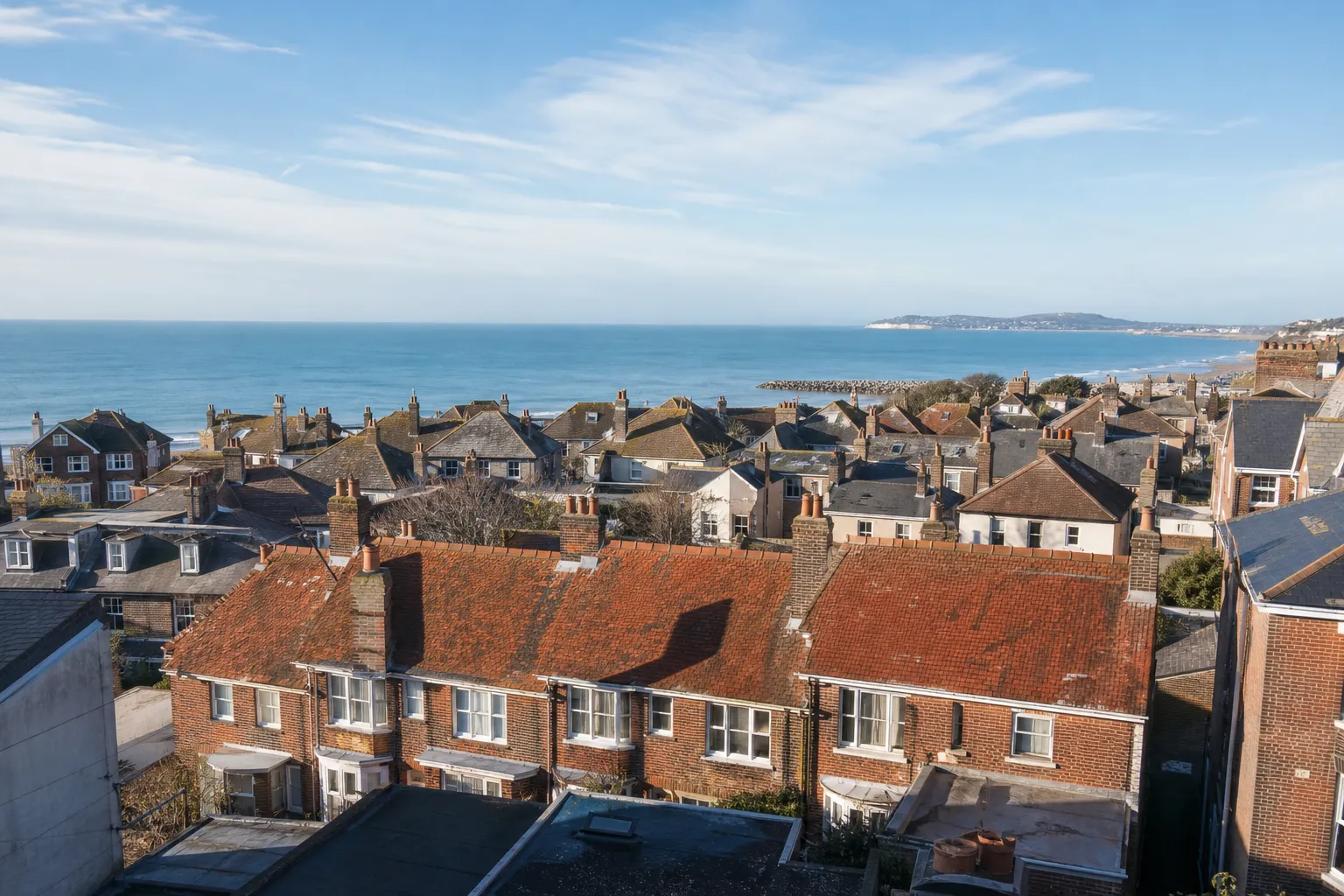
Sunlit clay and slate roofs of Worthing houses running down to the sea

Chapter one

What roof work costs around Worthing

The price follows the cause, so a serious-looking leak can be a small job.

People ring a roofer wanting two answers: where is the water coming from, and what will it cost to stop it. The second answer depends on the first. A damp patch on a bedroom ceiling might come from a single cracked tile, a tired lead flashing or a gutter that has been overflowing into the wall for a year. Each of those is a different job with a different price, which is why we look before we put a figure on paper.

At a glance

  • Access and covering move the price first
  • National guides give a useful starting range
  • Ask whether VAT and scaffolding are included
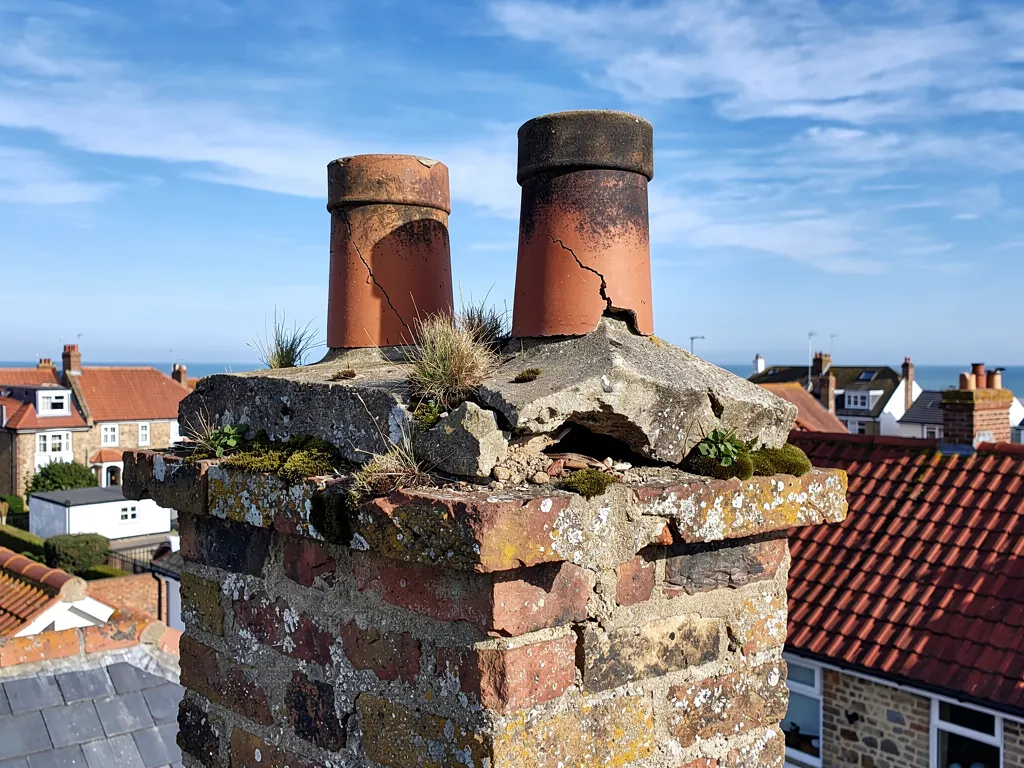
Top of a brick chimney with cracked mortar flaunching around the pots

Our guide prices for Worthing sit near the top of this page. The chart below shows national ranges from MyBuilder, so you can see how a Worthing job sits against the rest of the country.

1.1 What pushes a price up or down

Access comes first. A bungalow eaves you can reach from a ladder costs far less than a three-storey seafront terrace that needs a full scaffold. Scaffolding on its own runs at around £850 to £1,200 for a standard two-storey house, according to MyBuilder. Then comes the covering, because slate, clay, concrete, lead and flat-roof membranes are each fixed in their own way. After that, it is the condition of what sits underneath: the underlay (the membrane under the tiles) and the battens (the timber strips the tiles hang on). Finally, it is how much of the roof the job touches. Quality roofing work costs more than a quick patch, and it lasts a great deal longer.

Top of a brick chimney with cracked mortar flaunching around the pots

1.2 Reading any quote you are given

A good quote tells you what is wrong, what will be done and what it costs in total. Check whether VAT is included. The standard rate is 20%, and Checkatrade's ranges are shown before VAT. Check too whether scaffolding and any council scaffold licence are covered. Our own quotes give one total price in writing, and our prices are good and fair for the work involved. For the national picture by job, our roofing costs guide sets out the published ranges and their dates.

Typical UK ranges for common roof jobs

  • Roof repair£150 to £1,500
  • Dry ridge, typical job£500 to £1,000
  • Chimney repointing£500 to £2,000
  • Flat roof replacement£2,800 to £7,500
  • New roof, typical house£5,000 to £12,000

National ranges only; your own figure follows the survey. Source: MyBuilder price guides, updated 21/08/2026.

Before you compare two prices, ask whether scaffolding and VAT are inside them.

One more thing moves a price: timing. A repair done when a few tiles first slip is a short visit. Left through a winter, the same fault can soak the battens, stain the ceiling and turn into a bigger job. That is the quiet case for a quick look after any big storm. It is when a small fault costs least to put right.
Chapter two

Repair it now or replace the roof

Slipped tiles rarely mean a new roof; a roof failing in new places usually does.

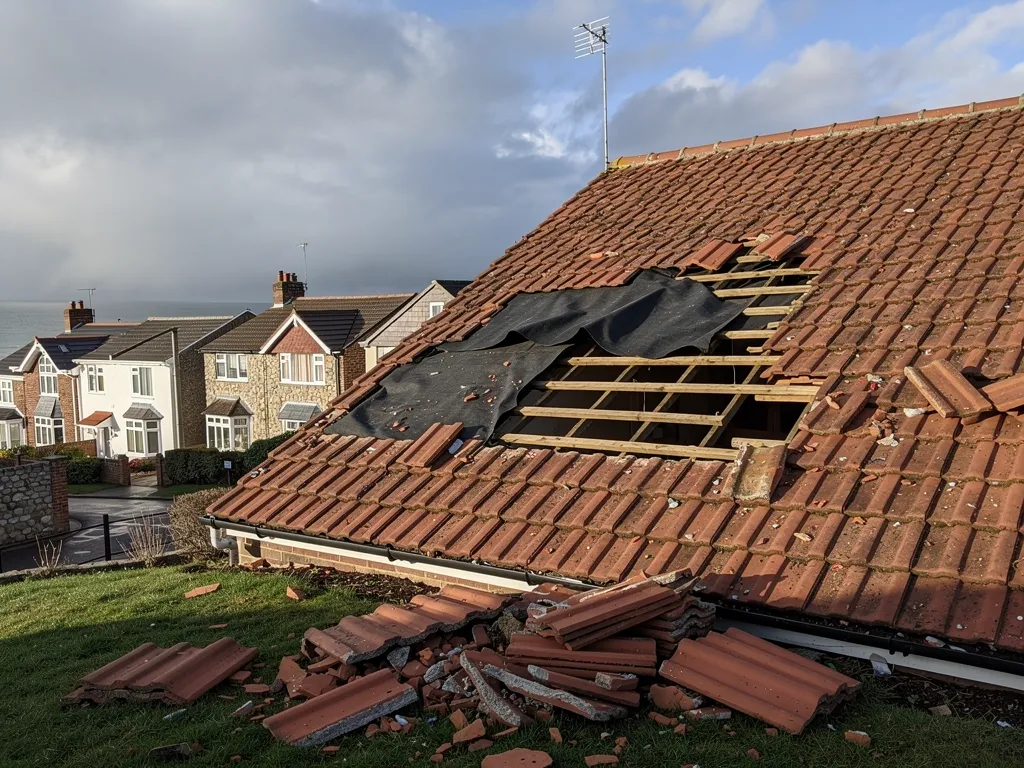
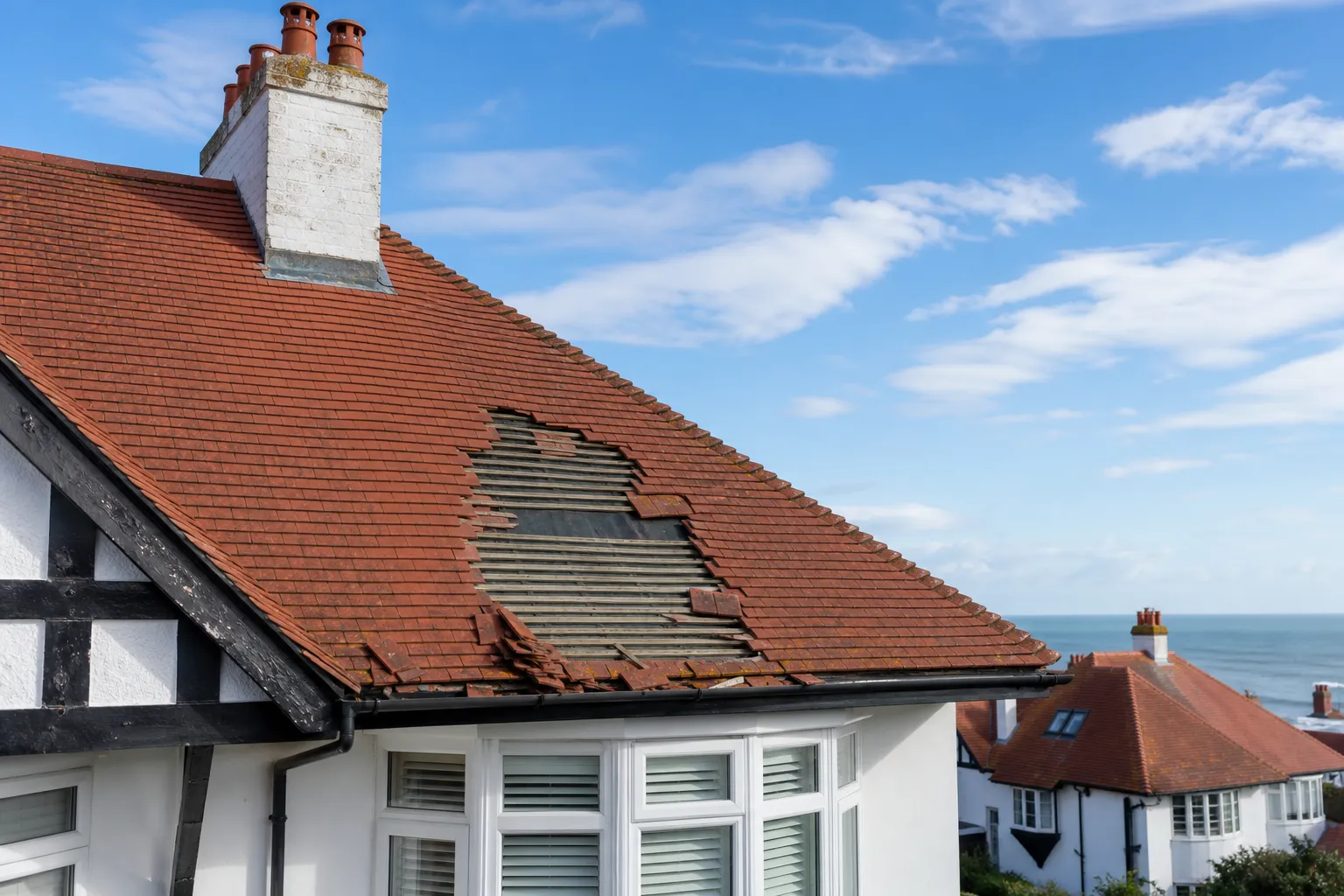
Clay-tiled roof with a patch of tiles blown off by a gale, under a bright broken-cloud sky

The question we hear on almost every survey is whether the roof can be saved. Often it can, and for less than people fear. A roof repair makes sense when the structure is sound, the underlay is still doing its job and the fault is local: a few slipped tiles, a cracked ridge, a lifted flashing. Fixing those properly costs a fraction of a new roof and can give years of service.

At a glance

  • Sound underlay and battens favour a repair
  • Repeated new leaks point to replacement
  • Photographs show you which case applies

Note Approved Document L: renovate over half a roof's surface and insulation is upgraded, towards 0.16 W/(m²·K).

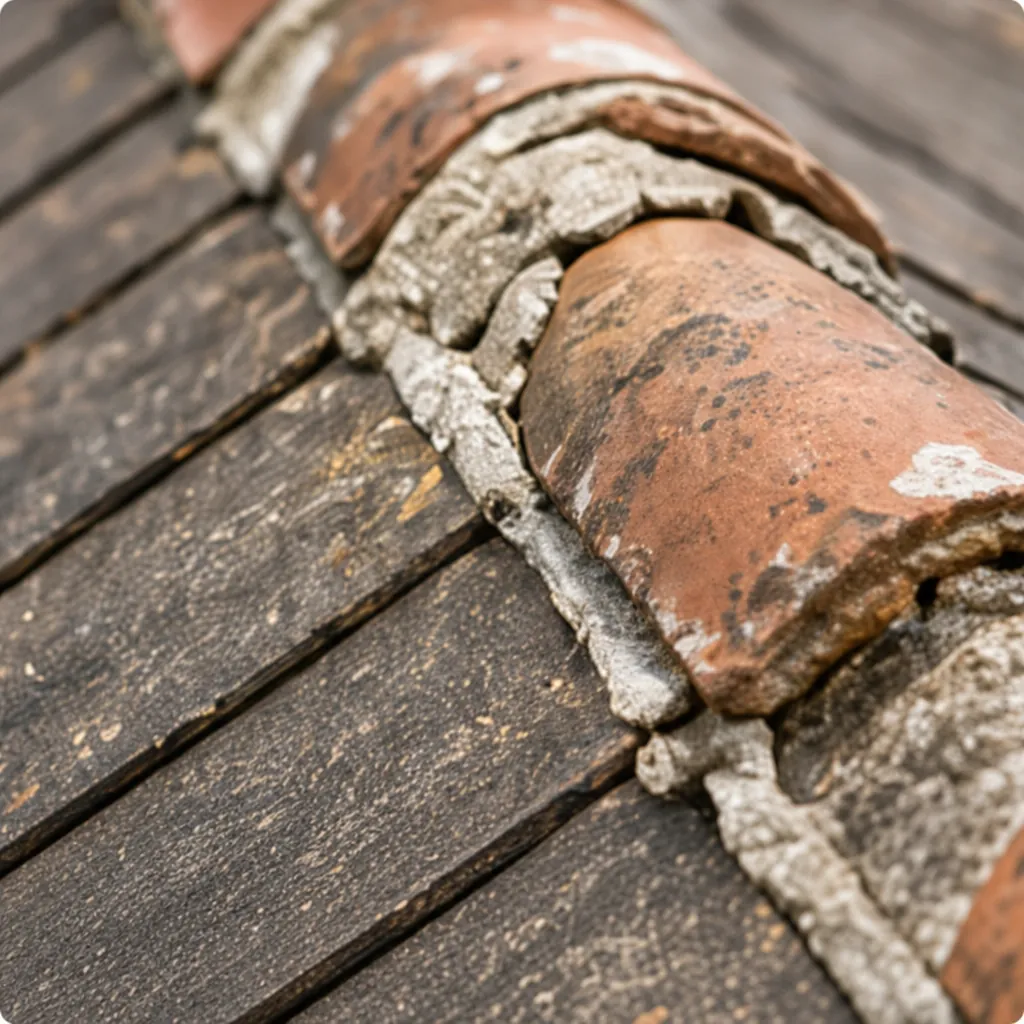
Cracked mortar bedding under a clay ridge tile

Replacement makes sense when the covering itself is at the end of its life. The signs are a roof that leaks in a new place after every storm, tiles that crumble or flake when touched, underlay that has torn or turned brittle, and battens that have gone soft. At that point, each repair buys a few months, and the money is better spent on a full roof replacement.

2.1 How we decide on your roof

We go up, or into the loft, and look at three layers: the covering, the underlay and the timber. We photograph each one. You then see the same pictures we see, with our recommendation and the reason for it. If a repair will properly solve the problem, we recommend the repair. If it will not, we tell you plainly and explain why, and you can decide with the evidence in front of you. Our roof repairs and roof replacement pages go into each route in more depth.

Cracked mortar bedding under a clay ridge tile

2.2 When a new roof installation is the better value

A new roof is a chance to correct old faults. We install new breathable underlay and new battens, and the tiles go back on with ridges and hips mechanically fixed. A quality roof starts with the parts you never see once it is finished. The ventilation can be set right, so condensation stops collecting in the loft. On a bigger re-roof, the Building Regulations come into play, which we cover in the regulations chapter. A full roof replacement takes planning, and the survey is where that planning starts.

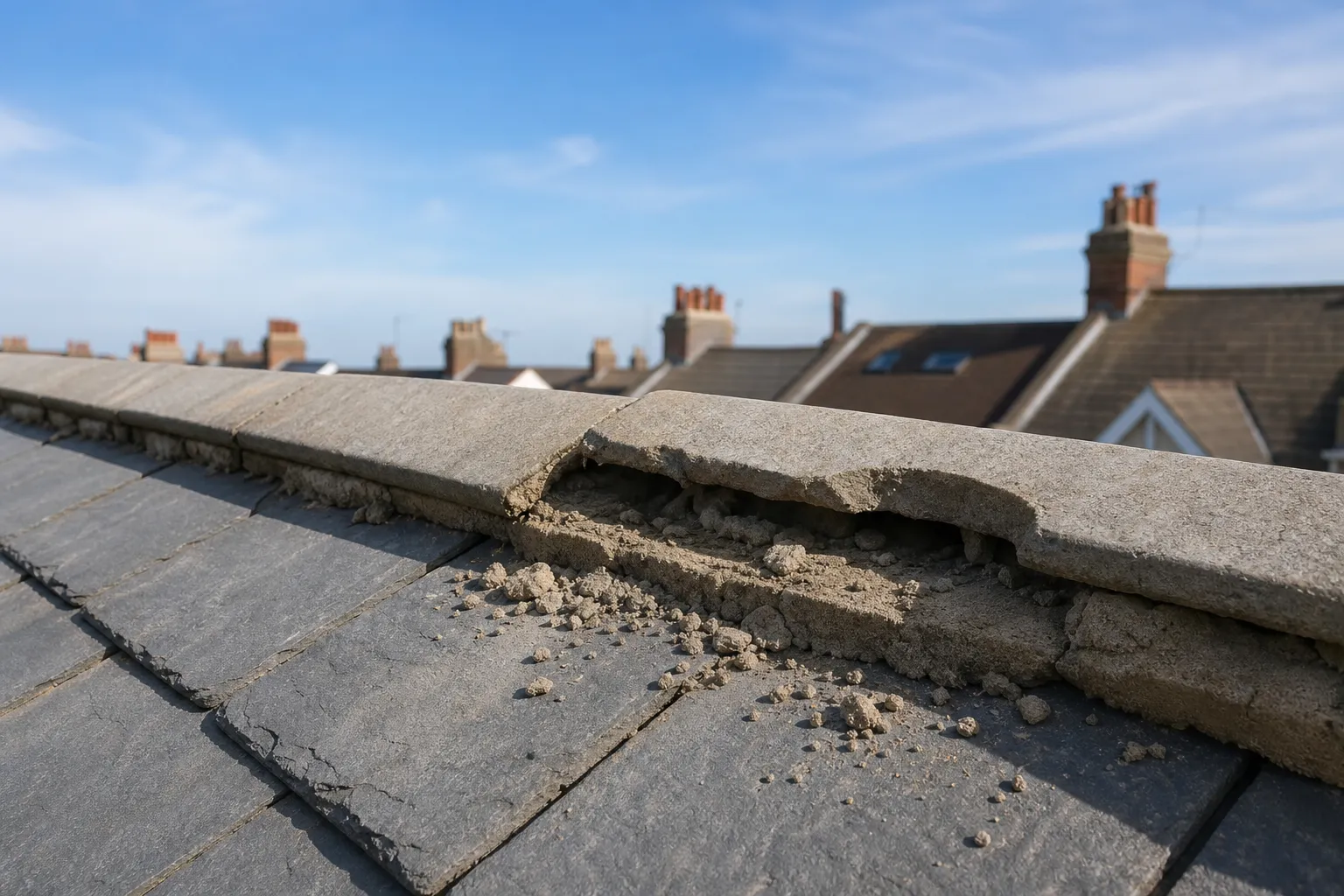
Cracked mortar under a ridge tile on a slate roof, the ridge working loose
Fig. 2.a On the survey Cracked bedding mortar leaves a ridge tile loose.
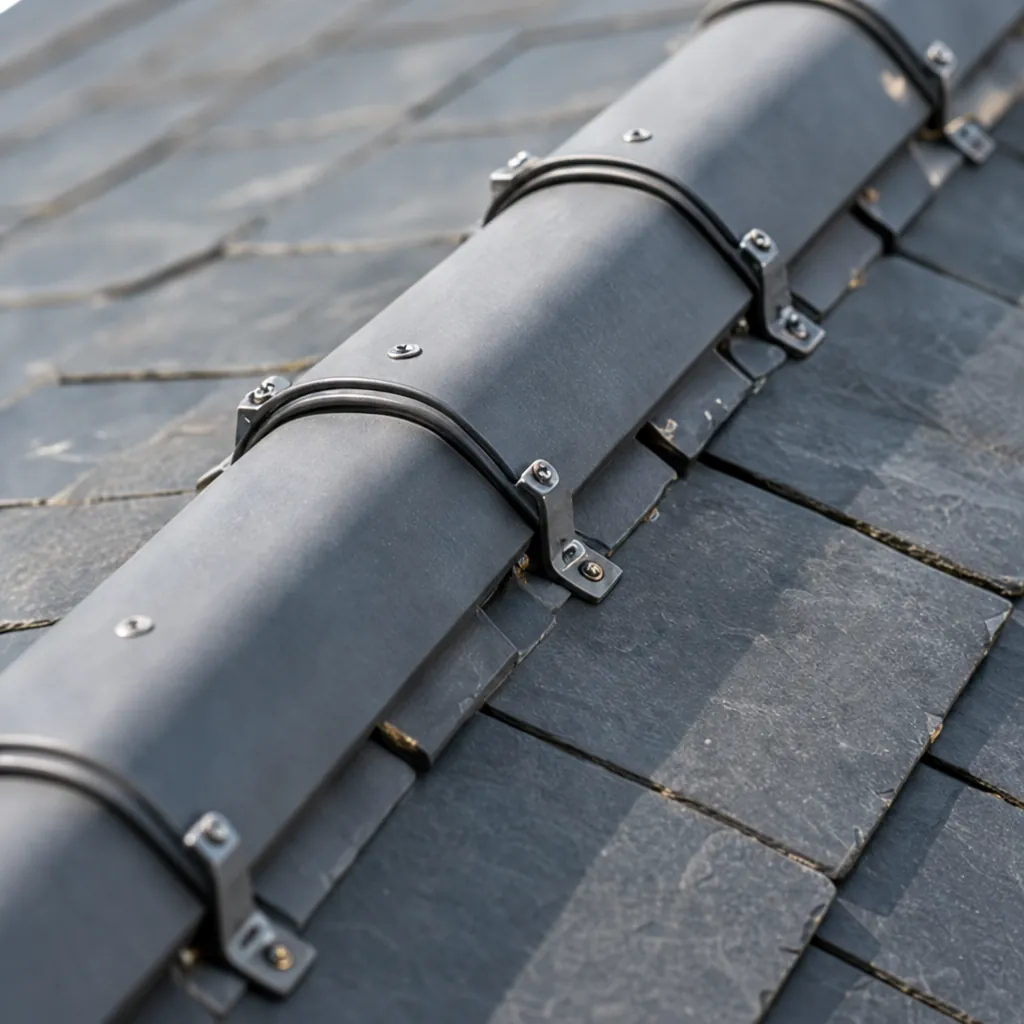
New dry-fixed ridge with mechanical clips on a slate roof
Fig. 2.b Put right The ridge relaid with mechanical fixings.
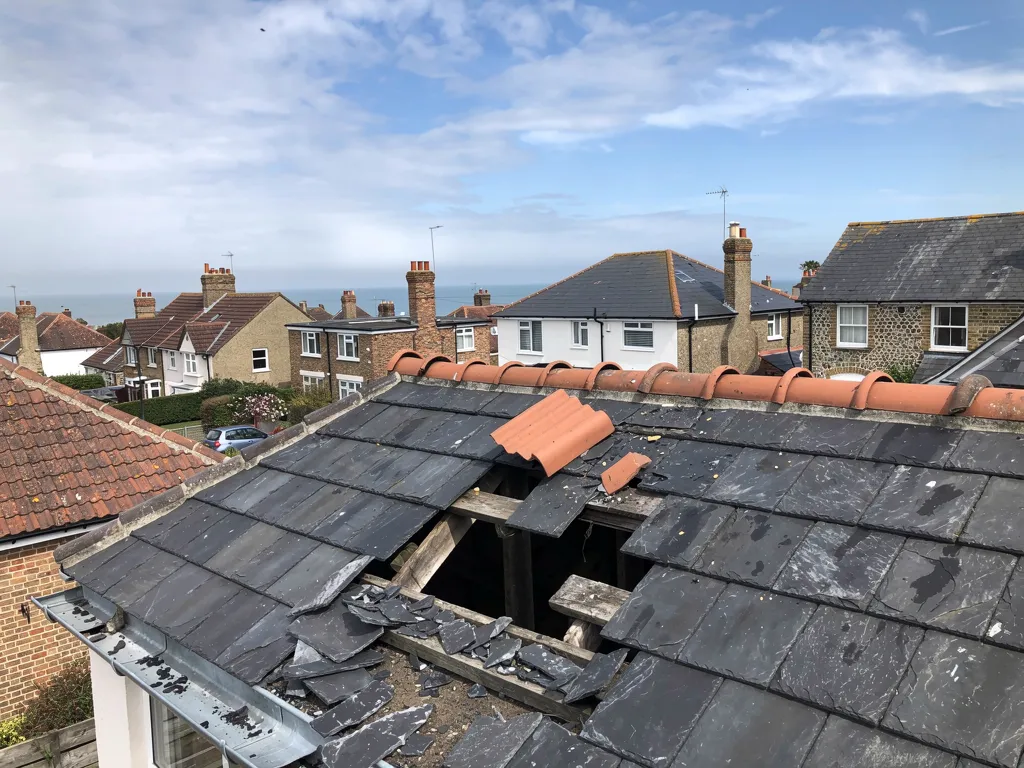
Broken ridge tiles and slipped slates on a terrace roof after a storm

Chapter three

Sea gales, salt air and how roofs are fixed

Channel weather tests every tile and fixing; current standards say how each should hold.

On this stretch of the south east coast, gales and driving rain arrive straight off the sea. Wind does not just push on a roof. It pulls. Marley notes that where the pitch is under 30 degrees, the windward slope can face severe suction, which is one reason the tiles round the edges of a roof get extra fixing.

At a glance

  • Shallow slopes can face strong suction from wind
  • Ridge and hip tiles need mechanical fixings
  • Near Shoreham airport, check the fixing specification
Freshly re-bedded clay ridge tiles on a tiled roof

A properly designed roof has a fixing specification worked out for its own site. Tile makers use the method in BS EN 1991-1-4 to set the wind load, taking account of terrain, building height and the shape of the roof. Wienerberger adds that each single-lap tile needs at least one mechanical fixing.

3.1 Why mortar alone no longer holds the ridge

The ridge is the line of tiles along the top; the hips run down the corners; the verge is the edge at the gable end. For years they were held on with mortar alone. Since the 2014 revision of BS 5534, mortar alone is not relied on to hold ridge and hip tiles; they are mechanically fixed as well. Dry-fix systems, which use clips and seals in place of mortar, are tested to BS 8612:2018. A verge bedded only in mortar is a common cause of tiles lost at the gable end; a dry verge system clips each tile in place. This is the work behind our ridge tile repairs.

Freshly re-bedded clay ridge tiles on a tiled roof

3.2 What salt air does

Salt settles where rain cannot wash it off. HomeBuilding points out that soffits and fascias attract salty deposits from the air, and the zinc maker VM Zinc warns that zinc close to the sea can stain in sheltered spots. So on a seafront house we look closely at the undersides of the roofline, not only the tiles. We use high quality materials on the roofline, because a West Sussex roofing job on the seafront takes salt and spray that an inland roof never sees. Our guide to coastal roofs in Sussex compares how each covering copes.

The standards behind a coastal fix

Slating and tiling
BS 5534:2014+A2:2018
Dry ridge, hip and verge
BS 8612:2018
Ridge and hip tiles
Mechanically fixed, not held by mortar alone
Wind load method
BS EN 1991-1-4

Source: BSI, Marley and Wienerberger, fetched 20/10/2026

Wind does not only push on a roof; on a shallow slope it pulls.

Shoreham airport adds one local twist. Marley advises that roofs near airports can see wind forces from aircraft that exceed the normal calculated loads. For homes near the airport, the tile maker's fixing specification may need special advice, and we check it before we order. If your house is close to the airport, mention it when you first call us.

Chapter four

Slate, clay, concrete and flat roofs here

A house's age usually tells you the covering, and the covering tells you how it fails.

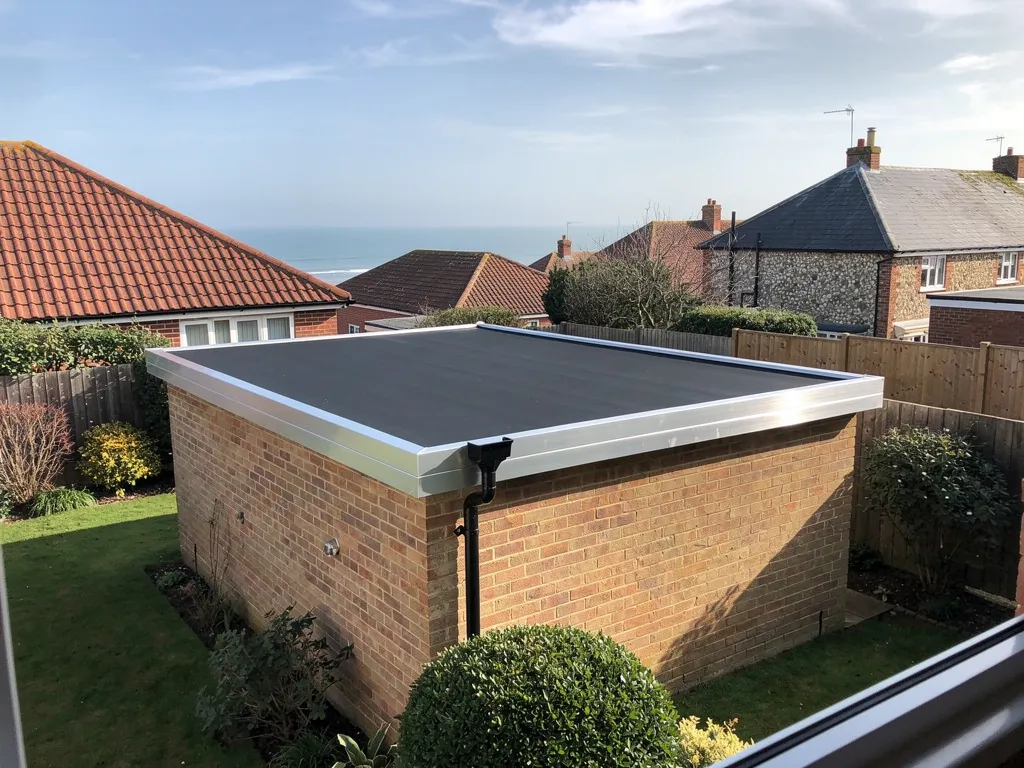
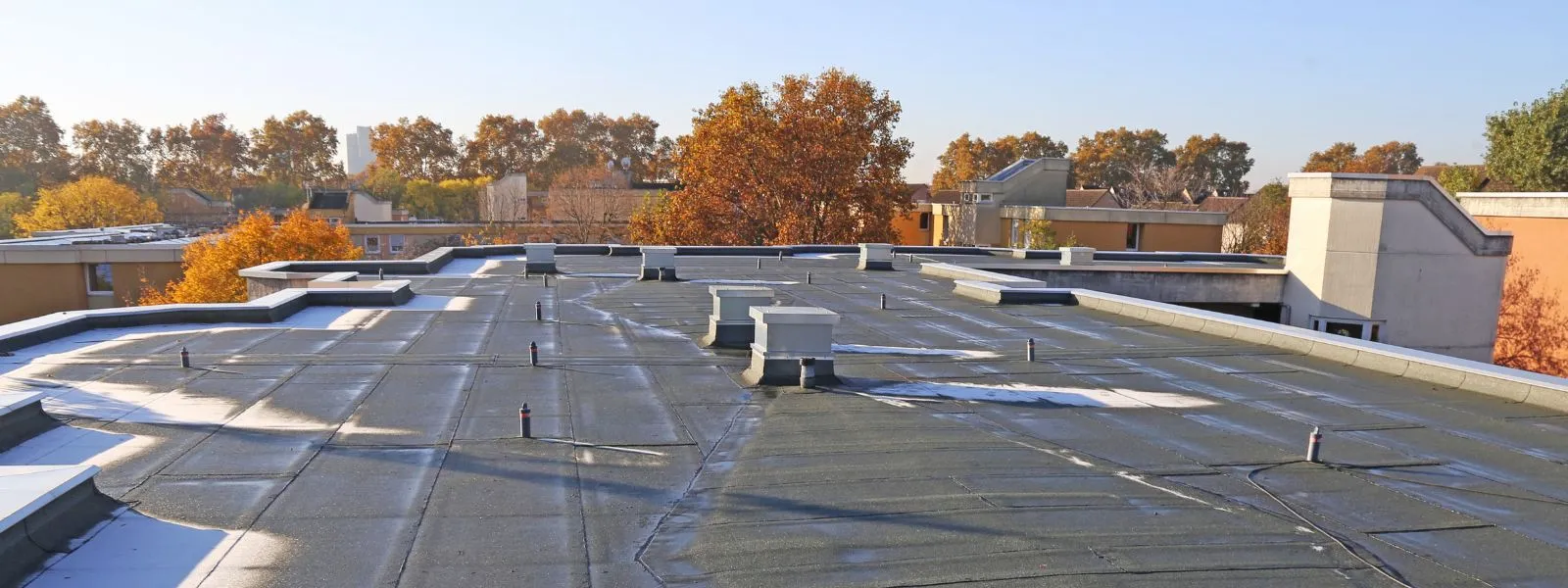
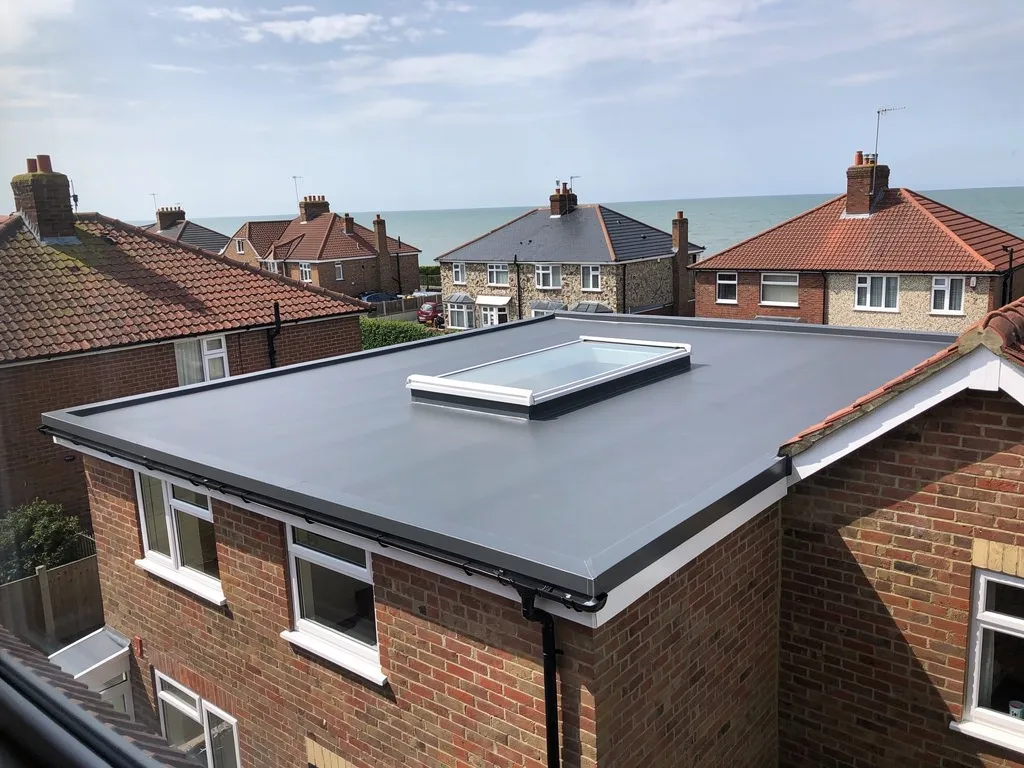
New black EPDM rubber roof with neat aluminium trims on a brick garage

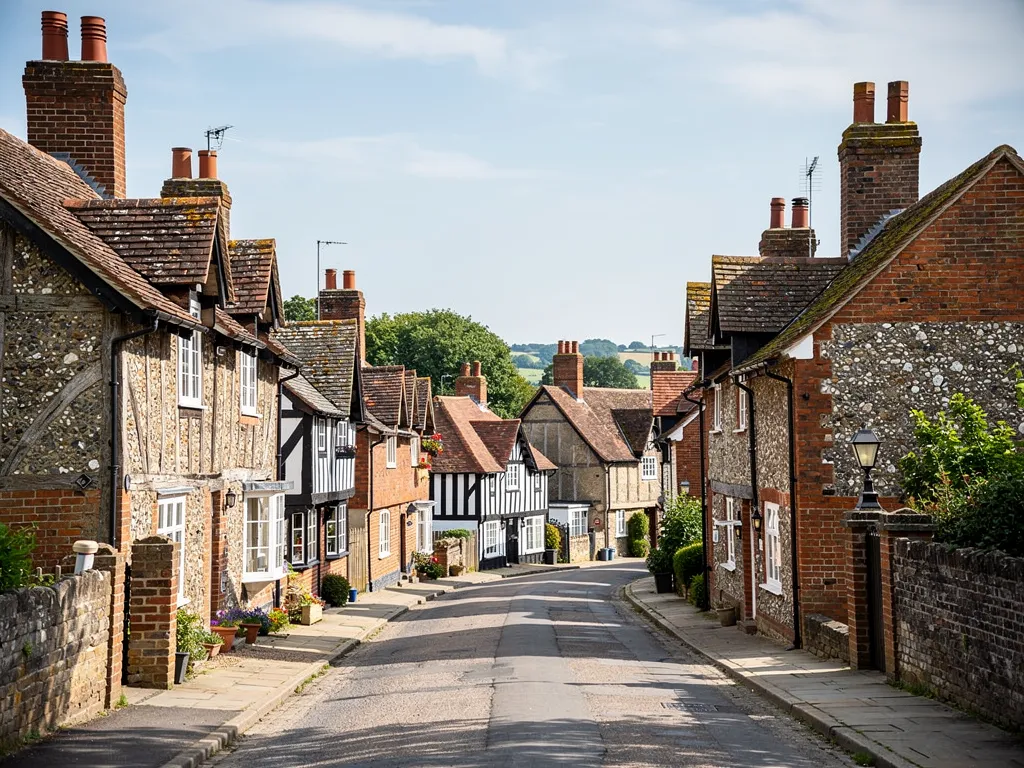
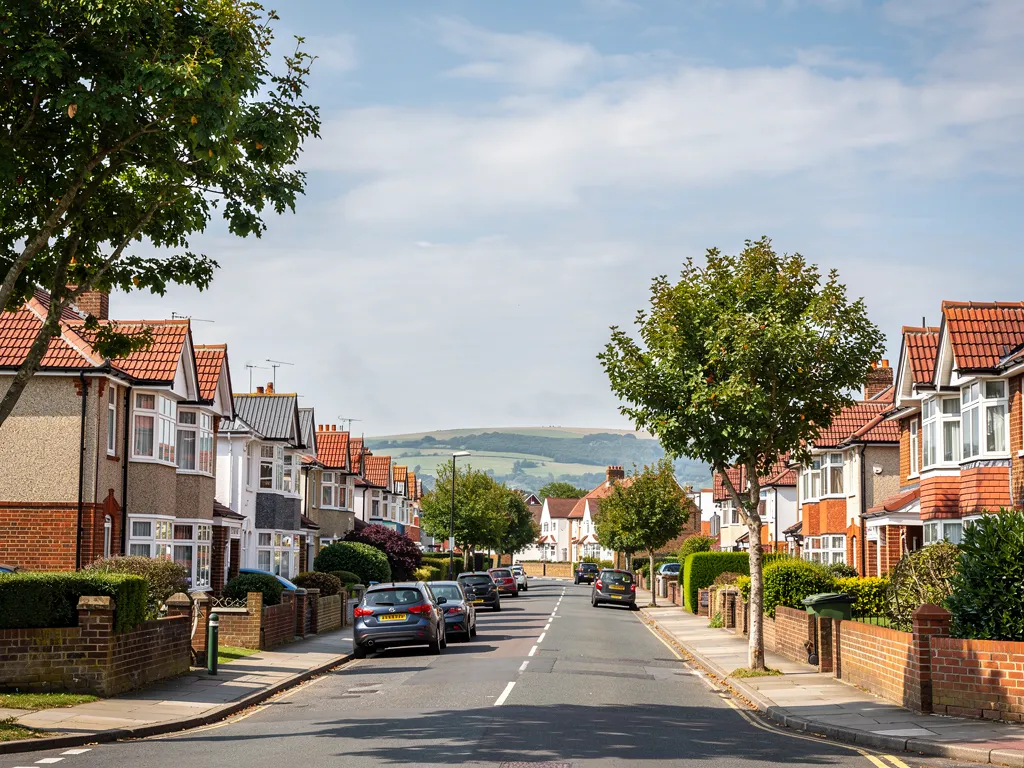
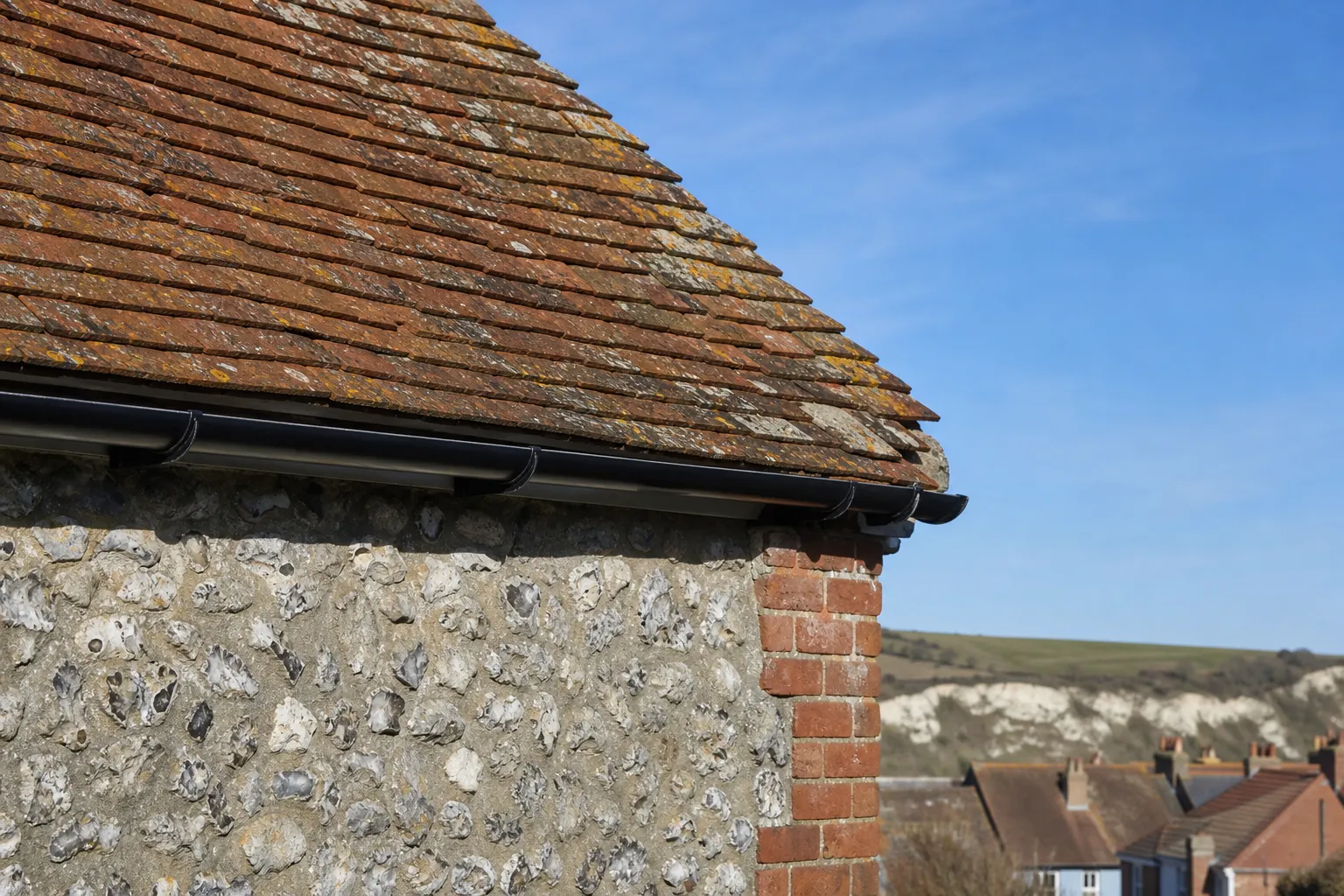
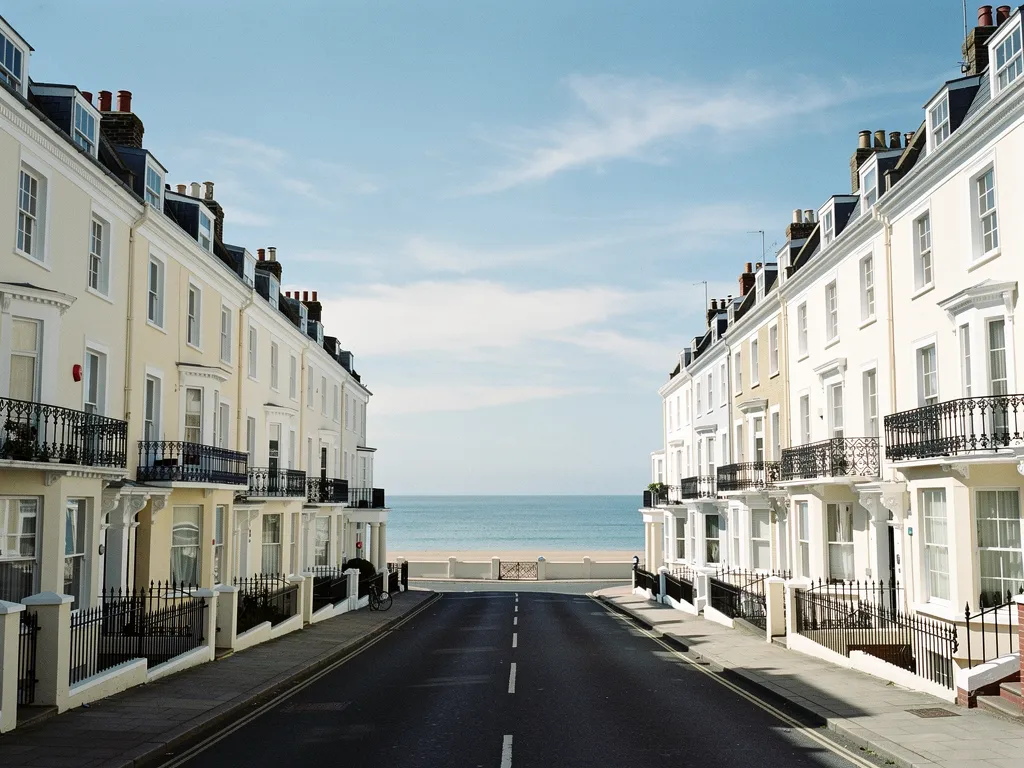
Worthing grew in waves, and each wave used a different roof. Near the seafront you find Victorian and Edwardian terraces and villas under Welsh slate, often with tall chimney stacks and decorative ridges. The 1930s semis in Goring and Durrington carry clay or concrete tiles, with lead over the bay windows. After the war came the bungalows, with hipped roofs, small chimneys and a flat-roofed extension at the back. Seafront flats and newer blocks have big flat roofs. In the Downs villages, flint cottages carry clay or slate, and Steyning's conservation area appraisal records that Horsham slab roofs survive there in large numbers. There is no single roofing solution for every house on this coast: a terrace, a 1930s semi and a bungalow each need their own approach to the roof, chimney and gutters.

At a glance

  • Each covering has its own repair method
  • Published lifespans are ranges, not promises
  • Exposure and workmanship change real lifespans
Steyning street of old flint, brick and timber-framed buildings with tiled and stone roofs

4.1 How each covering tends to fail

Slate rarely wears out quickly; the nails that hold it do, and slates slide. Clay tiles can flake after years of frost. Concrete tiles are heavy and long-lived, but their surface wears and the ridge mortar cracks. Lead on bays and chimneys splits if it was laid in pieces that are too long. Felt flat roofs blister and crack; EPDM (a synthetic rubber sheet) and GRP (glass-reinforced plastic, often called fibreglass) last longer when they are laid to proper falls.

Steyning street of old flint, brick and timber-framed buildings with tiled and stone roofs

4.2 Matching the material on a repair

A repair should match what is already there, in size, colour and fixing. A heavier covering on an old roof is a different matter: the Planning Portal says Building Regulations approval is needed if the new material increases the weight of the roof covering by 15 per cent or more. We use quality materials matched to the roof, and on a slate roof that means reusing sound slates and sourcing a close match for the rest. On a Horsham stone roof, the Stone Roofing Association advises reusing as much of the roof's own stone as possible. Our flat roofing page explains the choice between felt, EPDM and GRP.

Typical lifespans by covering

CoveringTypical published life
Natural slate80 to 100 years or more (MyBuilder)
Concrete tileOften 30 to 60 years (Marley, MyBuilder)
GRP flat roof25 to 40 years (Less)
EPDM flat roof20 to 30 years or more (GreenSpec)
Lead flashingOver 80 years (MyJobQuote)
Source: MyBuilder (21/08/2026), Marley, Less (March 2026), GreenSpec, MyJobQuote (22/09/26); fetched 20/10/2026

Chapter five

Permission, Building Regulations and listed homes

Like-for-like re-roofing rarely needs planning permission, but a large re-roof brings in building control.

Two sets of rules apply to roof work, and they are often confused. Planning decides what a building looks like. Building Regulations decide how it is built. Replacing a covering like for like, without changing how the house looks, does not usually need planning permission. Listed buildings, and homes in areas covered by an Article 4 direction, are the exceptions.

At a glance

  • Like-for-like work rarely needs planning permission
  • Large re-roofs need a building control application
  • Listed homes need consent before alterations

Note Castle Goring and Highdown conservation areas fall to the National Park Authority for planning.

5.1 When building control is involved

The Planning Portal says you will not normally need a building control application for repairs or re-covering when less than 25 per cent of the total building envelope is affected and less than 50 per cent of the roof is affected. Go over those limits and approval applies, and the Part L rules may mean the roof insulation has to be upgraded too. Approval can come from the council's building control team or from a registered building control approver, the term used since 6 April 2024. Once work starts, the owner must tell building control when certain stages of the work are reached. Adur and Worthing share one building control team. Where work is notifiable, we explain it and handle the notification.

Street of 1930s clay-tiled semis in Goring with bay windows and hipped roofs

5.2 Conservation areas, Article 4 and listed buildings

Worthing has 27 conservation areas. In some of them, Article 4 directions take away normal rights over roofs. In Warwick Gardens, for example, changing a roof slope in form or material where it fronts a highway or open space needs planning permission. In Old Shoreham and Kingston Buci, the directions cover roof coverings and chimneys on frontages. Elsewhere in a conservation area, like-for-like re-roofing is usually still fine, but before you choose a new covering, check with the Adur and Worthing planning team. Listed buildings need listed building consent for alterations, and the councils give repairs not carried out in matching materials as one example. Inside the South Downs National Park, the National Park Authority is the planning authority. Bats are protected by law, and roof work can affect their roosts. Our guide to roof regulations sets out each rule in more detail.

How we deal with the paperwork

  1. Check We confirm at survey whether the job is notifiable or needs consent.
  2. Explain We tell you which body decides and what they will need from you.
  3. Notify Where the work is notifiable, we handle the Building Regulations notification.
  4. Complete You keep the completion paperwork with your house deeds.
Street of 1930s clay-tiled semis in Goring with bay windows and hipped roofs

Chimneys need a word of their own. The Planning Portal says Building Regulations approval always applies when a chimney breast is removed, because it is part of the structure. If the breast sits on a party wall, your neighbour also needs a party wall notice. We flag both at the survey, and the Adur and Worthing planning team can confirm anything you are unsure about.

A like-for-like repair rarely needs a form; a large re-roof can need building control.

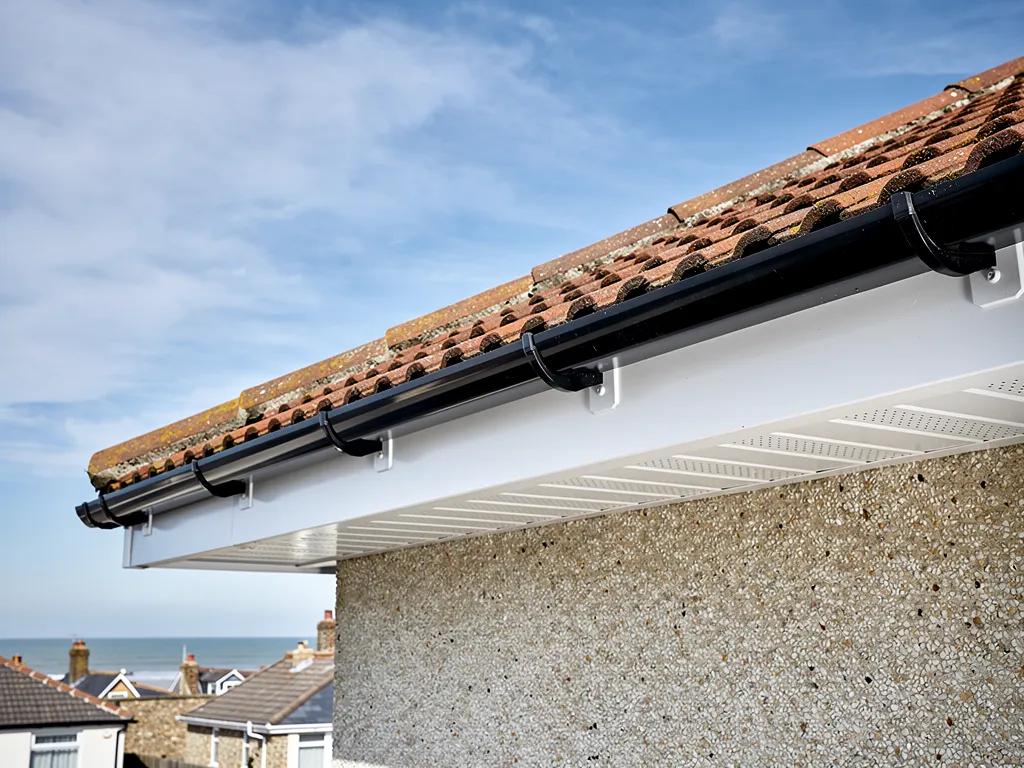
Bungalow eaves with new white fascia boards, vented soffits and a black gutter

Chapter six

Looking after a roof by the sea

Small checks after each winter catch a fault while it is still cheap to fix.

Roof trouble usually starts small: a blocked gutter outlet, one slipped tile, a crack in the flaunching (the mortar collar that holds the pots on top of a chimney). Caught early, each is a short visit. Left alone, water finds its way in and the job grows.

At a glance

  • Clear gutters after the autumn leaf fall
  • Look for slipped tiles after every gale
  • Check the loft for daylight and damp timber

Note BS 5250, via Marley: cold roofs with HR underlay need 10mm eaves ventilation above a 15° pitch.

Clean clay-tiled roof after moss removal with clear gutters

6.1 What you can check from the ground and the loft

After a storm, walk round the house. Look for tiles or slates on the lawn, a ridge line that dips, a gutter that sags or drips at the joints, and moss building up in the valleys. Inside, look at the ceilings under the eaves and around the chimney breast. Check the flaunching and pots on the chimney too, with binoculars if you have them. In the loft, on a bright day, switch off the light and look for daylight through the roof. Feel the timber near the eaves for damp, and check the underlay for tears. Professional roofing maintenance once a year, or after a big storm, catches what you cannot see from the ground.

Clean clay-tiled roof after moss removal with clear gutters

6.2 Gutters, flat roofs and cleaning

Gutters need a gentle fall to the outlet, and manufacturers typically recommend roughly 1:600 to 1:350 depending on the system. On flat roofs, IKO, citing the 2018 edition of BS 6229 (since revised), says the roof should be designed to a fall of 1:40 so that it still achieves a finished minimum of 1:80. Water that sits in puddles on a flat roof shortens its life. For moss, MyBuilder warns that pressure washing may damage delicate tiles, so we clear moss by hand and treat it. Condensation is the other quiet cause of damp, and a roof with poor ventilation can drip in the loft without any leak at all. RICS adds that condensation risk checks for insulation need a qualified professional. Spray foam is no answer to a leak: the Energy Saving Trust says it does not recommend spraying foam under a roof without fixing the problem first. Regular maintenance is cheaper than any repair.

What people sayA roof only needs attention once it starts to leak.

What is trueWater often travels along timber before it shows, so a fault found on a routine check is smaller and cheaper.

Chapter seven

Storm damage, emergency repairs and your insurer

Make the roof safe, record what happened, then call your insurer before the permanent repair.

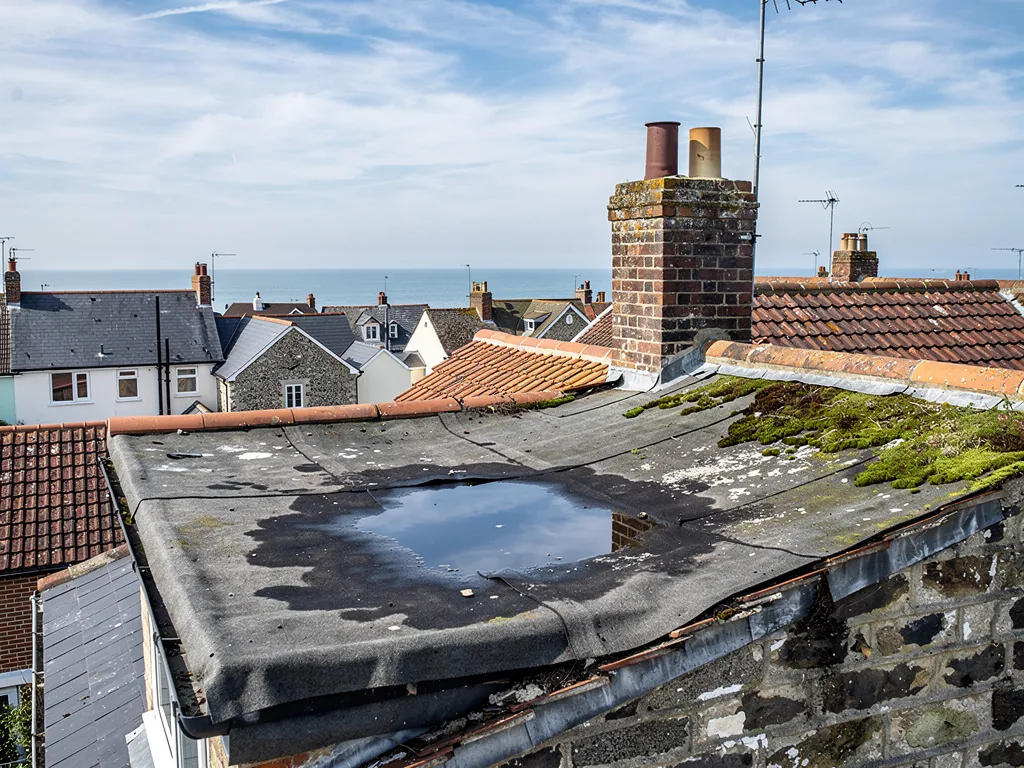
Old flat roof with standing water, cracked felt and moss

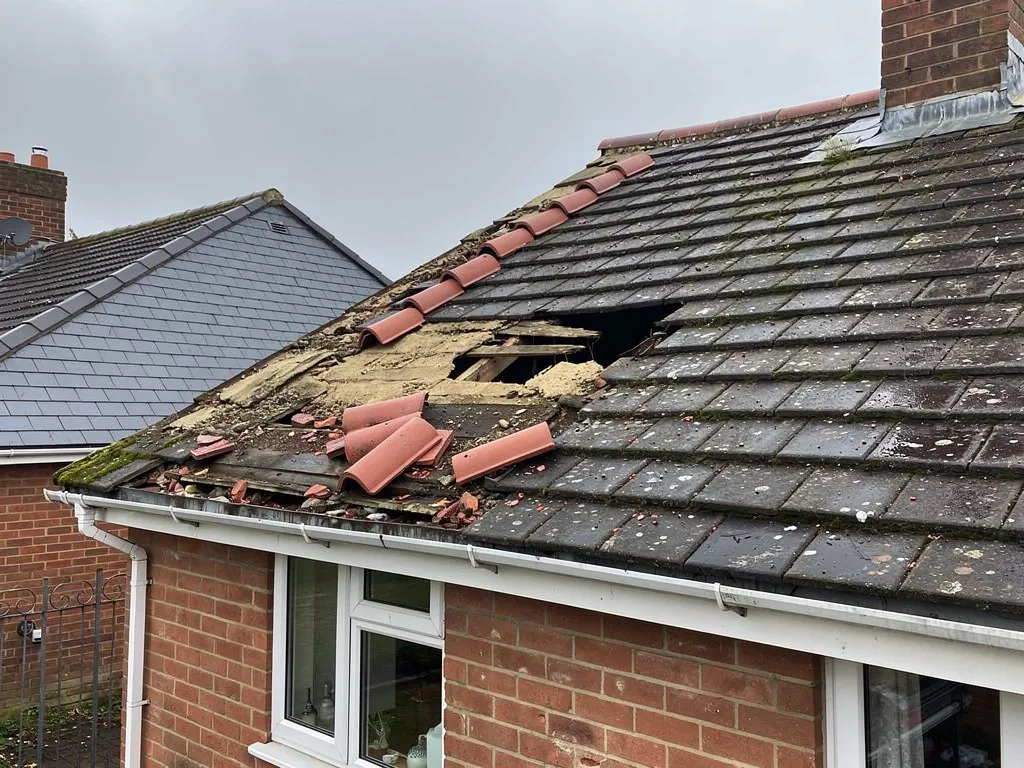
When a gale strips tiles or brings down a chimney pot, the first job is to stop more water getting in. We prioritise leaks and storm damage, and we make a leaking roof safe first, often with a temporary cover over the opening. That buys time to plan the proper repair without the ceiling coming down in the meantime. Our emergency roof repairs page explains what a make-safe visit involves.

At a glance

  • A temporary cover stops further water damage
  • Photograph damage before anything is moved
  • Your insurer decides whether a claim is paid

Note The Financial Ombudsman Service puts the burden of proving a policy exclusion on the insurer.

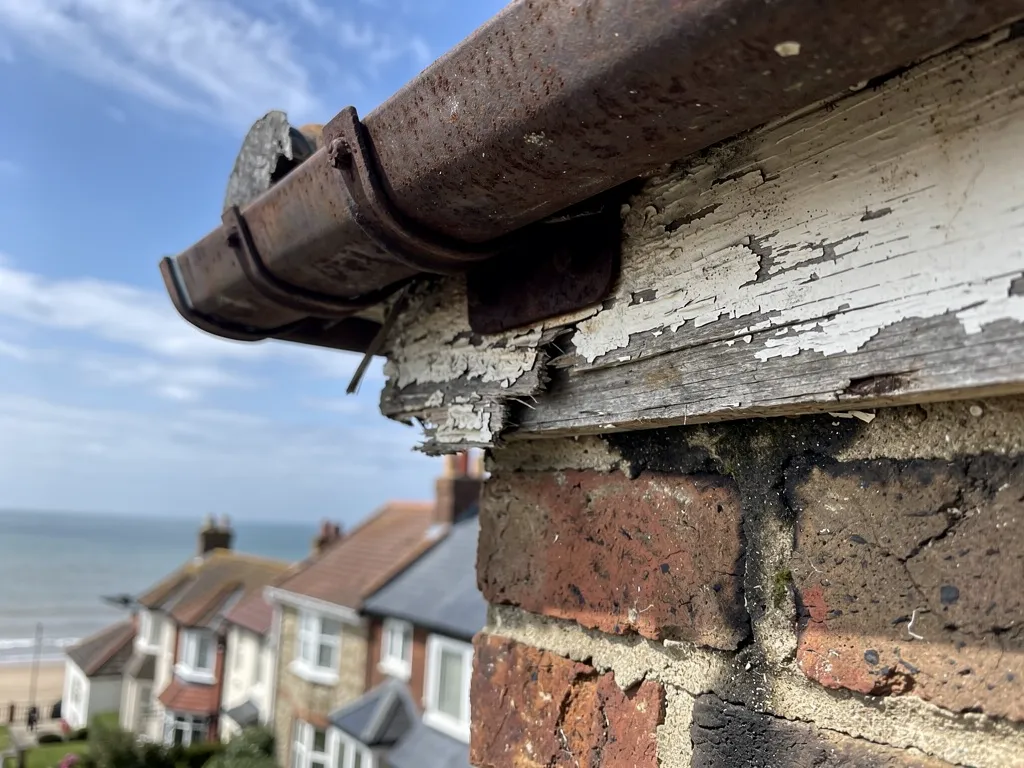
Rotten painted timber fascia with peeling paint and a gutter coming away

Once the roof is safe, we survey it properly and price the permanent fix. That might be a few tiles or a new length of lead. If the storm found a roof that was already tired, it might mean complete roofing work across a whole slope. Keep any receipts for the temporary cover work, because your insurer may ask for them.

7.1 Storm damage or wear and tear

Insurers treat these very differently. The Financial Ombudsman Service asks three questions when it looks at a storm claim: was there a storm on the date of the damage, is the damage consistent with what storms usually cause, and were storm conditions the main cause. It also notes that policy exclusions often include damage that has happened gradually. Which? reported figures from the Financial Conduct Authority showing that only 32% of storm-related claims made in 2024 resulted in a payout. A roof that was already failing is a common reason a claim is turned down.

Rotten painted timber fascia with peeling paint and a gutter coming away

7.2 Making a complaint about an insurer

If you disagree with a decision, complain to the insurer first. If you have no final response within eight weeks, or you are unhappy with it, you can take the complaint to the Financial Ombudsman Service, which is free to use. You have 6 months from the date on the final response to do so. The decision on any claim is always the insurer's, but clear photographs of the damage, taken on the day, help you put your case. Our guide to roof insurance cover goes into what a typical policy includes.

The first hours after storm damage

  1. Stay safe Keep clear of fallen tiles and never climb onto a wet roof.
  2. Make safe We cover the opening so that rain cannot do any further damage.
  3. Record Photograph the damage inside and out, with the date, before anything moves.
  4. Repair A written quote for the permanent fix follows the survey.

A roof that was already failing is the usual reason a storm claim fails.

One caution after any big storm: callers sometimes knock on doors along a street offering to fix roofs on the spot. Take their number, not their offer, and check who they are before you agree to anything. A proper repair starts with a look at the roof and a price in writing, and any reliable roofer will be happy to give you both.

Chapter eight

How to choose a roofer in Worthing

See the fault, get the price in writing, and know your rights before work starts.

When you look for a roofer, Worthing gives you plenty of choice, from one-person firms to larger contractors. What matters is how they work. A professional roofer shows you the fault rather than describing it, explains the fix in plain words, and gives you a price in writing before anything starts. If someone cannot show you what is wrong, ask why.

At a glance

  • Ask for photographs of the actual fault
  • Get one written price before work starts
  • A contract signed at home has 14 days to cancel

8.1 Questions worth asking any roofer

Ask what is causing the problem and how they know. Ask how the ridges and verges will be fixed, and whether the work meets BS 5534. Ask who does the leadwork, and whether they are experienced with lead on chimneys and bays. Ask whether the job needs a Building Regulations notification, and who will handle it. Ask how long the job will take and what happens if the weather turns. Ask whether they will photograph the finished work, so you can see the parts you cannot reach. Ask whether the quote includes VAT, scaffolding and the scaffold licence. In West Sussex, the county council needs at least 10 working days' notice for a scaffold licence, which the scaffold firm applies for; Brighton and Hove runs its own licences. Our guide to finding a good roofer goes through each step.

8.2 Homes, landlords and commercial roofs

We carry out domestic and commercial roofing, from a terraced house in Heene to a block of flats or a row of shop units, and the full range of roofing work in between, from one slipped tile to a new roof. Landlords have a duty of their own: on most tenancies under seven years, the Landlord and Tenant Act 1985 makes the landlord keep the structure and exterior in repair. A tenant who reports a leak in writing gives the landlord a clear record, and Adur and Worthing Councils can inspect a home where repairs are not done. Commercial flat roofs often need the same care as a residential one, at a larger scale, and access, safety and timing all take more planning.

Your rights when you hire a roofer

Cancelling
14 days for a contract made at your home
Starting early
Only if you ask, in writing or by email
Urgent repairs
A visit you asked for to fix urgently is excluded
Standard of work
Reasonable care and skill, by law

Source: Consumer Contracts Regulations 2013 regs 28 to 36; Consumer Rights Act 2015 s49; legislation.gov.uk, fetched 20/10/2026

Roofers for Worthing and 30 miles around

Map of the area we cover: a circle of 25.3 miles around central Worthing, from Chichester in the west to Lewes in the east and Horsham in the north, with the main towns we cover marked.

We cover Goring, Ferring and Broadwater, Lancing and Shoreham, Hove and Brighton, Littlehampton and Arundel, and up through Steyning to Horsham.

All 160 areas we cover

Guides and answers for homeowners in Worthing, West Sussex

Plain answers on costs, rules, insurance and hiring a roofer.

Guides

Quick answers

Roofing questions from around Worthing

How can you tell a dodgy roofer from a good one?

Be wary of a caller who knocks after a storm, says the roof is dangerous and wants to start that day. A good roofer shows you the fault in photographs, explains what will be done, gives one written price. You also have 14 days to cancel a contract signed in your home.

What is the average cost of replacing a roof in the UK?

Checkatrade puts the UK average at around £8,000, with most jobs between £4,000 and £19,000 overall. MyBuilder gives a typical range of £5,000 to £12,000 for a house. Size, shape, covering and access make the difference, so a written quote after the survey is the only figure to plan on.

How much should a roofer charge per hour or per day?

Checkatrade gives £35 to £45 per hour, or £280 to £360 per day, as typical UK rates, and MyBuilder quotes a day rate of £250 to £300. Roof work is usually priced by the job, because access and materials vary so much. Always ask for one written total before work starts.

Can I get a government grant for a new roof?

Most homes will not qualify for a grant for a new roof. The national schemes fund insulation and heating, not roof repair. If you are on a low income and face a serious hazard at home, Adur and Worthing Councils' Housing Grants Team runs a means-tested Repair Grant of up to £5,000.

How do I know if my roof needs repairing?

From outside, look for slipped or missing tiles, a ridge that dips, cracked mortar on the chimney, and gutters that overflow. Inside, watch for stains on ceilings, a musty smell in the loft, damp timber or daylight through the roof. A survey with photographs shows where the water is really getting in.

What is the most expensive part of replacing a roof?

On a re-roof, the price is mainly labour, materials and access. MyBuilder puts labour at £50 to £130 per m², and scaffolding alone at around £1,125 on a new roof. Natural slate costs more than concrete tile, and a roof with hips and valleys costs more than a plain gable roof.

What usually delays roofing work in Worthing?

Weather comes first: tiles and flat-roof membranes cannot be laid safely in high wind or heavy rain. Scaffolding on a public pavement needs a licence, and West Sussex County Council asks for at least 10 working days' notice. Listed building, conservation area and building control approvals can add time; we plan for them when quoting.

Which towns around Worthing do you cover?

Based in Worthing, we work across the town and every place within about 30 road miles. That takes in Lancing, Shoreham and Sompting along the Adur, Hove and Brighton to the east, Littlehampton, Arundel and Bognor Regis to the west, and Steyning, Storrington and Horsham to the north. If in doubt, ring 01903 299063.

Tell us about your roof

Describe what is happening and we will call you back to arrange a visit.

  • Photographs of what we find
  • A written quote with one total price
  • Or call 01903 299063
Call Get a quote